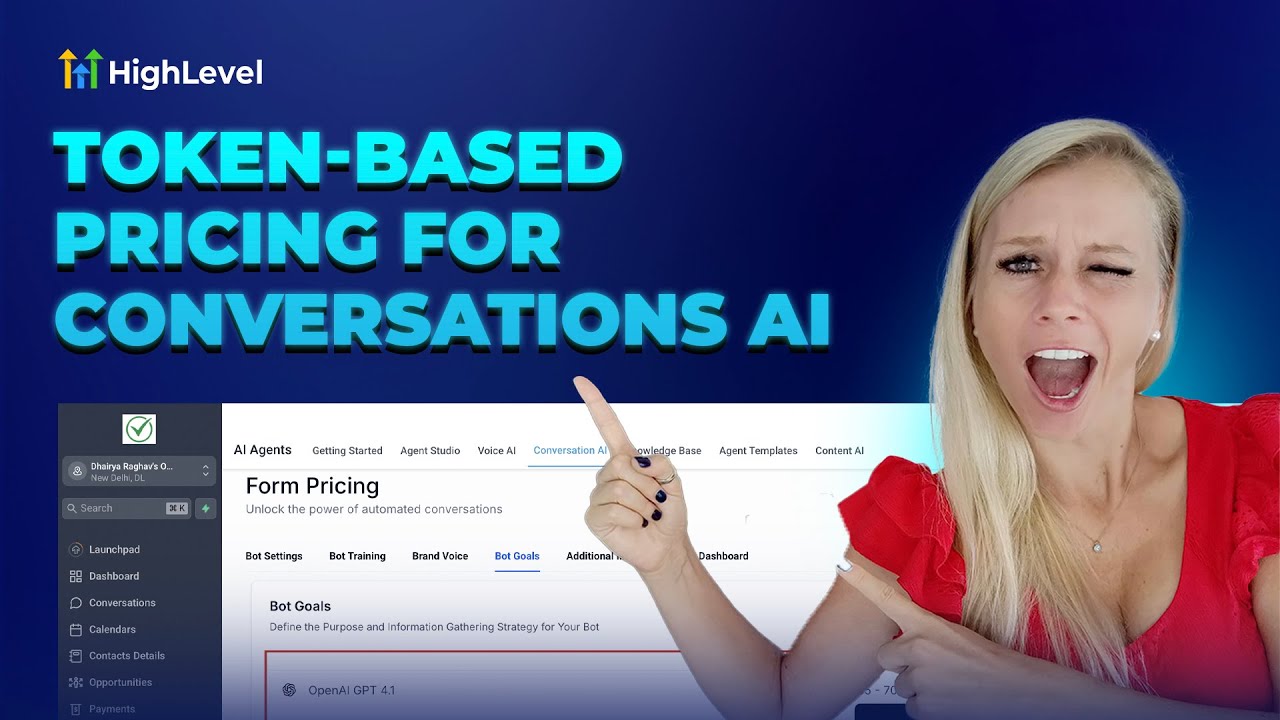
Entrepreneurs, ready to transform your marketing funnels and streamline conversations? In this guide I walk you through how to think about AI-driven conversations, token-based pricing insights, and how to pair those learnings with GFunnel’s all-in-one business platform. If you want to build marketing funnels that convert, automate repetitive tasks, and keep an eye on AI costs for customer-facing bots, this practical breakdown will help you plan, implement, and scale.
Introduction: Why marketing funnels and smart AI cost management matter right now
Marketing funnels are the backbone of predictable growth. Whether you are a small business owner, an e-commerce entrepreneur, or a marketer, building marketing funnels that capture attention, nurture leads, and convert customers is essential. At the same time, AI-powered conversations can dramatically improve engagement and outcomes — but they introduce new cost dynamics.
Recent changes in how conversation engines bill for usage — shifting from flat per-message fees to token-based billing — highlight an important truth: cost efficiency and clear visibility are now part of any scalable conversational strategy. That change matters when you evaluate platforms that offer chatbots, automation, and lead management like GFunnel. A modern business platform must balance high-performing marketing funnels with transparent AI usage so you only pay for value, not guesswork.
Lead Connector With GFunnel becomes the practical bridge between your funnels and CRM. With GFunnel, you can centralize lead capture from landing pages and chat flows, automate follow-ups, and monitor costs across conversation AI agents. Read on for a step-by-step playbook to align your AI conversations with your marketing funnels, reduce wasted spend, and accelerate revenue growth.
Outline
- Introduction: Why marketing funnels and AI cost management matter
- Video insights and themes: automation, personalization, analytics, networking, AI
- GFunnel’s ecosystem solutions: mapping themes to features
- Real-world applications: two case studies with testimonials
- Why GFunnel leads: comparison vs traditional tools
- Conclusion and call to action
- FAQs
Video insights: Strategies for business success
Marketers, boost your conversions with these strategies drawn from recent conversation pricing updates and operational best practices. The video highlights changes in conversational AI billing that have wide implications for how you design marketing funnels and automation. I distilled the content into five core themes you can apply immediately.
Theme 1: Cost-aware Conversation Design
HighLevel: The pricing around Conversation AI is changing. We are introducing a much more flexible and more transparent billing model for Conversation AI agents.
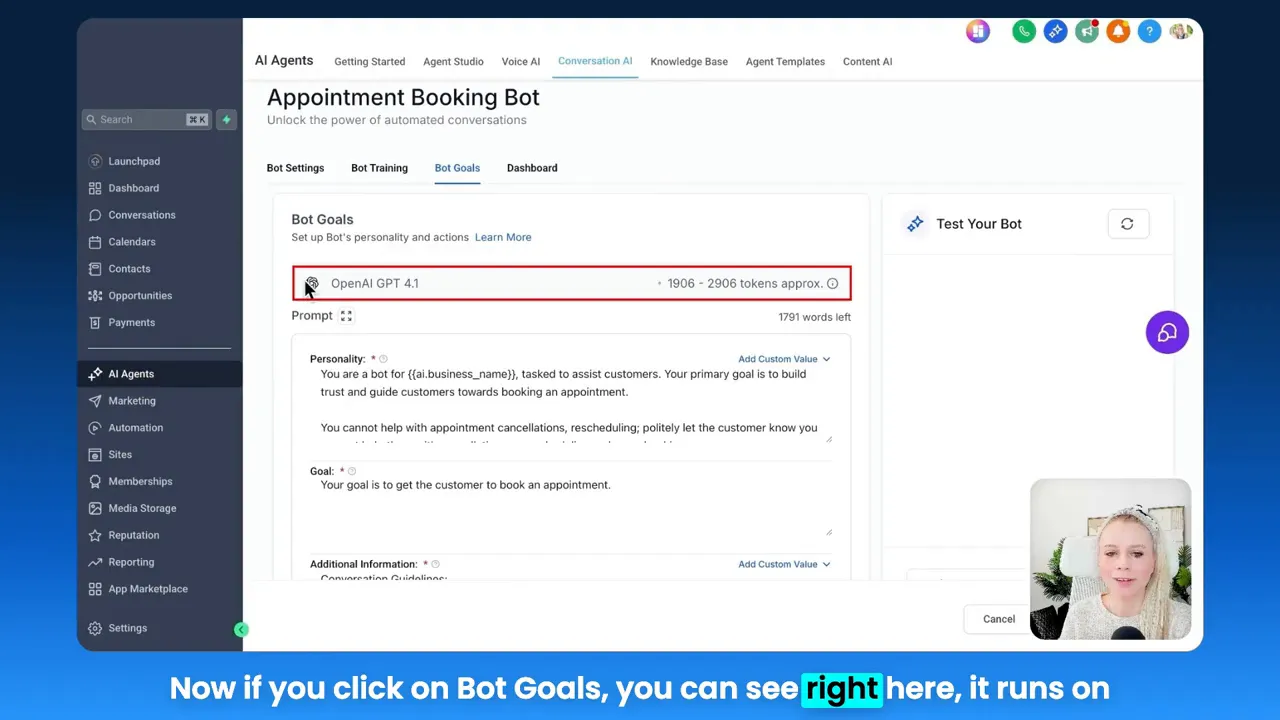
When an AI platform shifts from a flat per-message rate to token-based billing, every word and data lookup becomes meaningful. Short replies cost less; multi-paragraph, knowledge-driven exchanges cost more. This forces businesses to design conversational flows with cost-awareness, ensuring that your marketing funnels use AI where it adds the most value.
Key takeaways:
- Use short, deterministic responses for common requests (hours, addresses, confirmations).
- Reserve long-form AI responses for high-value interactions like proposals, training, or nuanced troubleshooting.
- Measure token consumption per flow and optimize prompts or knowledge lookups to save spend.
Stat: Short, lightweight replies can reduce per-interaction cost by 50% or more compared with long, knowledge-heavy responses.
CTA: Audit a top-of-funnel chat flow in your marketing funnels and cut unnecessary long-form AI responses.

Theme 2: Automation and Workflow Efficiency
HighLevel: This means you will only pay for what your agents actually process. This provides a much better alignment between costs and usage.
Automation is more than autoresponders. It is a combination of chat routing, data capture, CRM actions, and business rules that move leads through your marketing funnels automatically. Token-based AI billing rewards efficient automation: if you can capture the info you need in smaller messages and then trigger backend workflows, you can reduce conversation costs while improving conversion reliability.
Key takeaways:
- Capture essential lead data early with concise prompts to minimize AI token usage.
- Leverage backend processes for heavy lifting — database lookups, GO TO steps, and templated messages — rather than generating verbose AI responses each time.
- Use automation to route complex queries to human agents when AI costs would spike.
Stat: Automation can reduce manual workloads by up to 50% when paired with targeted AI usage and streamlined marketing funnels.
CTA: Integrate a lead capture sequence into your primary marketing funnels and measure time to qualification.
Theme 3: Personalization with Measured Complexity
Personalization drives conversions, but it adds complexity. The video outlines how custom variables, actions, and knowledge lookups increase token usage. The balancing act is to personalize where it moves the needle and simplify where it does not.
Key takeaways:
- Personalize confirmation and follow-up messages that directly influence buying decisions.
- Avoid heavy personalization for generic status replies or low-value interactions.
- Cache frequently used knowledge or pre-process documents outside the chat loop to limit repeated token-heavy lookups.
Stat: Personalization when applied to critical funnel stages yields up to a 20% uplift in open rates and CTR for follow-ups.
CTA: Map every personalized step in your marketing funnels and tag it as high, medium, or low impact; prioritize accordingly.
Theme 4: Transparency and Analytics
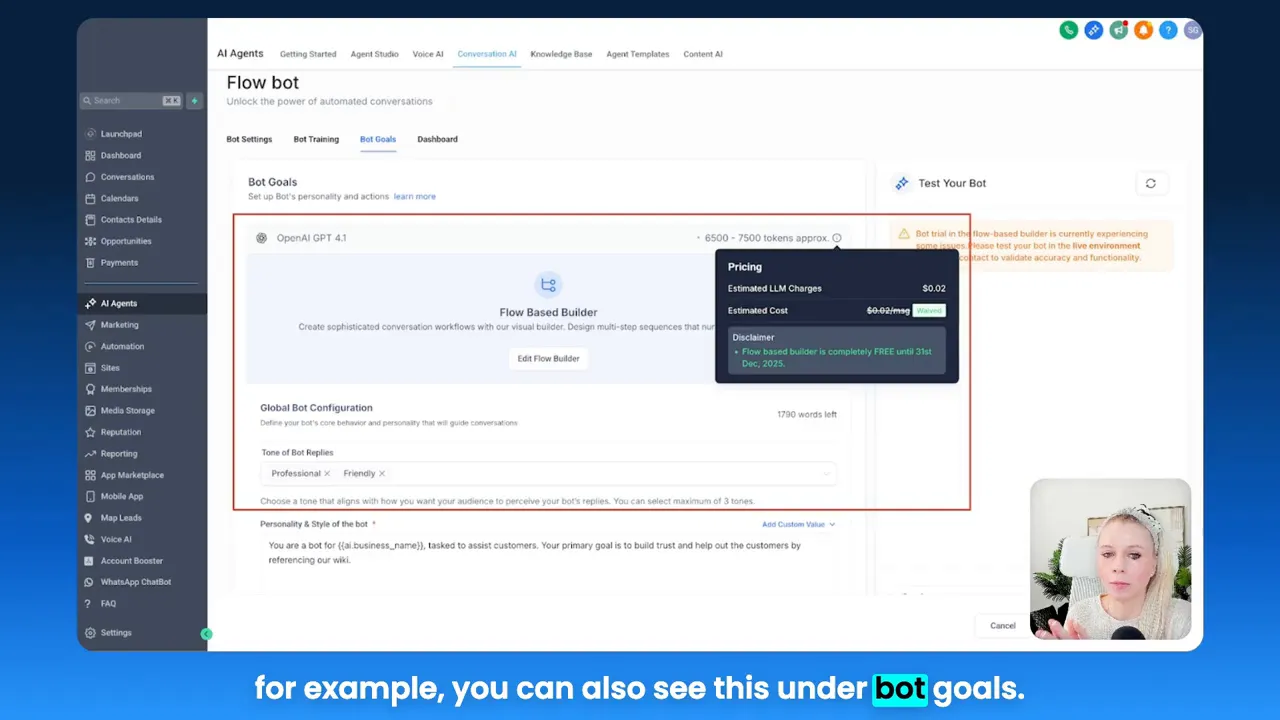
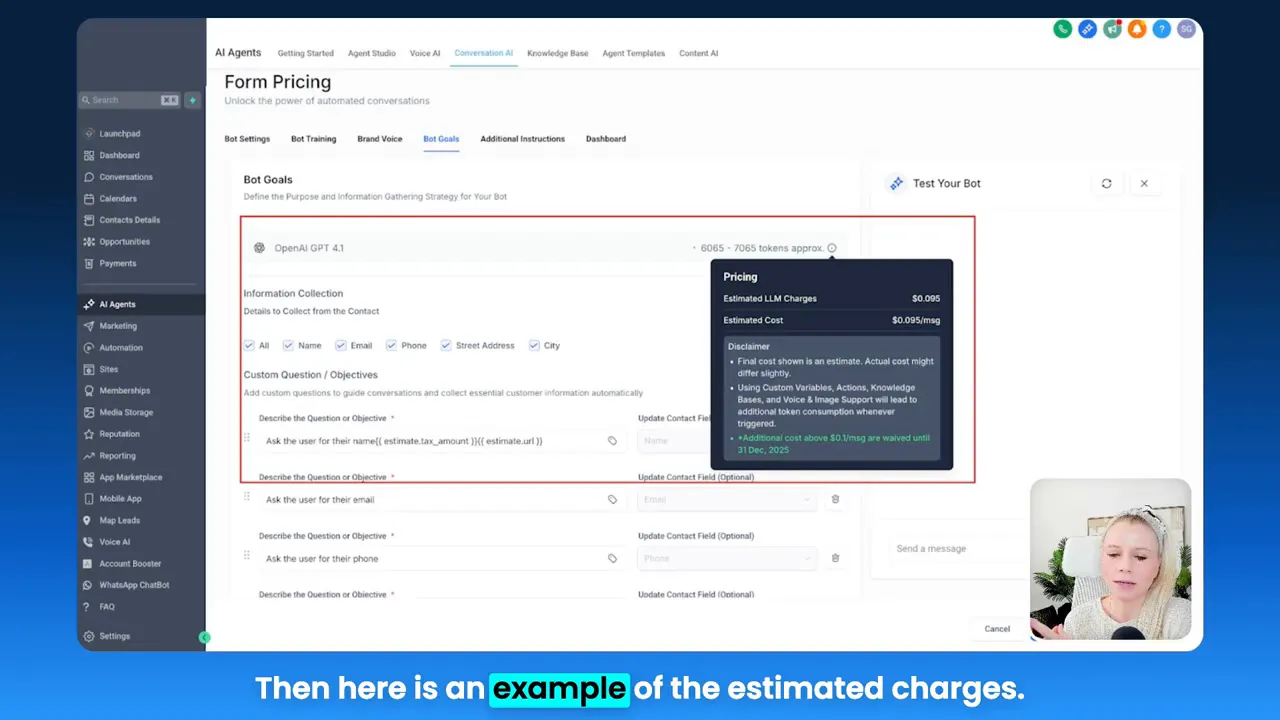
Transparency in AI billing empowers smarter decisions. The video shows how backend analytics reveal input and output tokens for actions and estimated per-bot charges. Pairing this visibility with your real-time performance dashboards is crucial for cost control and optimization across your marketing funnels.
Key takeaways:
- Track input tokens and output tokens per bot and tie them to conversions.
- Use estimates to set monthly caps and alerts for token consumption.
- Include cost-per-conversion in funnel reporting to compare campaign ROI alongside AI spend.
Stat: Real-time analytics can reduce overspend by enabling quicker responses to rising token usage trends.
CTA: Set up a dashboard in your platform to link conversation AI token usage to funnel conversion events.
Theme 5: Community and Knowledge Bases
Using knowledge bases with your AI agent increases value — and token usage. The video emphasizes knowledge-driven lookups as a driver of higher token consumption. But if you structure your knowledge and community contributions smartly, you can make knowledge lookups efficient and meaningful for your marketing funnels.
Key takeaways:
- Organize knowledge articles with short summaries first, then longer supporting docs for deep dives.
- Use community-curated FAQs to reduce redundant AI prompting and reduce token overhead.
- Design knowledge lookup triggers carefully so bots fetch only the most relevant snippets.
Stat: Well-structured knowledge bases reduce average token consumption per complex query by up to 30%.
CTA: Create a prioritized knowledge index and link it to your top-performing marketing funnels.
GFunnel’s ecosystem solutions: How each theme maps to a feature
Small business owners, scale smarter with GFunnel. Below I map each of the five themes to specific GFunnel features so you can implement the strategies above inside a single platform that covers marketing funnels, CRM, automation, analytics, and community networking.
GFunnel’s Automation for Cost-aware Conversations
GFunnel's automation features let you minimize token spend across marketing funnels by handling routine steps on the backend. Instead of prompting the AI to generate a multi-step confirmation message each time, use the automation engine to assemble and send templated confirmations after a concise AI-driven capture.
- Feature highlight: Email and SMS automation sequences tied to funnel stages.
- Benefit: 50% less manual work for routine follow-ups and confirmations.
- Stat: Businesses using GFunnel automation see up to a 20% increase in conversions from nurtured leads.
CTA: Explore automation features at https://www.gfunnel.com/automation-home and connect them to your primary funnel pages.
GFunnel’s Real-time Analytics to Track Token Costs and Conversions
Real-time analytics are vital for connecting AI token consumption with funnel performance. GFunnel’s analytics dashboards show engagement, conversion rates, and real-time revenue events so you can determine whether AI-driven interactions are delivering ROI.
- Feature highlight: Real-time dashboards for conversions, chat engagement, and funnel drop-off analysis.
- Benefit: Identify expensive conversational flows that generate low returns and iterate quickly.
- Stat: Real-time insights can reduce wasted ad spend and bot costs by revealing underperforming pages fast.
CTA: Compare funnel step costs to conversion uplift on GFunnel’s dashboard at https://www.gfunnel.com/funnel-home.
GFunnel’s Community Networking to Build Knowledge Efficiently
Community networking helps you crowdsource answers and build a knowledge base that reduces token-heavy lookups. GFunnel’s niche communities and collaboration tools let entrepreneurs share templates, FAQs, and workflows that are ready to plug into your marketing funnels.
- Feature highlight: Niche communities and resource sharing for entrepreneurs and e-commerce pros.
- Benefit: Faster access to proven funnel templates and knowledge snippets.
- Stat: Teams that leverage community assets reduce time-to-launch for new funnels by 40%.
CTA: Join GFunnel communities at https://www.gfunnel.com/communities to get funnel templates and best practices.
GFunnel’s Funnel Builder and Fast Autosave for Rapid Iteration
Build marketing funnels with a drag-and-drop editor that saves instantly. GFunnel’s autosave via a dedicated web worker is 103ms — 28x faster than slower editors — so you can experiment and iterate without losing momentum.
- Feature highlight: Drag-and-drop funnel builder with fast autosave (103ms).
- Benefit: Rapid iteration and fewer lost hours rebuilding funnel steps.
- Stat: Faster editing cycles enable more A/B tests, leading to better optimization over time.
CTA: Start building and testing marketing funnels quickly at https://www.gfunnel.com/funnel-home.
GFunnel’s CRM and Lead Connector for Seamless Follow-ups
Lead Connector With GFunnel ties captured leads from marketing funnels directly to the CRM so every conversation and action gets tracked. Use lead scoring, segmentation, and automated nurturing to move leads through the funnel efficiently.
- Feature highlight: Built-in CRM and Lead Connector capabilities.
- Benefit: Centralized lead data for personalized automation and reduced duplication.
- Stat: Proper CRM integration increases lead-to-customer rates by improving follow-up consistency.
CTA: Connect your funnels to the CRM: https://www.gfunnel.com/crm and enable Lead Connector With GFunnel for single-pane lead management.
Real-world applications: Two case studies
Small business owners, here are two practical case studies showing how marketing funnels combined with intelligent AI and GFunnel’s ecosystem can deliver measurable results.
Case study 1: E-commerce store — Increasing checkout completions and reducing chat costs
Scenario: A mid-size e-commerce brand was using an AI chat agent that defaulted to long, full-context responses whenever a customer asked about shipping, returns, or product specs. They were paying a flat fee per message previously but switched platforms and found token-based billing amplified costs during peak traffic.
Action plan implemented:
- Shortened bot replies for common questions and used automated ticket creation for complex queries.
- Implemented a knowledge snippet layer so the bot fetched concise answers first and only loaded full documents when necessary.
- Connected lead data to GFunnel’s CRM to trigger abandoned cart sequences and targeted SMS follow-ups.
Results:
- Checkout completion rate increased by 12% after adding targeted follow-up sequences from captured conversations.
- Token-consumption related costs dropped 35% by reducing unnecessary long-form bot responses during high-traffic periods.
- Conversion from chat-driven leads improved by 18% because human agents were routed to high-value customers only.
“GFunnel’s automation saved us hours weekly and reduced our conversation AI bill significantly — it paid for itself within one month.”
CTA: E-commerce entrepreneurs, test your funnels and chat flows today by visiting GFunnel’s e-commerce and automation pages: https://www.gfunnel.com and https://www.gfunnel.com/automation-home.
Case study 2: Local restaurant chain — Streamlined reservations and staff training
Scenario: A multi-location restaurant wanted to automate booking, handle common guest questions, and run staff training dialogues. Their AI often reprocessed PDFs and training docs with every interaction, spiking token usage.
Action plan implemented:
- Used GFunnel’s forms and funnel pages to capture booking data and pushed confirmations through automated sequences rather than long AI-generated messages.
- Stored staff training materials in a summarized knowledge base so the conversational agent called up concise reminders and only triggered deep-dive content during scheduled training sessions.
- Connected Call Net Capture and ordering features to the CRM so guest behavior informed upsell sequences in marketing funnels.
Results:
- Reservation completion increased 22% after removing friction from the booking flow and clarifying confirmations.
- Training dialogues consumed 60% fewer tokens by pre-loading summarized training prompts and using automation for follow-ups.
- Cross-sell revenue from targeted messages rose 9% due to improved segmentation and timing.
“GFunnel’s communities doubled our local promotional reach and the automation made managing bookings so much easier.”
CTA: Restaurants can explore specialized features and event integrations at https://www.gfunnel.com and start a trial to see improvements in booking funnels and order capture.
Why GFunnel leads: Comparing GFunnel to traditional business tools
Small business owners, compare your existing stack to a unified platform that handles funnels, CRM, analytics, automation, and community in one place. GFunnel reduces fragmentation, lowers integration overhead, and gives you clear ROI from your marketing funnels and AI-driven conversations.
Traditional Business Tools vs. GFunnel’s Ecosystem
- Autosave Speed: Traditional editors often save slowly and can interrupt creativity. GFunnel’s autosave is 103ms — 28x faster than slower alternatives.
- Automation: Traditional systems rely on manual processes or many point tools. GFunnel consolidates automation to reduce manual work by up to 50% and aligns automation to your marketing funnels.
- Networking: Traditional methods limit connections to local groups or disparate forums. GFunnel includes niche communities so you can access templates, mentors, and peer feedback quickly.
- Analytics: Traditional analytics require stitching multiple tools. GFunnel offers real-time dashboards so you can see funnel conversion and chat token costs in one place.
Dynamic comparison (conceptual):
- Aspect - Traditional Methods - GFunnel
- Autosave Speed - Slow (seconds) - Fast (103ms, 28x faster)
- Automation - Manual processes, multiple tools - 50% less manual work with unified automation
- Networking - Limited connections and fragmented communities - Niche communities and resource sharing
- Analytics - Third-party dashboards and delayed reporting - Real-time dashboards and funnel-level cost metrics
- Flexibility - Generic tools with integration headaches - Tailored solutions and API integrations
CTA: Compare your stack to GFunnel’s integrated approach at https://www.gfunnel.com and see where you can consolidate tools and reduce hidden costs.
Conclusion and next steps
Marketing funnels remain the most reliable way to create predictable revenue. Pairing efficient funnel design with cost-aware conversation AI creates a powerful engine for growth. The shift to token-based billing means your conversations should be strategic: short and precise when appropriate, and deep and valuable when it matters.
GFunnel is built to help you implement these principles across your business platform. Use automation to reduce repetitive interactions, real-time analytics to tie AI spend to funnel outcomes, community resources to speed implementation, and a fast autosave funnel builder to iterate quickly. Whether you are optimizing e-commerce checkout flows or automating local restaurant bookings, GFunnel helps you build marketing funnels that convert while keeping AI costs in check.
Small business owners, scale smarter with GFunnel. Start by auditing a top funnel, trimming unnecessary long-form AI responses, and connecting your lead capture to GFunnel’s CRM. For detailed features, sign up or explore: https://www.gfunnel.com/create-account and learn how GFunnel can be the central hub for your marketing funnels and business automation.
Frequently asked questions
How does GFunnel support cost-aware conversation design?
GFunnel supports cost-aware conversation design by enabling short, templated responses, automated backend workflows to handle repetitive tasks, and analytics to track token consumption per flow. You can combine minimal AI usage for common replies with triggered automation for confirmations and follow-ups.
What makes GFunnel more than a funnel builder?
GFunnel is a comprehensive business platform that includes a drag-and-drop funnel builder, built-in CRM, automation features, community networking, real-time analytics, and e-commerce tools. It consolidates what would often be multiple point solutions into one integrated system focused on marketing funnels and business automation.
Can GFunnel help manage AI conversation costs from token-based billing?
Yes. GFunnel provides analytics to monitor conversation metrics and best-practice automation patterns to reduce token usage. By capturing essential data early and delegating heavy processing to scheduled tasks or human agents, you can reduce average token consumption and improve ROI.
Which GFunnel features are best for e-commerce marketing funnels?
E-commerce businesses benefit from GFunnel’s funnel pages, abandoned cart automation, CRM integrations, analytics dashboards, and community templates designed for product promotions and checkout optimization. These features work together to improve conversion rates while keeping AI usage targeted.
How does GFunnel’s fast autosave improve funnel building?
GFunnel's autosave operates at 103ms via a dedicated web worker, enabling rapid iterations and A/B testing for marketing funnels. Faster autosave reduces lost edits and supports a continuous improvement workflow that boosts conversion optimization velocity.
Related resources
- GFunnel homepage: https://www.gfunnel.com
- GFunnel communities and resources: https://www.gfunnel.com/communities
- GFunnel automation features: https://www.gfunnel.com/automation-home
- GFunnel funnel builder: https://www.gfunnel.com/funnel-home
- GFunnel CRM and Lead Connector: https://www.gfunnel.com/crm
- Create an account and try GFunnel: https://www.gfunnel.com/create-account
Interactive suggestion: Test your business growth potential with a GFunnel quiz and discover which funnels and automations will move the needle for your business.
Thank you for reading. Implement these recommendations and align your marketing funnels and conversation strategies to capture value, reduce unnecessary AI spend, and grow with confidence using GFunnel.
Need Help Implementing This? |
|
Schedule A Discovery Call With One Of Our Professionals |
| Access Now |


