Table of Contents
- Introduction: The problem almost every entrepreneur faces
- Chapter 1 — The Entrepreneurial Challenge: Why doing more beats optimizing forever
- Chapter 2 — The Highest Risk Adjusted Move: How volume becomes your unfair advantage
- Chapter 3 — GFunnel’s All-in-One Solution: Tools that let you do more, smarter
- Chapter 4 — Real-World Playbook: How teams, campaigns, and creativity scale through volume
- Chapter 5 — Execution Checklist: Concrete steps to 10x your inputs
- FAQs
- Conclusion: Make the bet on more
Overwhelmed by juggling a patchwork of tools, complicated workflows, and the constant urge to “optimize” instead of scale? You are not alone. Most entrepreneurs and creators spend years chasing tiny relative gains—squeezing conversion rates up a few percentage points, A/B testing creative until the well runs dry, or hunting for the mythical one tweak that will change everything. The paradox is simple: small optimizations rarely move the needle; volume does.
This article makes a case for a single operating principle that beats most other strategic debates: do more. Not busywork. Not random activity. Focused, prioritized, high-volume inputs executed consistently. That’s the move that changes the risk-reward profile of your business and gives you options other people don’t have.
We’ll break down why “more” is the highest risk-adjusted return move you can make, how to think about tradeoffs through a simple investor frame, and how modern tools—especially an all-in-one stack like GFunnel—turn the burden of volume into a sustainable, automatable competitive advantage.
Chapter 1 — The Entrepreneurial Challenge: Why doing more beats optimizing forever
Every business owner faces the same question: why can’t I grow faster? The answer most often is not “I need a new idea” or “I need a miracle.” It is usually “I am not doing enough of the things that already work.” You can be a brilliant strategist and still lose to someone who simply outworks you in volume and consistency.
There are three common mental traps entrepreneurs fall into:
- Optimization obsession — focusing on small relative improvements rather than absolute output.
- Change fatigue — constantly swapping systems and losing baseline performance during transitions.
- Capability underestimation — assuming current limits are fixed when they are usually negotiable.
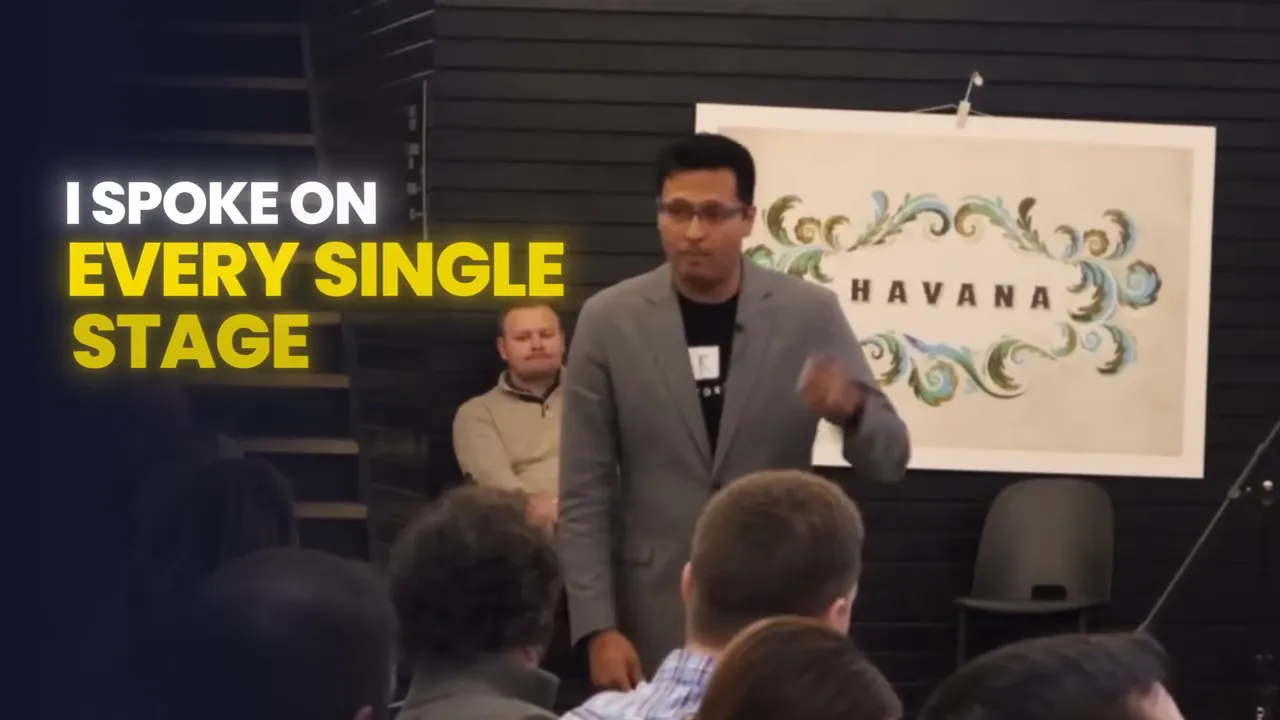
Consider the story of a leader who grew a company from $200 million to $1.2 billion in under three years by doing something simple: he showed up everywhere. He did roughly 260 events in a year, spoke on stage repeatedly, and used sheer volume of touches to generate demand. That is not charisma alone. That is systematic output multiplied by repetition. People confuse “being on stage once a month” with “being on stage constantly.” The volume matters more than you think.
Alex Hormozi’s operating rule is blunt and effective: “Get better. Never stop.” But in practice the highest-leverage version of that is to do more of what already works. Repetition creates skill depth and an understanding of nuance that a single tweak never will.
A short list of why entrepreneurs get stuck optimizing:
- They measure relative returns instead of absolute output. A campaign that yields 6-to-1 at higher spend still produces more profit than the smaller 10-to-1 test they obsess over.
- They treat change as free. Every change carries a cost: retraining, rework, transitions and often a temporary performance dip. If you can gain only 5 percent at a cost of a 20 percent drop while you rebuild, you often lose.
- They overvalue cleverness and underweight consistency. Big results come from consistency layered over time.
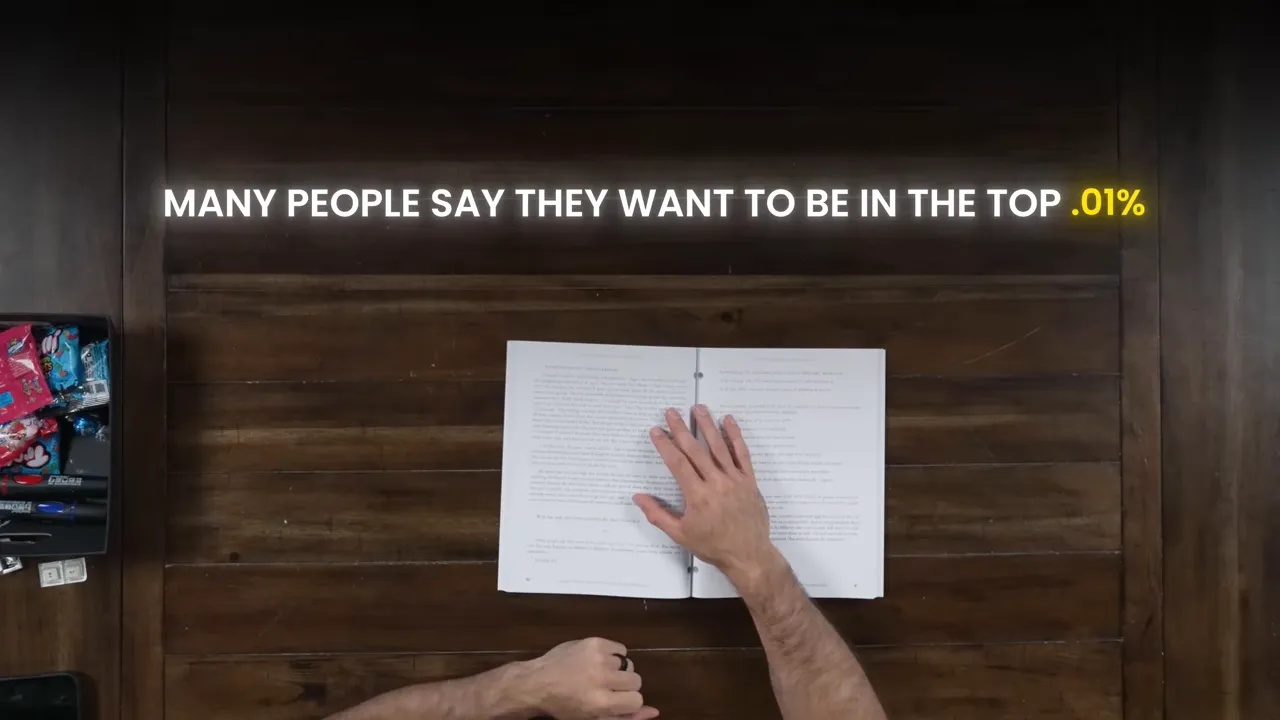
This chapter is not an insult to intelligence. It is an invitation to reframe strategy. Think of business like a stadium. To be top 0.01 percent you must enter a stadium of 10,000 people and leave number one. That requires a life that is different—sometimes lonely, often singularly focused. That is not wrong. It is a consequence of producing results at scale.
Optimization vs Maximization: Two mindsets
Optimizers ask: how do I get as much as I can out of as little as I can? Maximizers ask: how do I get as much as possible? Both are valid, but when the objective is market dominance or rapid scaling, maximizers win. Diminishing returns are still returns. A 6-to-1 scaled campaign that nets you $1,000 more is still better than a 10-to-1 campaign that caps out at $200. Maximizers focus on absolute dollars and absolute output; optimizers focus on percentage points.
This is why winners spend disproportionately on winners. If a channel returns profit at scale—even if ROI diminishes slightly—doubling or tenfolding the spend will likely make more money than obsessively improving small conversion rates or margins.
Chapter 2 — The Highest Risk-Adjusted Move: How volume becomes your unfair advantage
Saying “do more” is easy. Doing more without collapsing yourself, your team, and your margins is the skill. Here are the analytics, frameworks, and mental models that make volume a smart, risk-adjusted bet.
The investor frame: ICE (Impact, Confidence, Ease)
Treat business bets like investments. Evaluate them with three dimensions: Impact, Confidence, and Ease.
- Impact — How big is the upside if this works? Can it double or triple revenue?
- Confidence — How likely is it that this will work given current evidence?
- Ease — How many resources and time will it require?
A perfect move is high impact, high confidence, and easy. Those are your priority bets. If something can double the business and you have high confidence and the resources are reasonable, take it. If one move can double your business, why take three small guesses? The desire to be busy or novel is a dangerous bias.
Change has a fixed cost and a variable reward
When you change something in a system that involves people, you pay a fixed cost. People have to learn new scripts, new processes, new tooling. That retraining often causes a temporary performance drop—my observation is that businesses commonly see about a 20 percent decrease in performance when they switch systems or major processes.
If the expected upside of a change is small—say 5 percent—you just took a big risk for little reward. The more mature the business, the higher the bar any change needs to clear. Prioritize bets that are well above the guaranteed transition cost.
Volume compounds skill and understanding
Repetition is the father of skill. If necessity births invention, repetition matures it into expertise. The more times you run a funnel, a call script, an ad, or a product launch, the faster you learn nuanced optimizations that no test ever reveals. Volume unlocks subtle operational knowledge—what time zones work best, what audience segments respond, which creative motifs scale.
That is why the highest probability path to outsized results is to take something that works and pour more fuel into it, iterating faster and learning by massive exposure rather than chasing small optimizations that drain focus.
Concrete examples of “more” that scale predictably
Here are how “more” manifests in marketing and sales, ordered from lowest to highest risk:
- Make more creative variations for ads and content to increase the chance of winners
- Increase ad spend on proven winners to scale acquisition
- Replicate the proven machine across platforms and avatars (Instagram, TikTok, X)
- Multiply editorial capacity and output so volume becomes sustainable
- Automate repetitive processes with intelligent workflows to turn manual pain into leverage
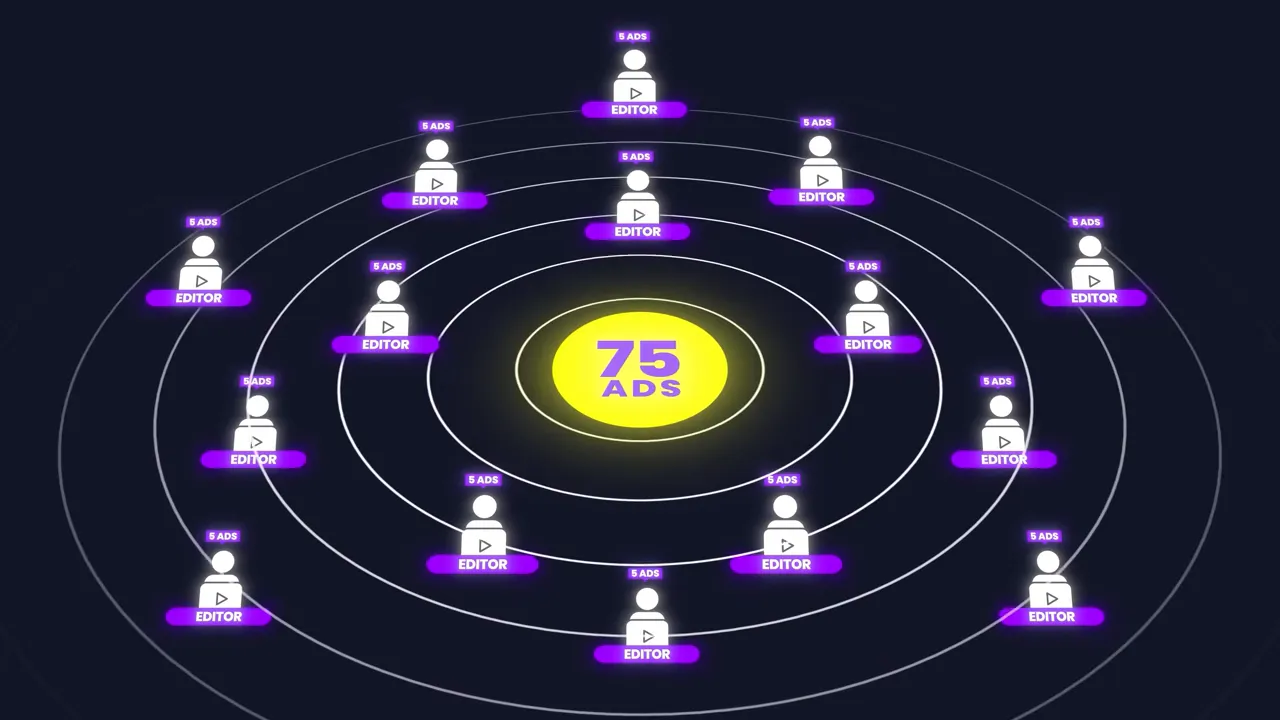
A real launch example: banking 2,000-plus ads before a six-week push. That required scaling editing capacity from 5 editors to 15. The math was simple: the cost of hiring contractors was a sliver of the upside. The launch returned tens of millions. The decision was not exotic. It was an arithmetic call: what does it take to hit the target and is the cost worth it? The answer was yes, so they executed.

Watch how a high-volume approach can transform launches and campaigns in this long-form deep dive.
Chapter 3 — GFunnel’s All-in-One Solution: Tools that let you do more, smarter
Doing more becomes sustainable when your tools remove friction and replace manual labor with repeatable systems. If “more” is the lever, automation and an integrated stack are the fulcrum. That is where GFunnel fits: an all-in-one ecosystem that connects lead capture, CRM, creative workflows, contract management, and website funnels so you can scale outputs without multiplying headaches.
GFunnel’s core promise is simple: channel your success by giving entrepreneurs one single place to run their business front to back. Here is how GFunnel maps to the “do more” strategy.
Lead Connector — centralize your leads and scale outreach
Lead Connector is the CRM nucleus. When you do more, you generate more leads, and more leads require centralized tracking, follow-up automation, and segmentation. Lead Connector gives you:
- Unified inbox and lead timeline so no touch falls through the cracks.
- Drip sequences and automated follow-ups that fire at scale.
- Real-time analytics so you can measure absolute output, not just conversion ratios.
With Lead Connector, the logic is simple. If a campaign generates three times the leads that your current system can handle, that is a growth problem. Lead Connector turns growth into a process. You can scale outreach without hiring an immediate army of support staff because automated flows and templates do much of the heavy lifting.
Start here: https://www.gfunnel.com and then explore the CRM-specific page: https://www.gfunnel.com/crm
Flows AI — automate high-volume communication with intelligence
Doing more means sending more messages, running more sequences, and touching more prospects. Flows AI automates high-volume workflows with smart conditional logic and AI-enabled personalization. Instead of creating a hundred near-identical sequences, Flows AI helps you:
- Auto-personalize messages at scale so volume feels personal.
- Trigger cadence changes based on engagement signals.
- A/B test flows across segments without manual setup headaches.
This is the safety valve for volume. It allows teams to maintain quality as quantity grows. When the pain of doing more becomes real, Flows AI converts that pain into improved conversion rates by increasing the productivity of each contact point.
Explore automation tools: https://www.gfunnel.com/automation-home
AI-powered contract management — close more, faster, with less risk
As you scale, friction in closing deals multiplies. The solution is AI-powered contract management: fast templates, automated signatures, and risk-sensing clauses. Instead of bottlenecking deals through legal or manual back-and-forth, this system lets you:
- Deploy standardized contracts that you can customize and sign in minutes.
- Track contract lifecycle and automate reminders for signing or renewals.
- Reduce legal back-and-forth by using AI to flag risky terms and suggest safe alternatives.
If your growth plan requires doing 10x more demos and closing 10x more deals, you cannot rely on slow contract processes. Automation here saves deals and time.
No-code website builder and funnel pages — launch, iterate, and scale faster
If you can build a landing page in minutes and deploy it across audiences, you can test volume without hiring a dev team for every creative idea. GFunnel’s drag-and-drop builder and funnel templates let you:
- Spin up micro-landing pages targeted to specific ad sets and avatars.
- Replicate proven pages across markets rapidly and track absolute conversions.
- Optimize by scaling winners instead of nitpicking a single page forever.
You will never 10x your business by tweaking a 30 percent opt-in rate to 35 percent. You 10x it by sending 10x traffic to that page. If the page performs, you multiply output. If not, you shutter and shift. Speed here beats perfection.
Try the funnel builder: https://www.gfunnel.com/funnel-home
CRM solutions and real-time analytics — measure absolute returns
One of the most destructive behaviors in growth is obsessing over relative KPIs while ignoring absolute returns. GFunnel centralizes analytics so you can see dollars in and dollars out across funnels, channels, and creatives. This allows you to make the true maximizer decision: “Is this making more absolute profit if I scale it?”
If your ad campaign converts less efficiently at scale but still produces more profit, that’s a scale opportunity, not a failure.
See more: https://www.gfunnel.com/ads
Passive income and affiliate programs — monetize your growth machine
GFunnel’s platform includes affiliate and partner opportunities so you can generate passive revenue as your audience grows. If doing more means creating more content and driving more traffic, you can monetize that additional reach directly through affiliate relationships or by referring clients to the GFunnel ecosystem.
For creators and entrepreneurs, this is a simple arbitrage: increase content volume, route qualified leads into automation, and capture recurring revenue streams with minimal ongoing manual work.
Affiliate home: https://www.gfunnel.com/affiliate-home

Chapter 4 — Real-World Playbook: How teams, campaigns, and creativity scale through volume
“More” sounds brutal until you see the operational map for making it sustainable. Here is how to turn more into repeatable, predictable outcomes.
Step 1 — Pick one machine and measure absolute output
You cannot multiply everything at once. Choose one customer acquisition machine: paid ads, content, cold outreach, or warm outreach. Measure absolute dollars produced per day, not just ratios. Ask: if I sent 10x the input, how many dollars would I make? If the answer is “a lot,” you have found a candidate to scale.
Step 2 — Build capacity for scale
Early on you will hit bottlenecks: editors, sales reps, onboarding specialists, or automation engineers. Instead of leaving the bottleneck to strangle growth, identify the minimum additional capacity required to reach the next milestone. In one launch case the answer was simple: hire 10 more editors. The cost of those contractors was far less than the upside.
Step 3 — Make the work painful on purpose
Doing more is painful. Use that pain as a forcing function to automate and optimize the right things. If your team is committed to 100 calls a day, they will begin to look for ways to make those calls better. They will find higher pickup times, better scripts, and better data. The pain forces creativity and efficiency. If there is no pain, you will readjust and coast.
Step 4 — Use automation to convert manual pain into leverage
Every repetitive task is an automation candidate. Capture automation payoff by connecting lead capture to flows, sequences, reminders, and contracts. Flows AI and Lead Connector automate those touches while preserving personalization. That is the point: volume without degradation of experience.
Step 5 — Iterate on creative at scale
Scale requires more creative variations, not fewer. Create more ad creative, more hooks, more short-form videos. When you bank a library of creative assets, you can test fast and scale winners into full-funnel campaigns. The creative library becomes the raw material for volume.
Step 6 — Replicate the machine across platforms and avatars
Once one channel proves repeatable, copy it to adjacent platforms and audiences. A funnel that works on Instagram can be adapted to TikTok and X. Each platform will have different dynamics, but the machine and the assets give you a head start and allow you to scale across audiences.
Team structure to enable sustainable volume
A practical operating structure when scaling volume:
- Head of Acquisition — owns performance and ROI decisions.
- Creative Manager — ensures the creative machine keeps producing daily.
- Editor Pool — scalable contractors producing dozens of assets per day.
- Automation Engineer — maps flows and sequences that convert at scale.
- Closer / Sales Team — trained to handle higher volume of quality leads.
- Ops & Onboarding — ensures customers get value quickly and churn stays low.
This structure maps directly to GFunnel features: automated funnels, flows, contract templates, and CRM workflows make it possible to operate this org without enormous overhead.
Chapter 5 — Execution Checklist: Concrete steps to 10x your inputs
Below is a tactical checklist you can follow this month to put the “do more” principle into practice. Each item is actionable and maps to GFunnel tools where relevant.
Week 1 — Audit and pick one machine
- Audit your current channels and calculate absolute revenue per day per channel.
- Pick the single highest absolute-return machine to scale for the next 90 days.
- Set a concrete target: for example, increase paid spend from $100/day to $1,000/day while maintaining profitability threshold.
Week 2 — Build capacity and automation
- Estimate inputs required to hit the target (e.g., number of editors, sales reps, or landing pages).
- Hire or contract the minimum necessary capacity (editors, funnel builders, closers).
- Connect lead capture to Lead Connector and build initial flows in Flows AI to handle 2x–10x lead volume.
- Set up AI contract templates to move prospects to signed in days, not weeks.
Week 3 — Execute volume production
- Produce a minimum viable library of creative (e.g., 50 short-form ads, 50 headlines, 10 landing page variants).
- Start scaled ad spend on a subset of winners and measure absolute returns daily.
- Iterate creative every 48–72 hours based on early signals.
Ongoing — Monitor absolute output and optimize for scale
- Track absolute profit, not just ratios.
- If absolute profit rises with scale, pour more fuel. If not, pivot quickly.
- Use Flows AI to automate lead qualification so closers get higher-quality conversations.
- Use GFunnel analytics to track funnel leakage points and fix the most visible bottlenecks first.
A compact example of applying this checklist: if you want to increase sales demos from 20 per week to 200 per week, you do not optimize your calendar. You create capacity: more calendar slots, more marketing volume, flows that qualify and pre-screen, and contract automation to close faster. Each of those can be done inside an integrated platform like GFunnel so that doing more does not increase manual complexity linearly.
FAQ
What is Lead Connector and how does it differ from standard CRMs?
Lead Connector is GFunnel’s centralized CRM built to handle high-volume acquisition and multi-channel outreach. Unlike standalone CRMs, Lead Connector integrates with the funnel builder, Flows AI, and AI contract templates so lead capture, follow-up, and closing are all automated without stitching multiple apps. It is optimized for absolute output tracking, not just relative metrics.
How does Flows AI save time while maintaining personalization?
Flows AI uses conditional logic and AI-driven content personalization to send tailored messages at scale. The system adapts to engagement signals so each prospect receives communications that are contextually relevant—allowing you to maintain a personal touch even when volume goes up.
How does AI-powered contract management speed up closes?
AI contract management provides pre-built templates, automated signature reminders, and intelligent clause suggestions to reduce legal friction. The result is faster contract turnaround and fewer deals lost to slow back-and-forth—especially critical when scaling demo volume and closing more deals per day.
Can I build landing pages and funnels without a developer?
Yes. GFunnel’s no-code drag-and-drop funnel builder lets you create, clone, and deploy landing pages and funnels in minutes so you can test volume hypotheses fast. Build targeted micro-pages for different ads and audiences to scale absolute conversions instead of optimizing a single page to death.
Is GFunnel free to start and where can I learn more?
GFunnel offers tiered options and ways to get started quickly; you can create an account and begin exploring the platform at https://www.gfunnel.com. From there, explore specific pages like the CRM page https://www.gfunnel.com/crm and automation home https://www.gfunnel.com/automation-home for deeper details.
How do I know when to hire more team members vs build automation?
Hire when the marginal cost of labor is less than the expected marginal profit and when human judgment is required. Automate when tasks are repetitive and scale exponentially with automation. Use a quick evaluation: if a task will be repeated more than X times per month and automation reduces handle time significantly, build the automation. GFunnel’s Flows AI and templates make this decision easier by lowering automation costs.
Conclusion: Make the bet on more
Winning at scale is rarely a matter of genius. It is a matter of arithmetic, prioritization, and persistence. The highest risk-adjusted return move you can make in many businesses is to do more of what already works. Pour fuel into your proven channels. Build capacity. Automate the repetitive. Replicate across platforms. Measure absolute returns and don’t be seduced by marginal relative wins.
GFunnel is built for entrepreneurs who want to make that bet on more without multiplying complexity. With Lead Connector, Flows AI, AI-powered contract management, no-code funnels, and centralized analytics, GFunnel turns volume into a system you can run predictably.
If you want to scale faster, the math is straightforward: identify your highest absolute-return channel, calculate the inputs required to take it 5x or 10x, and then build the capacity and automation to make it happen. Most of the time the cost is far lower than the upside. The only question left is whether you are willing to do the work other people won’t.
If the answer is yes, start here: https://www.gfunnel.com and begin channeling your success today.
Need Help Implementing This? |
|
Schedule A Discovery Call With One Of Our Professionals |
| Access Now |