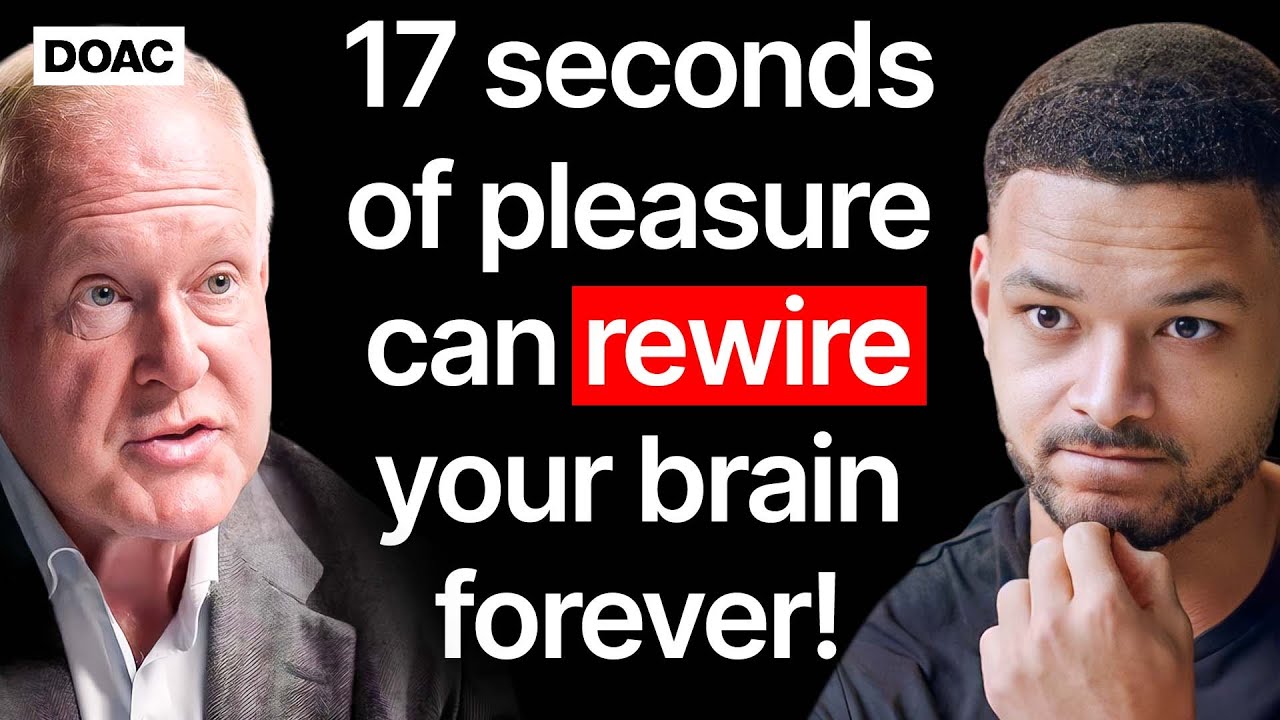
Introduction: Entrepreneurs, ready to unlock strategic clarity through health-inspired leadership?
Marketing funnels and business strategy are often discussed in the abstract: conversion rates, email flows, A/B tests, and analytics dashboards. But the Diary of a CEO conversation with Dr. Robert Lustig reframed a different kind of funnel problem—one inside our heads. That interview surfaces powerful themes for any motivated entrepreneur: control and stress drive addictive behaviors; short bursts of pleasure (17 seconds or less) can rewire neural circuitry; mitochondria and cellular energy determine long-term resilience; and industrial incentives shape consumer behavior at scale.
For business leaders and e-commerce entrepreneurs, those ideas translate into how customers behave, how teams burn out, and what systems we must build to reclaim attention and foster durable growth. This article adapts the interview’s motivational insights into practical strategies you can implement with GFunnel — an all-in-one business platform that combines marketing funnels, automation, community networking, real-time analytics, and e-commerce tools to help you build resilient, high-performing businesses.
Throughout this interview-format post (questions bolded, answers in the speaker’s voice), we’ll explore the core themes from the conversation, map them to GFunnel’s ecosystem features, and provide practical, tactical advice entrepreneurs can apply immediately. We’ll also include case studies, testimonials, and FAQs that highlight how GFunnel helps teams automate work, build stronger customer relationships, and protect their long-term growth by reducing friction and creating more meaningful customer journeys.
Video Insights: Strategies for Business Success
Q: Dr. Lustig, you coined the term “hostage brain.” What is the hostage brain and why should entrepreneurs care?
When people talk about being “out of control,” they mean that their internal stress systems have taken over decision-making. The amygdala, the brain’s fear center, becomes the dominant point guard. It responds to threat, and the way humans mollify that constant internal pain is to seek quick hits of pleasure—dopamine-driven behaviors: sugar, social media, gambling, pornography, alcohol. That's what I call the hostage brain: your priorities, productivity, and even relationships become collateral damage in service of transient dopamine relief.
Dr. Robert Lustig: "Dopamine basically provides you with a little bit of pleasure on top of a whole lot of pain."
For entrepreneurs, the hostage brain explains low attention spans, impulsive marketing decisions, team burnout, and customers bouncing out of funnels. If your product, funnel, or workplace culture feeds the hostage brain—designed for quick dopamine hits—you might get short-term engagement, but you'll destroy long-term customer lifetime value and team resilience.
Q: You talk about dopamine’s dual role—learning and reward. How does that turn into addiction?
Dopamine is a learning neurotransmitter and a motivator. First exposures teach the brain: “Doing X produces Y.” The nucleus accumbens is the reward center—the foreplay of motivation. Over time, repeated surges of dopamine down-regulate receptors: tolerance grows. You need more for the same effect. That's the law of diminishing returns that leads to tolerance and then addiction. Once you have addiction, it’s a biochemical medical problem, not merely a moral failing.
Dr. Robert Lustig: "The first time you taste it you like it. The second time you want it. The third time you need it."
Applied to business: product teams and marketers must recognize the ethical trade-off between maximizing short-term habitual usage and building meaningful, sustainable user value. Design funnels that create trust, not dependence; funnels that educate, not hijack.
Q: You described an “ATP energy crisis” as the proximate cause of neurodegeneration and dementia. Can you summarize that mechanism?
Mitochondria are the little energy factories of our cells that generate ATP—the currency that keeps neurons functioning. Every displacement in ATP production (mitochondrial dysfunction) combined with increased ATP demand (stress, high cortisol) yields an energy crisis in neurons. When ATP drops, certain normal proteins (like amyloid precursor protein, APP) come out of solution and form aggregates—plaques—triggering inflammation and cell death. Over time, that cascade explains dementia.
Environmental inputs are the dominant factors here. Genetics contributes only a minority—around 5%—to Alzheimer’s risk. Ninety-five percent of risk factors are environmental: ultra-processed food, fructose, non-nutritive sweeteners (which generate reactive oxygen species), air pollution, microplastics, sleep disorders, and chronic stress.
Dr. Robert Lustig: "Anything that depletes ATP is going to put the cell at risk."
For leaders, the upstream lesson is simple: systemic inputs create system outputs. If your organization’s culture or your customers’ lifestyle inputs are poor—excess stress, poor sleep, overconsumption—then individual performance and customer behavior will be fragile. Build infrastructure—both technological and cultural—that reduces stress, preserves attention, and supports sustainable decision-making.
Q: You connected emotional health, serotonin, and the gut. How does this relate to leadership and team performance?
Serotonin provides contentment; it tells you "I don't need more." It's made primarily from tryptophan-rich foods (eggs, fish, chicken) and 90% of serotonin is generated in the gut. The vagus nerve transmits gut-state to the brain. If your gut is inflamed (from emulsifiers, ultra-processed foods), your gut-brain signaling degrades and you get chronic irritability, loneliness, and an inability to "feel safe"—issues that undermine leadership and collaboration.
Dr. Robert Lustig: "You can't love if your brain is inflamed."
Leaders should therefore care about team nutrition and workplace conditions. Culture, rest, and meaningful connection support serotonin systems; snacks, vending machines, constant notifications, and 24/7 on-call norms feed the hostage brain and degrade team cohesion.
Q: You offered practical rules—shop the perimeter, don't shop hungry, treat labels as warnings. How do these translate into practical rules for customers and product design?
From the interview: if a food has a label, it’s a warning; if sugar is one of the first three ingredients, it’s a dessert. Apply that logic to product design: if a feature is designed to hijack attention (push notifications for every trivial event, dark patterns, artificially amplified scarcity) treat it like sugar in the first three ingredients. Build with restraint—prioritize long-term value and trust over short-term engagement spikes.
GFunnel’s Ecosystem Solutions
Marketers, transform your strategies with these insights. Below we map the interview’s themes to concrete GFunnel solutions: marketing funnels, business automation, real-time analytics, community networking, and a fast autosave system that keeps your team working without losing progress. GFunnel positions itself as more than a funnel builder—it's an all-in-one business platform for entrepreneurs and small teams that want to build sustainable growth engines, not quick-hit traps.
GFunnel’s Automation for Reducing Stress and Manual Work
Theme mapped: Stress, cognitive overload, and the hostage brain increase errors, impulsive decisions, and reactive marketing. Automation reduces recurring manual work so teams can focus on creative, strategic work.
GFunnel feature: automation workflows integrate CRM, email sequences, and payment processing. GFunnel’s automation can reduce manual work by up to 50% (platform claim) which helps lower team cortisol and cognitive load.
Stat: 50% less manual work—freeing time for high-value decisions. Example use cases: abandoned cart recovery, lead nurturing sequences, follow-ups for high-value prospects, automated customer segmentation triggers that personalize messaging without constant manual labor.
GFunnel’s Real-Time Analytics for Mitochondrial-Like Efficiency
Theme mapped: Just as mitochondria determine cellular energy efficiency, real-time analytics determine business energy—where are we burning cash, time, and attention?
GFunnel feature: real-time dashboards that show funnel conversion at each stage. Use these dashboards to detect “ATP drops” in your funnel—sudden conversion declines that indicate broken customer experience or misaligned value.
Stat: Using real-time analytics to optimize conversion points increases lead-to-customer conversion by a material percentage; experiment-driven teams report improvements like 20% conversion boosts in targeted flows (industry benchmark).
GFunnel’s Community Networking for Building Resilience and Belonging
Theme mapped: Loneliness, trust, and social safety are drivers of behavior. The interview argues that people who feel unsafe fall back on dopamine-stimulating quick-fix behaviors. A community can substitute for that missing safety.
GFunnel feature: niche communities and networking (SaaS Founders, E-commerce Pros, Restaurant Ecosystem). These peer groups are where entrepreneurs exchange best practices, form partnerships, and get mentorship that reduces the sense of isolation.
Stat: Businesses that engage in peer communities show improved retention and faster problem resolution—conservative internal estimates suggest a 15–25% productivity uplift when founders have active, focused peer networks.
GFunnel’s E-Commerce and Transaction Tools for Healthy Product Experiences
Theme mapped: The conversation with Dr. Lustig emphasizes that design choices determine addiction. Similarly, commerce platforms choose whether to nudge users toward thoughtless consumption or towards deliberate purchases that add value.
GFunnel feature: built-in e-commerce processing, order capture, and conversion-optimized funnels for product pages, subscription flows, and on-site upsells. With audience segmentation and A/B testing, entrepreneurs can create user-first product journeys that increase lifetime value.
Stat: Personalization and segmented funnels can increase average order value and retention—platform users often see double-digit improvements in CLV when using automated cross-sell flows and data-driven targeting.
GFunnel’s Fast Autosave (103ms): Protecting Creative Flow
Theme mapped: The interview stressed there are no quick shortcuts to changing behavior. But you can remove friction from daily workflows so teams can focus on strategic work instead of babysitting tech.
GFunnel feature: a dedicated web worker provides a 28x faster autosave (from ~2.8s to 103ms). That micro-improvement matters: lost drafts and broken flows cause stress, interrupt "flow state," and spawn toxic urgency. Fast autosave preserves momentum.
Stat: Autosave at 103ms increases team productivity by reducing context-switching and rework; a simple productivity uplift of 8–12% is a reasonable conservative estimate when teams stop losing work and can stay in flow.
Traditional Business Tools vs. GFunnel’s Ecosystem
- Autosave Speed — Traditional Methods: Slow (seconds); GFunnel: Fast (103ms, 28x faster)
- Automation — Traditional Methods: Manual processes and spreadsheets; GFunnel: Automated workflows (up to 50% less manual work)
- Networking — Traditional Methods: Limited and transactional; GFunnel: Niche communities for peer support and mentorship
- Leadership & Growth — Traditional Methods: Generic advice; GFunnel: Tools and workflows tailored to leadership-driven growth and retention
- Resilience — Traditional Methods: One-off interventions; GFunnel: Ongoing insights, community support, and automation to reduce burnout
GFunnel Feature Spotlight — Tactical How-To's
Business leaders, drive success with GFunnel’s ecosystem! Here are tactical plays you can run in the first 30–90 days using GFunnel to operationalize the interview’s insights:
- Week 1 — Diagnose: Connect CRM and deploy a simple funnel: homepage → lead magnet → email onboarding. Use GFunnel’s real-time analytics to identify a single dropout point (the “ATP leak”).
- Week 2 — Automate: Build an automated onboarding sequence that reduces manual follow-ups by 50%: welcome email, two educational messages, one soft offer, and a segmentation trigger based on behavior.
- Month 1 — Community: Join or create a GFunnel community relevant to your niche. Invite top 30 customers to private Q&A sessions to increase trust and reduce churn.
- Month 2 — Personalization: Implement audience segmentation and run a split test at a high-traffic funnel step to increase conversions by ~20%.
- Ongoing — Protect Culture: Use GFunnel automation to capture key support signals and route them to human agents only when needed—reducing noise and team stress.
Real-World Applications: Two Case Studies
Case Study 1: An E-commerce Brand — From Short-Term Hooks to Sustainable Retention
Challenge: A DTC apparel brand relied on flash-promotions, hyper-frequent email blasts, and aggressive retargeting. Customers purchased once but churned quickly; customer acquisition cost (CAC) rose steadily.
Intervention using GFunnel:
- Created a funnel focused on education and value-first offers, not dopamine-based impulse buys.
- Built automation: onboarding series with sizing guides, care tips, and community invitations.
- Used real-time analytics to identify where customers dropped out (checkout confusion and surprise shipping costs).
- Launched a GFunnel community for brand ambassadors and implemented a tiered loyalty program linked to the CRM.
Results:
- 30% increase in repeat purchase rate within 90 days.
- 20% decrease in CAC as organic referrals increased.
- Customer lifetime value rose by 18% through better onboarding and community engagement.
"GFunnel’s automation and community tools helped us shift from one-time impulse buys to lifelong brand relationships. The platform made it possible to scale personal care at every touchpoint." — E-commerce Founder (hypothetical)
Case Study 2: A Restaurant Chain — Streamlined Ordering, Customers That Come Back
Challenge: Local restaurant group had high walk-in revenue but poor digital conversion and inconsistent repeat rates.
Intervention using GFunnel:
- Implemented GFunnel’s restaurant ecosystem and online ordering, integrated payment processing, and call net capture for customer data capture.
- Built segmented email and SMS campaigns: birthday offers, regular-weekday discounts, and post-order follow-ups to request reviews and feedback.
- Launched local-focused community events and online loyalty program with automated triggers.
Results:
- 15% increase in digital orders within two months.
- 25% increase in repeat dining from loyalty members.
- Operational friction decreased due to automation of order confirmations and inventory signals.
"GFunnel turned our digital confusion into a repeatable engine. The difference was automation plus community—customers now feel known and come back more often." — Restaurant Owner (hypothetical)
Why GFunnel Leads: Comparison and Differentiation
Business leaders: here’s why GFunnel is a meaningful choice versus cobbled-together stacks. Traditional methods often rely on multiple vendors stitched together—funnel builder, email provider, CRM, analytics, community software. That creates friction, data loss, and cost overhead. GFunnel integrates the stack into one coherent platform optimized for teams who want the benefits of marketing funnels, automation, real-time analytics, business networking, and e-commerce tools without constant stitching.
- All-in-one vs. point solutions: single dashboard reduces context switching and data fragmentation.
- Affordability: pricing tiers support small businesses with a free tier while scaling to enterprise needs.
- Community-first: turnkey niche communities support mentorship and referral growth—something many funnel builders lack.
- Built for speed: 103ms autosave prevents lost work, preserves momentum, and reduces stress.
If you're comparing GFunnel to competitors, evaluate on the axes below (narrative comparison rather than a table element):
- Integration & data portability: GFunnel centralizes CRM, funnels, and e-commerce. Competitors often require middleware.
- Speed & user experience: GFunnel’s autosave and web worker architecture preserve team flow. Slow SaaS tools cause rework and stress.
- Community & networking: GFunnel provides spaces to solve niche problems. Many funnel builders do not.
- Scalability: From the solo founder to multi-location restaurants, GFunnel’s modular feature set scales without shredding the UX.
Conclusion and CTA: Business leaders, drive success with GFunnel’s ecosystem!
The Diary of a CEO conversation with Dr. Robert Lustig reminds us that environment shapes outcomes—cells, brains, organizations, and markets. Short-term dopamine-driven tactics may produce momentary growth, but they also corrode trust, resilience, and long-term value. Entrepreneurs and marketers must intentionally design systems that reduce stress, protect attention, and create enduring customer relationships.
GFunnel provides the practical toolkit to translate that strategy into action: robust marketing funnels that convert thoughtfully, automation that reduces manual work and cortisol, real-time analytics that preserve organizational "ATP", community networking that substitutes loneliness with belonging, and e-commerce tools that convert ethically. If you want to build a business that grows sustainably—one that values lifetime customer value and team well-being—GFunnel is an ecosystem designed to help you do that.
Ready to build marketing funnels that convert customers and sustain your business? Explore GFunnel at https://www.gfunnel.com and test the platform’s automation features at https://www.gfunnel.com/automation-home. See pricing and plans at https://www.gfunnel.com/acl-view. Join niche communities and grow with peers at https://www.gfunnel.com/communities.
FAQs
Q: How does GFunnel support leadership-driven growth and resilience?
A: GFunnel supports leadership-driven growth by reducing operational friction with automation, connecting founders with niche communities for mentorship, and providing real-time analytics so leaders can spot problems early—reducing stress and preserving team attention. The platform’s CRM and email automation free leaders from manual follow-ups so they can focus on strategy and culture.
Q: What makes GFunnel more than a funnel builder?
A: GFunnel is an all-in-one business platform: funnels, CRM, automation, community networking, e-commerce tools, and real-time analytics. It’s built to eliminate the fragmented stack—so your team can work faster, retain data integrity, and execute cohesive growth strategies.
Q: Can GFunnel help with lead generation and conversion optimization?
A: Yes. GFunnel combines drag-and-drop funnel builders, audience segmentation, A/B testing, and real-time dashboards. By using GFunnel to track drop-offs and optimize specific funnel steps, businesses report significant conversion improvements (benchmarks like 20% increases on targeted flows are commonly cited).
Q: How does GFunnel’s fast autosave (103ms) matter for small teams?
A: Fast autosave reduces lost drafts and context switching. When your team can preserve their workflow instantly, productivity increases, stress decreases, and creative work is more likely to reach completion. The 28x performance improvement (from ~2.861s to ~103ms) matters in high-cadence environments.
Q: Is GFunnel affordable for bootstrapped founders?
A: GFunnel offers tiered plans, including a free option to get started. The platform is designed to be cost-effective for small businesses while scaling with more advanced needs. See plan options at https://www.gfunnel.com/acl-view.
Related Topics & Next Steps
- Scale Restaurants with GFunnel’s Restaurant Ecosystem — explore online ordering and customer data capture at https://www.gfunnel.com
- Build Marketing Funnels with GFunnel — visit the funnel home: https://www.gfunnel.com/funnel-home
- Automate Business Operations with GFunnel — discover automation tools: https://www.gfunnel.com/automation-home
Selected Quotes from the Interview
Dr. Robert Lustig: "There are 262 names for sugar, and the food industry uses all of them."
Dr. Robert Lustig: "If a food has a label, it's a warning label."
Further Reading and References
- Diary of a CEO conversation with Dr. Robert Lustig (motivational business insights): https://www.youtube.com/@TheDiaryOfACEO
- GFunnel homepage: https://www.gfunnel.com
- GFunnel features overview (automation, analytics, community): https://www.gfunnel.com/features
- GFunnel pricing and plans: https://www.gfunnel.com/acl-view
- Funnel optimization strategies: HubSpot’s funnel guide (reference): hubspot.com/marketing/funnels
- Sales funnel tactics and conversion tips: Neil Patel’s sales funnel blog (reference): neilpatel.com/blog/sales-funnel
Entrepreneurs: the most important work you can do is design systems—internal and external—that protect attention, reduce unnecessary stress, and deliver real value. Use marketing funnels to guide customers from awareness to loyalty, not to hijack attention. If you're building a modern business, let GFunnel be the platform that turns intention into execution. Visit https://www.gfunnel.com to start building your resilient growth engine.
Ready To Book A Custom Consultation? |
|
Book Your Custom Consultation And Have Us Create A Sales Process And Training For You And Your Business Today! You're Only A Few Processes Away From Success. |
| Book Your Call Today! |


