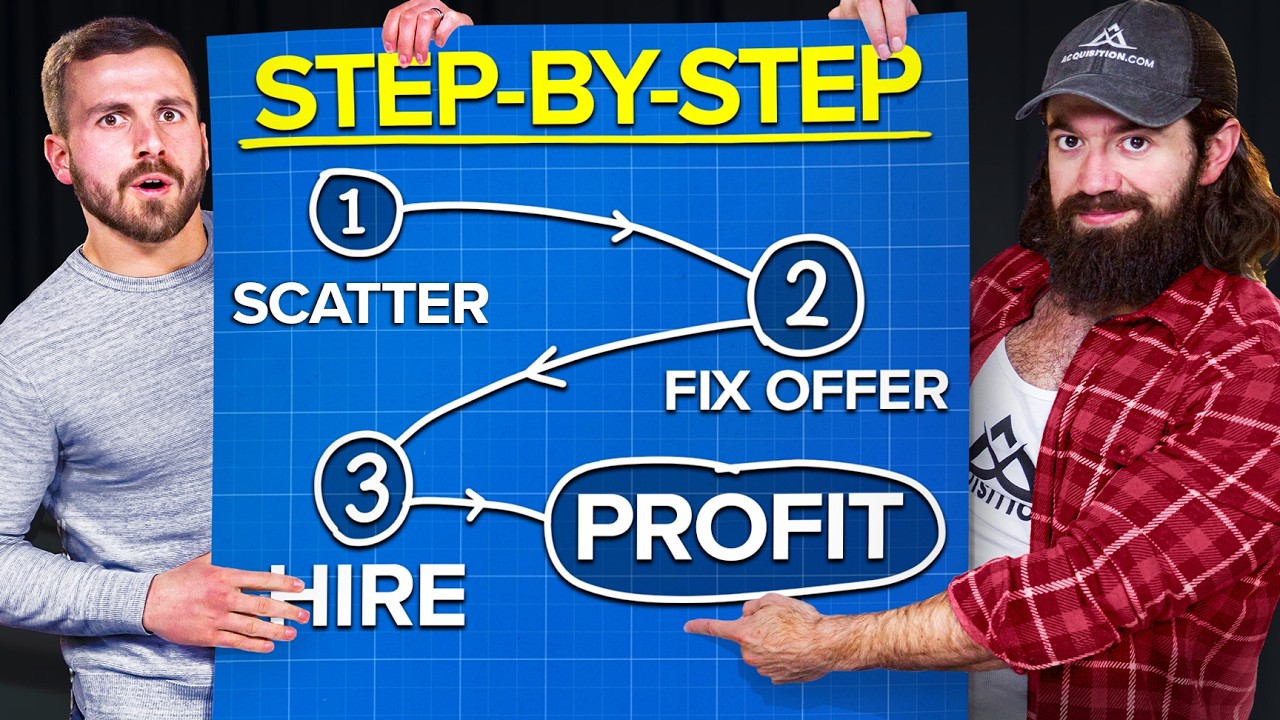
If you watched my recent coaching session with Philip — the former software engineer who quit Amazon to start a residential trash pickup business — you saw a brutal, honest reset that every founder needs to hear. Revenue looked good on paper, but cash flow was terrible: $642,000 in revenue and negative $151,000 net profit. That kind of gap kills families and businesses. In that conversation I walked Philip through a simple, repeatable playbook to make his company cash-positive immediately and build a scalable engine to grow to millions. In this article I’m going to lay out that playbook step-by-step and show how pairing those tactics with modern business automation tools like GFunnel (Lead Connector, Flows AI, AI contract management, website builders, and CRM) turns ideas into reliable cash machines.
My goal here is practical. If you run a small service business — landscapers, cleaners, junk removal, pest control, local delivery — these same principles apply. If you’re an entrepreneur or creator building online products, the offer, acquisition, and fulfillment logic is identical. Below you’ll find the diagnosis, the one-page strategy we executed in the session, the offer engineering and sales playbook, the team-hiring blueprint, and how to wire GFunnel’s tools into every step to automate and scale the business without sacrificing cash flow.
Table of Contents
- The Problem: High Revenue, Negative Profit — What’s Really Going On
- Decision One — Pick Your Avatar: HOA vs Scatter
- Decision Two — Pick One Channel: Door-to-Door as the Growth Engine
- Offer Engineering: How to Get $208+ Cash Upfront (and Why that Number Matters)
- Hiring Sales Teams: Commission-Only Door-to-Door + Scripted Training
- Automation & GFunnel: Wiring the Business for Scale
- Operational Execution: Route Efficiency, Fleet Utilization, and Growth Forecast
- Five-Step 90-Day Plan for Cash-Positive Growth
- Case Study Summary: Philip’s Transformation
- FAQs
- Conclusion & Next Steps
The Problem: High Revenue, Negative Profit — What’s Really Going On
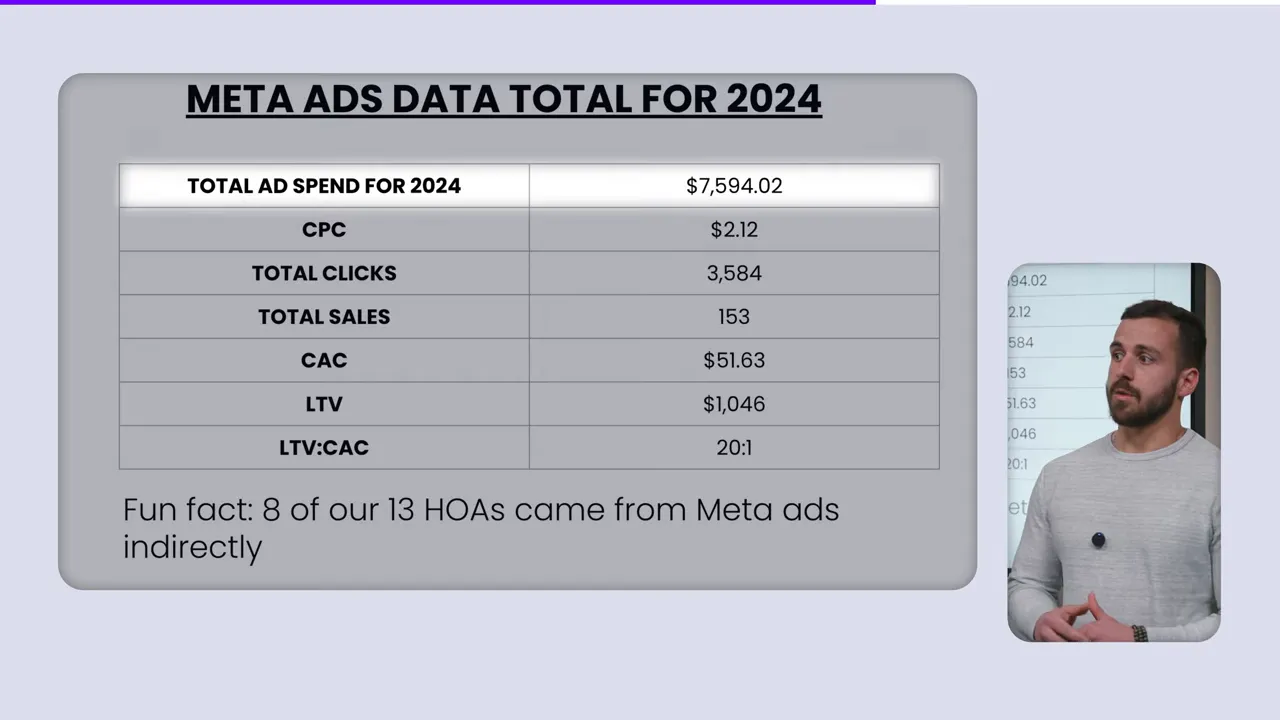
It’s common to equate high revenue with a healthy business. That’s a mistake. Philip was doing $642k in revenue and losing $151k net. The reason wasn’t poor market product-market fit — he had customers and great retention — it was cash: the timing of payments vs the timing of costs, poor unit economics on the initial transaction, assets underutilized, and an unfocused acquisition strategy.
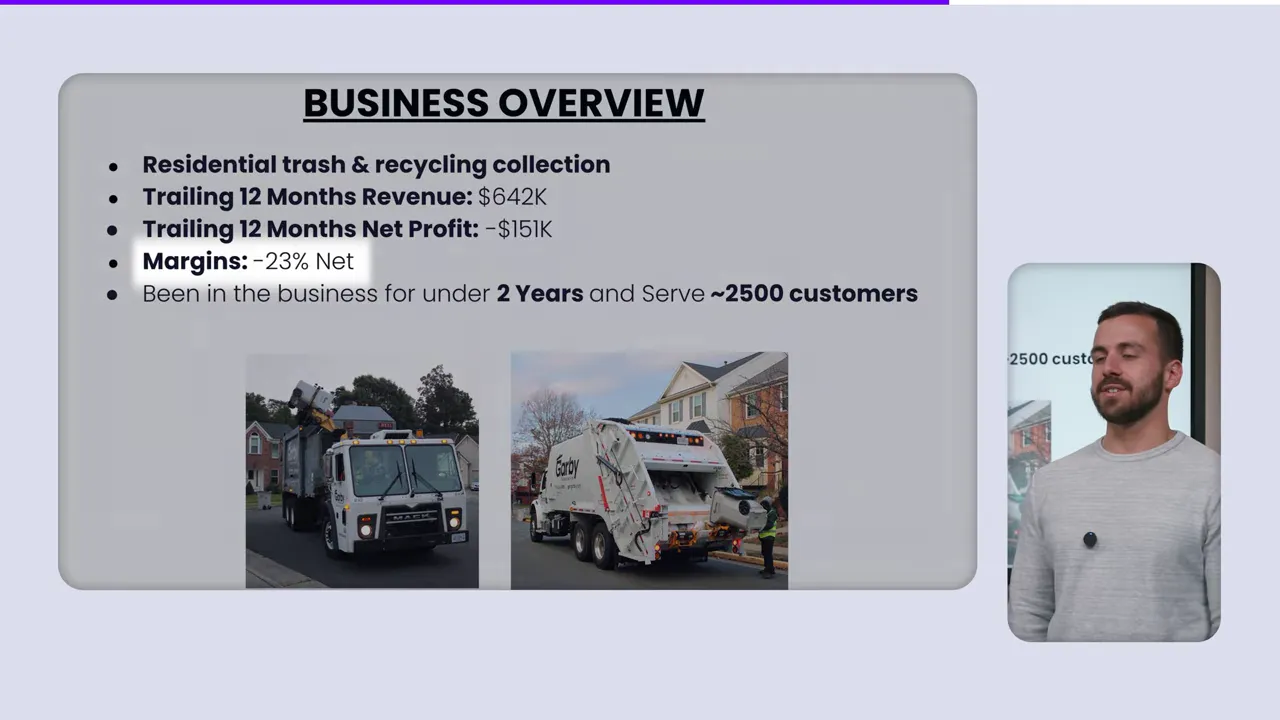
Let’s break down the three operating facts that matter for any service business:
- Unit economics on first transaction: What cash comes in at first sale vs what cash you need to deliver the service during the billing window? If you bill quarterly and deliver service for three months, you must have enough cash on day one to pay for the callbacks,hauling, dump fees and labor for the months before you collect the next payment.
- Channel efficiency and CAC (Customer Acquisition Cost): How many leads do you need to spend money on or deploy labor for to acquire one customer? Is CAC sustainable at scale?
- Asset utilization: Trucks, bins, employees — are they being used at a rate that covers their fixed costs?
In Philip’s case:
- He was billing quarterly but delivering weekly pickups, so the first-month cash outflows exceeded the upfront cash collected.
- He was fronting the cost of bins (roughly $116 per bin) and financing them, meaning a capital drain.
- He had mixed acquisition channels (door-to-door, Meta ads, outreach, HOA bidding) and lacked focus. That caused mediocre scale and distraction.
- His gross margins were skewed by a year of unusual truck repairs, but the underlying LTV/CAC on scatter customers looked attractive.
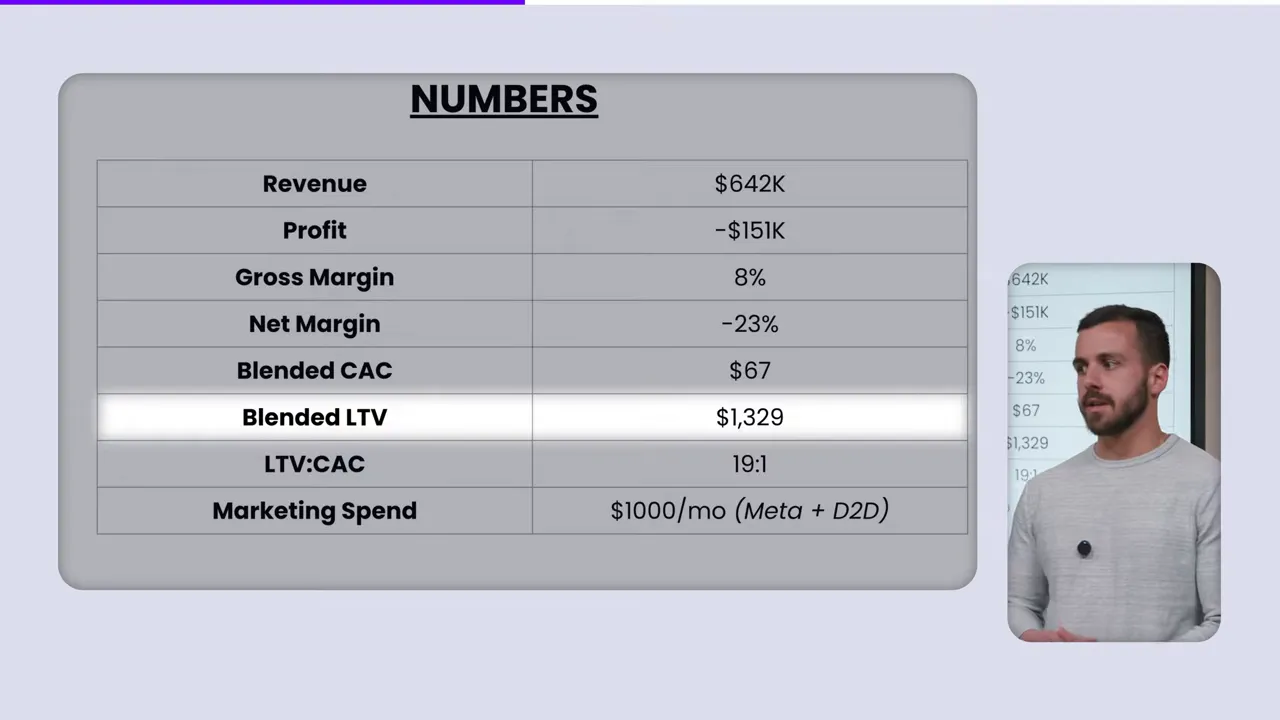
Point: If your first-transaction cash-in does not cover your cost-to-fulfill and acquisition, no matter how high your LTV is, you will run out of cash. Fixing that first-transaction cash flow is the fastest way to stop bleeding.
Decision One — Pick Your Avatar: HOA vs Scatter
Businesses scale when they narrow focus. Philip had two distinct customer avatars:
- HOA customers: Large, contract-driven accounts (3–5 year contracts) with predictable revenue but low competition on same customer; the sales cycles are long and low-touch once locked. CAC is high but LTV is very high.
- Scatter customers: Individual households that are contract-free, easier to convert door-to-door, and chargeable at higher gross margins per customer. Acquisition is local and repeatable.
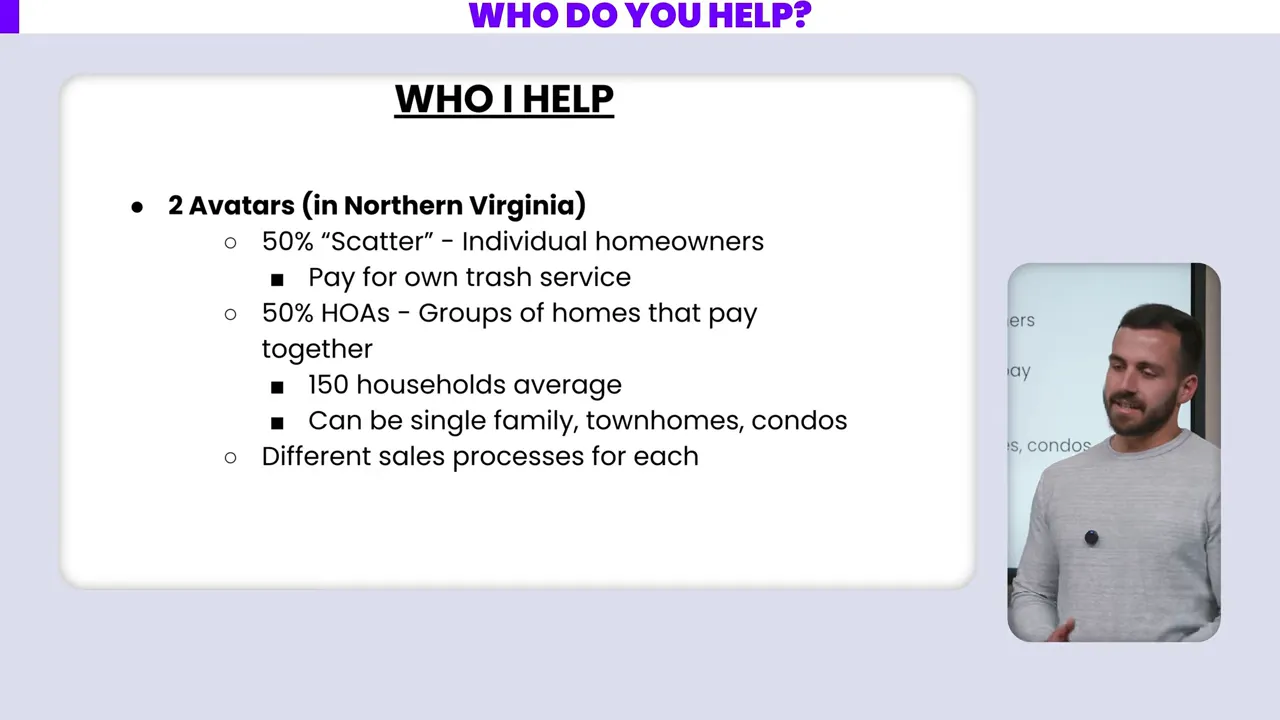
I argued to Philip — pick one. You can’t do both well as an early-stage operator. Each avatar requires different acquisition, pricing, and operations. I recommended focusing on scatter customers for two simple reasons:
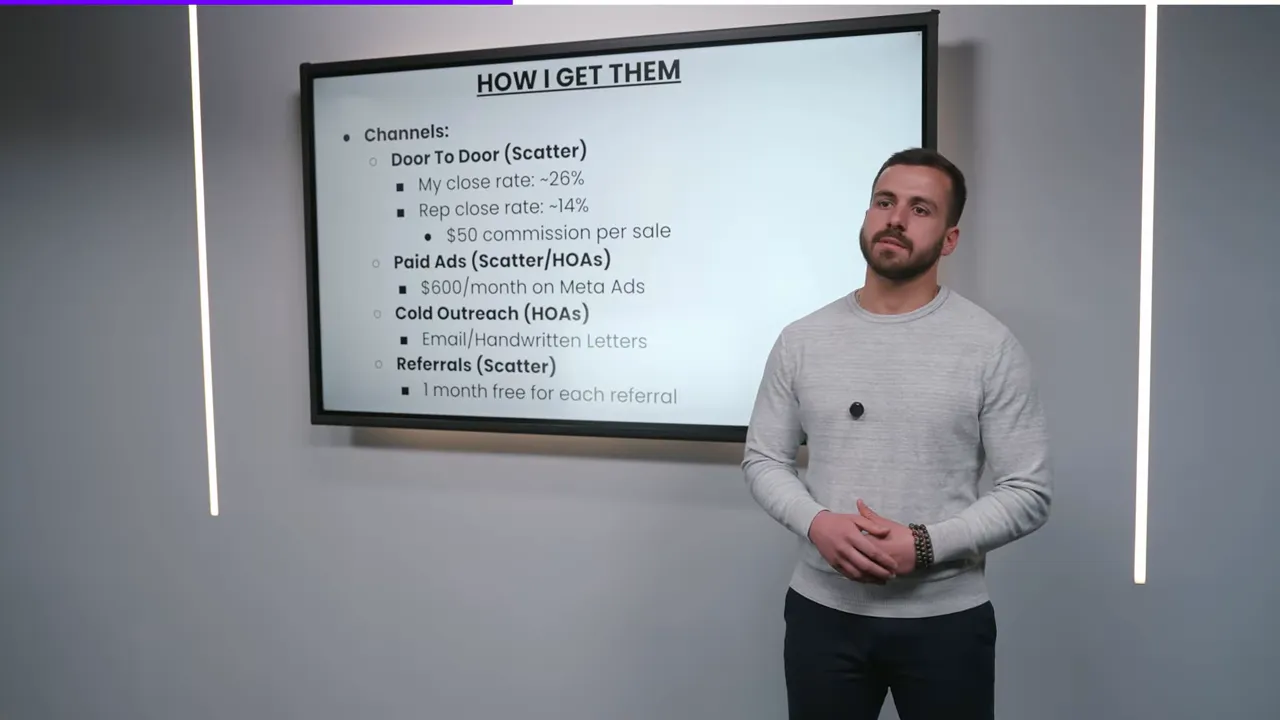
- Speed to cash — scatter converts quickly door-to-door. Philip’s door-to-door close rate was already 26% with a 30% door open rate; that’s one sale per ~12 knocks. Those are insane conversion numbers to scale quickly.
- Higher short-term margin and simplicity — scatter is typically once-weekly pickups, which increases throughput per truck and improves unit economics.
HOA is not a bad business long-term — it can be defensible — but it is commoditized and will turn into a lowest-bid auction unless you build an efficiency moat. In other words, HOA is a future play; scatter is the best lever today for cash and growth.
Why Focus Wins
When you pick one avatar, you pick one acquisition channel and one offer. You condense variables and create repeatable playbooks. That’s where efficiency and scale come from. If you try to be everything to everyone, you waste time, split attention, and your CAC multiplies.

Decision Two — Pick One Channel: Door-to-Door as the Growth Engine
Philip already had one thing working: door-to-door. He personally knocked 300 doors/week and was getting a 26% close rate, with a new hire closing 5–7 deals/day. We decided to double down on door-to-door and systematize it. Why?
- It’s replicable — hire commissioned sales reps, train them, and scale the number of doors covered.
- It’s capital-efficient — commission-only reps mean little cash risk for the owner; recruitment on classifieds and job boards is straightforward.
- It converts at high rates — the ROI of the door-to-door channel is immediate cash if you structure the offer correctly.
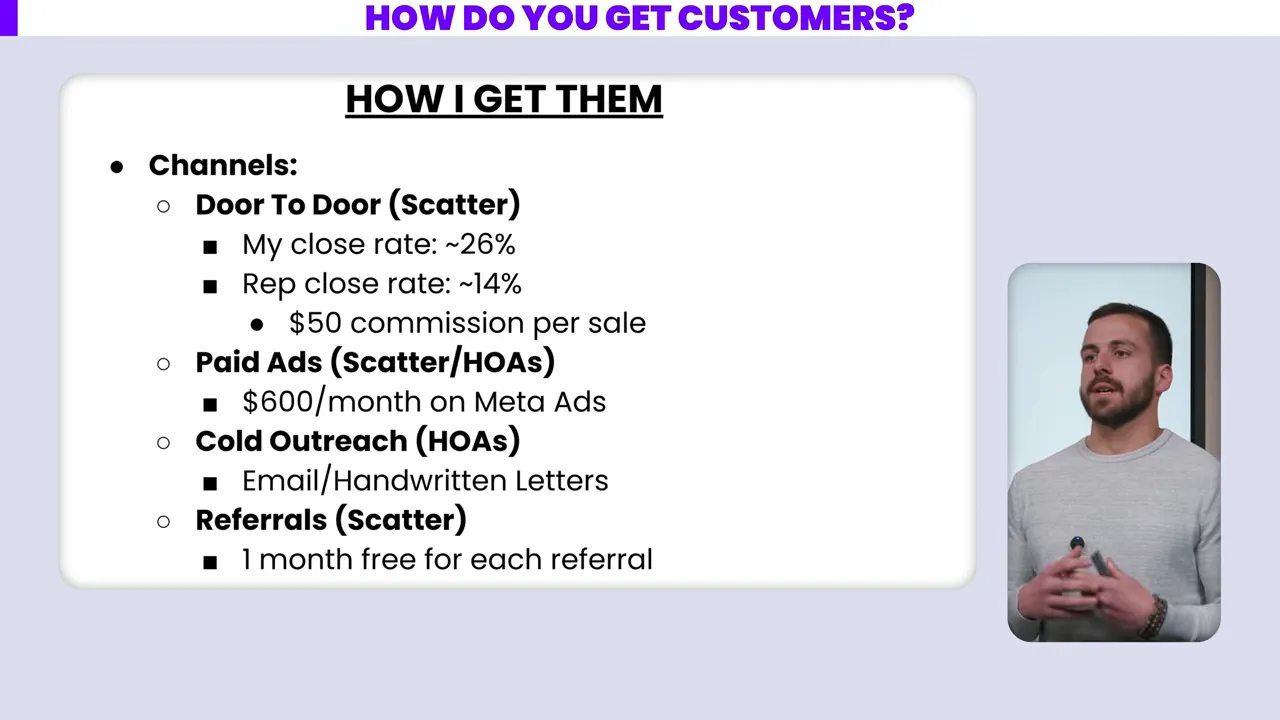
Door-to-door is not sexy, but it is brutally effective. With the right scripted offer and two-tier pricing (A/B offer), each sales rep becomes a predictable cash generator. This is where the GFunnel stack helps: Lead Connector to manage the leads, Flows AI to automate email/text follow-ups for those who sign a contract but haven’t completed payment, and AI-powered contract management to collect payment and legally bind the customer in minutes, not days.
Channel Metrics You Must Track
- Doors knocked per rep per day
- Door open rate
- Close rate per rep
- Cash collected at the door (% of closed deals that complete payment immediately)
- Blended cash per new customer (this is your primary KPI)
We aimed to increase the cash collected per sale to at least $208 — the break-even figure — so the business didn’t need extra capital to cover fulfillment in the months that follow.
Offer Engineering: How to Get $208+ Cash Upfront (and Why that Number Matters)
Everything in sales funnels back to the offer. The actual service (garbage pickup) is commoditized. Your differentiation must be in the structure of the transaction: price, timing, and terms.
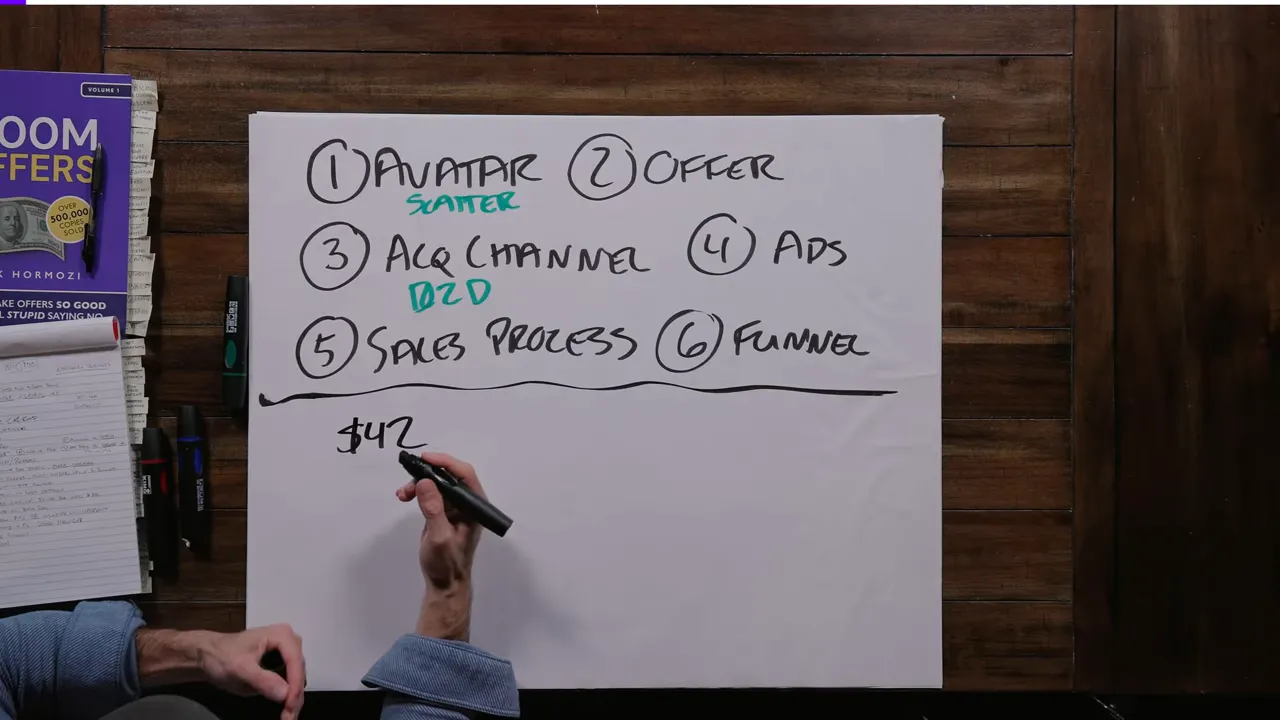
We ran the math in the session and found:
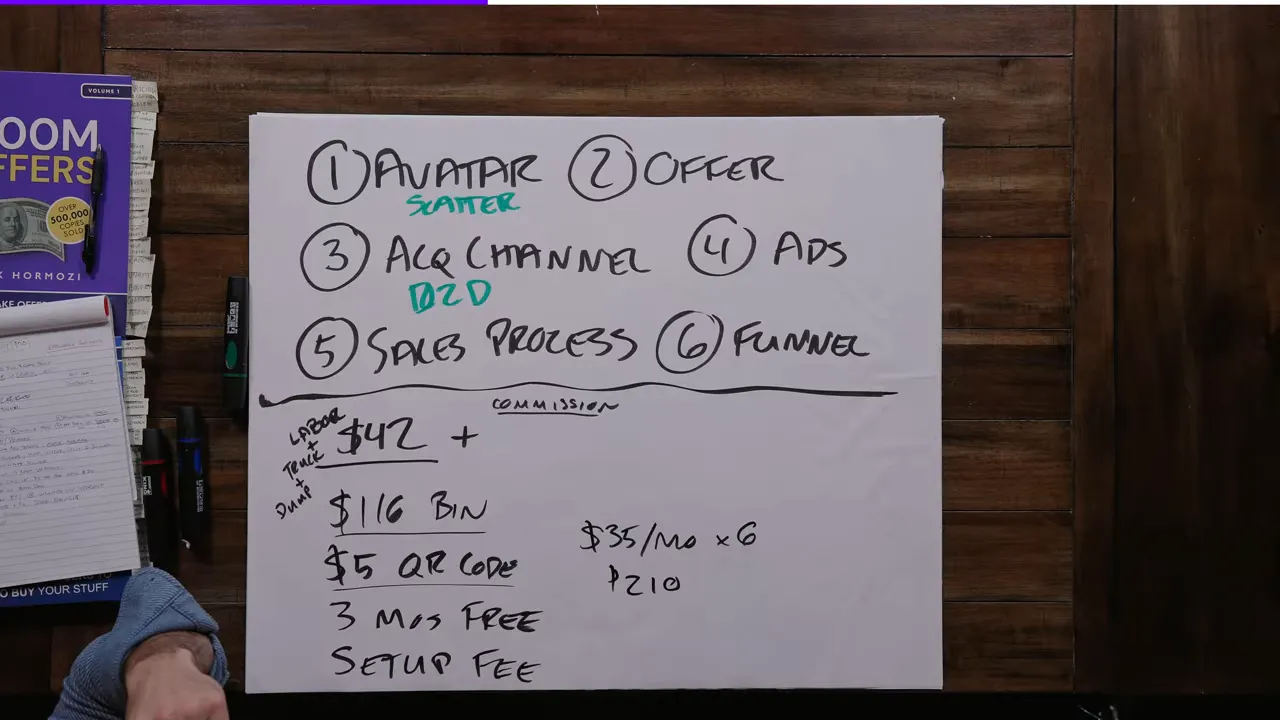
- Fulfillment cost in the first month per customer: $14/month x 3 months = $42 (because pickups occur weekly and the quarter billing means you pay out before you get subsequent payments).
- Target CAC (conservative): $67 (we used $50–70 in different calculations).
- Sales commission per sale: $50.
The sum of these is roughly $159 just to break even on the first collection window — add a buffer and sales friction, and you get to the target of $208. So the offer needed to collect at least $208 per door at the time of sale to be cash-positive and scalable without outside capital. Here’s how we did it.
Two-Option A/B Offer (Simple and Effective)
Keep the sales pitch simple. Two offers only:
- Offer A — Annual Prepay (Anchor): Pay $30/month billed upfront for 12 months = $360. We’ll waive the bin fee ($99 value). This is for the buyer who wants convenience and the best price. Collect $360 cash at the door.
- Offer B — Quarter + Bin: Core Offer: Pay a one-time bin purchase $99 + the first quarter $89 (your existing quarter price) = $188. We still give three months free (offered as an intro incentive) but this is the core AB pricing that appeals to those not ready to prepay for a year. Collect $188 cash at the door.
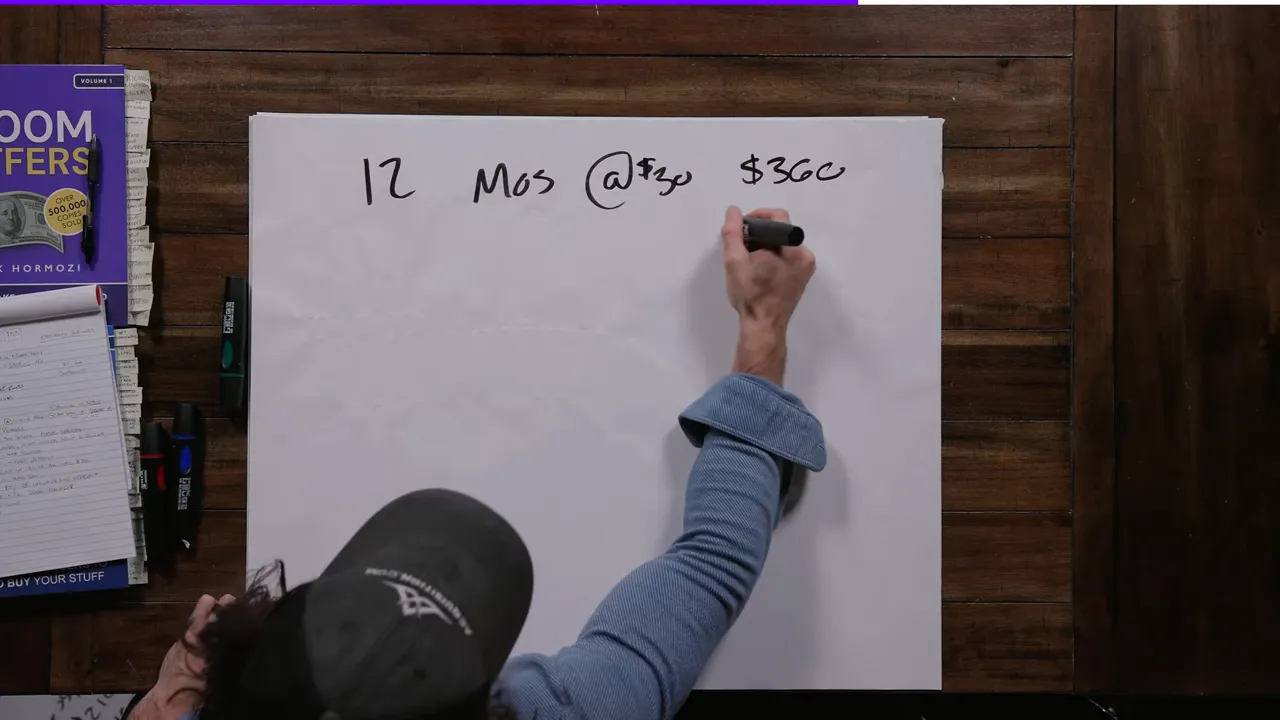
Why this works:
- The anchor offer (A) raises the average cash per new customer significantly. Even if only 20% take the yearly option, it bumps the blended cash per door well above $208.
- The core offer (B) closes the majority and removes the bin financing headache by making the bin an upfront purchase. You’re getting cash upfront for your bin, so you avoid capital outflow or financing cost.
- Both offers include a strong risk reducer: three months free during the second, third, and fourth invoice periods (this was already part of Philip’s messaging and it works to get people over the edge).
To be clear: the bin is yours, you can make it “owned” by the buyer. If the buyer cancels during the term, repossess the bin and reuse it — that’s collateral. If a customer insists on supplying their own bin, you can accept that, but charge a slightly higher rate or refuse to accept them as a target for the door-to-door funnel — it’s simpler to standardize the offering for sales reps and for operational quality control.
Example blended math (conservative):
- 80% choose Offer B (avg cash $189); 20% choose Offer A ($360). Blend = (0.8 x 189) + (0.2 x 360) = $213. That’s above the $208 break-even.
Result: You collect cash at the door that covers your first-quarter fulfillment, CAC, and commission — you can scale without external debt.
How GFunnel Makes This Offer Executable & Frictionless
- Lead Connector CRM: Log every door-to-door lead instantly. Capture name, address, phone, offer taken, rep who sold, and cash collected status. This lets you forecast cash and follow up automatically on any unsigned payments.
- Flows AI: After the contract is signed but if payment isn’t collected immediately, Flows AI kicks in with automated payment reminders, sequence messages, and fallback human alerts so you don’t lose customers who sign but forget to pay.
- AI Contract Management: Digital contracts at the door reduce friction: sign on a tablet, collect payment with Stripe (integrated via GFunnel), and store the contract. No manual invoicing or chasing. If collectors want to add a financing plan, AI can build a 3–year finance agreement on the spot.
- Website Builder & Landing Pages: If a homeowner wants to validate online rather than sign at the door, your rep sends a short link/QR that lands on a pre-populated checkout page (hosted on GFunnel) and processes ACH or card with saved templates to minimize friction.
Collecting $360 at the door or $189 at the door is easier if the rep can demonstrate legitimacy: branded bin, clean truck, and an immediate receipt. GFunnel’s CRM + pages + contract workflows make that legit in seconds.
Hiring Sales Teams: Commission-Only Door-to-Door + Scripted Training
Acquiring and scaling sales reps is the fastest multiplier. If one rep does 5 deals/day and you hire 10 reps, you’re doing 50 deals/day. Philip’s early hire was already doing 5–7 deals/day after three weeks — the potential is massive.
How to Recruit Commission-Only Reps Fast
- Use Craigslist/Indeed/Nextdoor and target ad copy to hungry people who want to control income. Write the ad to the rep, not to HR. Headline example: “Make $500–$1,500+/week — Commission Door-to-Door Sales (No Experience Required).” List simple bullets: “Memorize 4 questions. Make your own schedule. Paid weekly. Top performers $X.”
- Use group interviews — screen many at once. Ask candidates to pitch the product in two minutes. Filter for hustle and hunger, not stellar resumes. Invite the top to a shadow day.
- Offer rapid onboarding: shadow me for a week, then work in pairs for 2–3 weeks. Give on-the-spot offers and allow immediate start dates.
- Pay structure: $50 commission per sale to start. Consider a ramp for trainers/lead reps ($60+ per sale). If you want to attract high performers, offer higher daily guarantees (e.g., $300/day capped vs $50/sale) or bonus tiers for volume.
Training: Drill the opener — every rep must rehearse the first five seconds of the door opening until it's perfect. Use scripted role plays and real-time feedback. Each sale is 2–3 minutes; teach reps to move fast and run the route. Track doors knocked and convert rates using the CRM.

Script & Sales Flow (4 Questions)
Keep it simple — four questions + close + payment.
- Opener: “Hi, we’re switching trash service on this street — are you the homeowner?”
- Pain discovery: “Are you happy with your current pickup schedule and price?”
- Offer: “We’re offering a switching special that gives you three months free and a special upfront price today. Do you want the annual rate with a free bin, or would you rather pay for the bin now and do quarter-by-quarter?”
- Close: “Great — sign here, I’ll collect payment and we’ll have you on the schedule by [begin date].”
At the door the rep signs the contract (digital tablet or paper), collects payment if possible, issues a receipt, and schedules the first pickup. The CRM logs the sale automatically and triggers the introduction email/text to the new customer.
Automation & GFunnel: Wiring the Business for Scale
Once you have the offer and the sellers systematized, automation removes friction and human error. Here’s the GFunnel wiring diagram I recommended:
1. Lead Intake & Routing (Lead Connector)
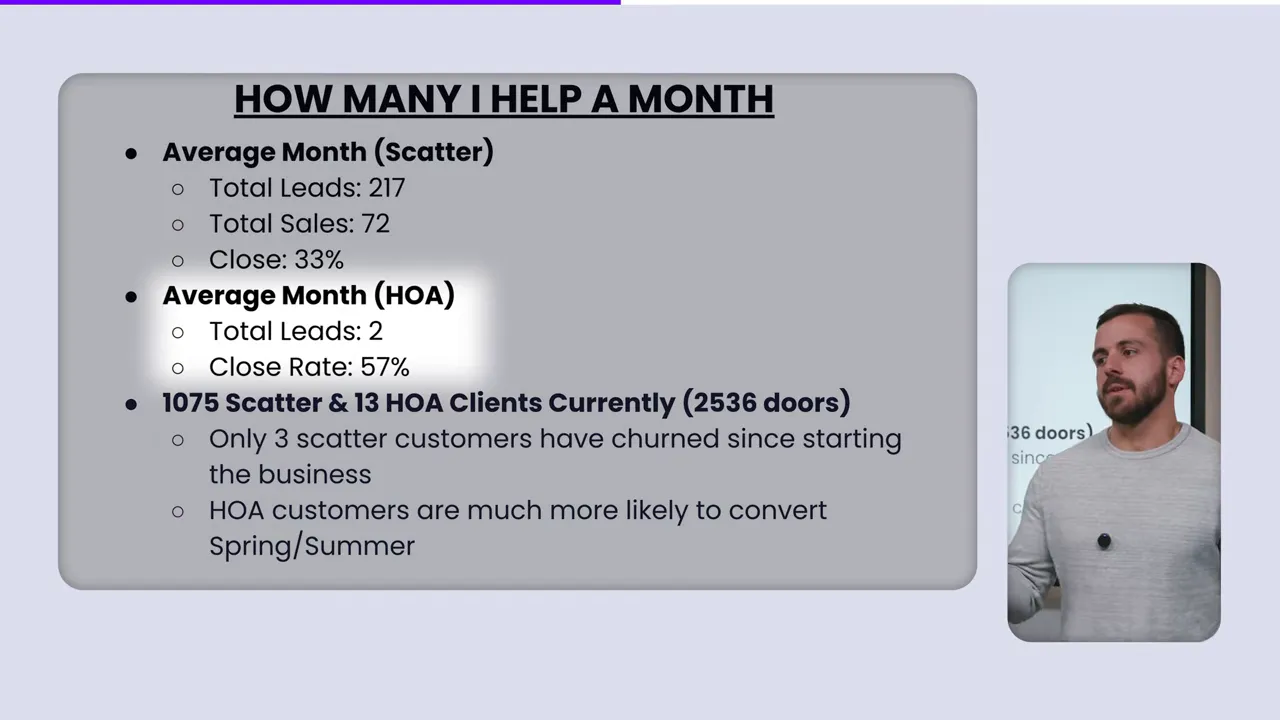
Every lead — whether the sales rep filled it in at the door or the homeowner signed from a QR — lands in Lead Connector. Capture all critical fields: address, bin preference, offer type, payment status, rep ID, and preferred pickup start date. Workflows in Lead Connector automatically:
- Assign the new customer to the next available route
- Trigger the contract generation and payment capture flow
- Notify operations to stage bins for delivery
2. Contract & Payment (AI Powered Contract Management)
Contracts matter. GFunnel’s AI contract manager can:
- Auto-generate a one-page service agreement at the door (or via QR) with dynamic fields (term length, bin purchase, payment schedule).
- Capture signature and payment via integrated Stripe/ACH. If payment fails, it triggers a follow-up drip to capture another card or ACH details.
- Store a signed contract in the customer record linked to payment receipts.
This means fewer contracts lost, fewer unpaid signups, and immediate legal documentation. It also frees you from manual data entry and late collection headaches.
3. Onboarding & Fulfillment (Flows AI)
After sale, Flows AI handles onboarding messaging: welcome text, schedule confirmation, expectations for the bin, troubleshooting flows if the customer isn’t satisfied. It automates these with human-handoff triggers when necessary. That reduces churn and service friction.
4. Ops & Route Optimization
With a steady inflow of customers, the next lever is route efficiency. Use GFunnel to batch new customers by geography and trigger routing suggestions. Integrate with route management tools (or export CSVs) to balance loads and maximize truck utilization.
5. Analytics & Scaling
Use real-time dashboards (Lead Connector) to monitor KPIs: cash per door, daily sales per rep, churn, customer LTV, gross margin per route, and truck utilization. Make decisions data-driven: raise prices where the market allows, add more sales reps where conversion is highest, and schedule truck acquisitions when utilization approaches thresholds.
Operational Execution: Route Efficiency, Fleet Utilization, and Growth Forecast
Fixing front-end economics without operational readiness is a mistake. Here’s what you must do to scale sustainably:
Fleet & Route Play
- Target utilization: aim for 80%+ by maximizing pickups per hour and clustering customers geographically.
- Pickup frequency: scatter customers are typically once-per-week, which increases pickups per hour vs twice-per-week HOA pickups.
- Stagger growth: use sales velocity to plan truck acquisition. If you can handle 3,500 customers with current trucks, you don’t need another truck until you sell past that point.
Inventory & Bin Management
- Bins are capital items; sell them upfront where possible. If you finance them, structure agreements so early cancellations allow repossession.
- Use a simple barcode system to track bins, ownership, and condition.
People & Pay
- Commission-only sellers lower fixed costs but require discipline in recruitment and management.
- Have a train-the-trainer system; the founder should be the initial trainer but transition to a lead rep as soon as possible.
- Consider bonuses for cross-sell, referrals, or hitting daily/weekly volume benchmarks.
Forecasting
Example growth forecast (conservative):
- 2 reps × 5 sales/day each = 10/day × 22 days = 220/month
- Add 3 more reps in month 2 = 5 reps total → 5 × 5/day × 22 = 550/month
- Average cash per door (blended) = $213 → 550 × 213 ≈ $117k of new cash collected in month
This is why simple things matter. You don’t need viral ads to make this work. You need a repeatable human process, a simple offer, and automation to track the flows.
Five-Step 90-Day Plan for Cash-Positive Growth
Here’s the 90-day execution plan you can steal and adapt.
- Fix the Offer (Days 1–7): Implement the two-offer A/B price structure (12-month at $30/mo prepay; 3-month core + bin purchase). Print simple scripts and one-pagers for sales reps.
- Recruit & Train (Days 3–21): Post ads on Craigslist/Indeed/Facebook Jobs. Hold group interviews and shadow days. Hire 2–4 commission-only reps and run intensive role-play and live door training. Use Lead Connector to log leads and sales.
- Automate Contracts & Payments (Days 7–14): Deploy GFunnel’s AI contract templates for sign-at-door. Integrate Stripe/ACH. Ensure every sales rep can issue a digital contract and receipt on a tablet/phone.
- Batch & Optimize Routes (Days 10–45): Use the CRM to batch signups by neighborhood. Adjust truck schedules to incorporate new pickups and measure utilization. Add a second truck if utilization exceeds thresholds.
- Scale Reps & Monitor KPIs (Days 30–90): Add more reps in markets with the highest conversion. Monitor blended cash per door (must remain > $208). Use dashboards to ensure CAC and LTV ratios remain favorable.

Case Study Summary: Philip’s Transformation
At the start: $642k revenue, negative $151k net, 2,500 customers, significant capital tied up in bins and uncollected cash windows. After implementing the plan:
- Offer change increases average cash collected per door to >$208.
- Door-to-door becomes the primary growth engine; commission-only reps convert the market with strong unit economics.
- GFunnel automates lead management, contract sign-ups, payment collection, and onboarding follow-ups, reducing collection friction and human error.
- Route optimization and staged truck acquisitions raise utilization and improve margins.
Result: rapid path to cash-positive operations and predictable growth. For Philip the outcome is clear: feed your family, stabilize the business, and then scale intentionally.
Deep Dive — How to Use GFunnel Features at Each Step
Lead Connector — Centralize Every Interaction
Use Lead Connector as the brain. Every rep, every call, every QR-signup becomes a record. Key benefits include:
- Assigning leads by geography to preserve route efficiency
- Tracking rep performance and commissions
- Generating real-time dashboards for cash-in-hand and forecasted cash
Where to start: create a simple intake form (name, address, offer type, payment status) and get that form on every rep’s phone. If they can’t get payment at the door, the intake triggers an automated flow and a human follow-up task.
Learn more and get started: https://www.gfunnel.com
Flows AI — Automate Follow-Up Sequences
Whether someone signs at the door but doesn’t pay, or signs online and uses an alternate payment method, Flows AI automates the follow-up sequence. It personalizes messaging, reduces churn risk from no-shows, and ensures timely payment collection without manual effort.
Use cases:
- Pre-scheduled messages that explain “What to expect” between signup and first pickup.
- Payment retries with optimized messaging and payment links.
- Welcome sequences that increase perceived value and lower early cancellations.
Start automating: https://www.gfunnel.com/automation-home
AI-Powered Contract Management — Sign, Collect, Store
Don’t let paperwork slow reps. Contracts generated and signed in seconds increase conversion and reduce disputes. When contracts are automated and tied to payment, you eliminate months of collection headaches and create enforceable agreements.
GFunnel advantage: AI can craft a short, consumer-facing service contract that includes clear terms, bin ownership, refund policy, and cancellation penalties, then capture signatures and payments via mobile.
Start here: https://www.gfunnel.com
Website Builder & Pages — Fast Pages that Close
Not every prospect signs at the door. Some want to validate. Build pre-populated landing pages and one-click payment pages for reps to send in real-time via QR codes. GFunnel’s page builder is drag-and-drop and integrates with the rest of the stack.
Benefits:
- One-click checkout with prefilled address and pricing
- Tracking UTM sources so you know which rep or flyer created the lead
- Minimal latency and mobile-optimized experience to avoid losing momentum
Try the builder: https://www.gfunnel.com/funnel-home
CRM & Analytics — Data First Decisions
Once you have a predictable flow of customers, the next focus is unit economics: LTV / CAC, churn, gross margins per route, and utilization. GFunnel’s CRM surfaces these metrics so you can set rules (e.g., when to buy a new truck, when to open a new territory).
Link with your operations team: export daily lists to route software or connect via API.
Mindset & Strategy — Hormozi’s Principles Applied
A few strategic principles I repeated during the session apply to any founder:
- One avatar, one channel, one offer: Simplify until it’s obvious. Complexity kills speed.
- Prioritize cash velocity over vanity metrics: Revenue without cash is a story; cash is reality.
- Shift risk to the offer: If you can make the initial transaction less risky for the buyer but more cash-positive for you (e.g., paid bins, prepay options), you win both sales and stability.
- Hire for hunger and train for skill: Commission-only roles attract people willing to hustle; you teach the script and the mechanics.

Frequently Asked Questions (FAQ)
What is Lead Connector and how does it help a local service business?
Lead Connector is GFunnel’s CRM that captures leads, routes them to reps, and tracks performance. For a local service business, it centralizes operations: intake, contract generation, payment collection, and route assignment. This reduces leakage and speeds up onboarding.
How does Flows AI save time and reduce churn?
Flows AI automates sequences like payment reminders, onboarding texts, welcome messages, and survey sequences. It reduces manual touchpoints and ensures consistent messaging that reduces violations, missed payments, and early churn.
Can GFunnel handle in-person sales reps collecting payment at the door?
Yes. GFunnel supports mobile contract signing and payment via integrated payment processors (Stripe/ACH). If collecting at the door is not feasible, the system triggers instant digital checkout links and automated follow-ups to capture payment quickly.
Is GFunnel free to start?
You can explore GFunnel and create a free account to test features. Visit https://www.gfunnel.com to create an account and see which plan best fits your growth stage.
How do I know whether to focus on HOA or scatter customers?
Choose scatter if you need fast cash and high conversion-speed per transaction — especially if you have an effective door-to-door channel. Choose HOA if you prefer fewer high-LTV accounts and have operational efficiency to deliver on contract terms. Many find scaling faster with scatter early, then adding HOA focus as operations matures.
How quickly can I train sales reps to close trash pickup deals?
With a simple script and live role-play, reps can close within a few days. Expect ramp time of 2–3 weeks for consistent performance; some reps convert at high rates immediately if they have hustle and are well-trained on the opener.
Conclusion & Next Steps
The fastest path from red to black is simple: fix the offer, double down on the channel that converts fastest, get cash at the front-end of the transaction, and automate the rest. For Philip that path was door-to-door + a two-offer structure + commission-only sales team + automation. For many founders the path is identical regardless of niche — the details differ but the structure is the same.
GFunnel’s all-in-one stack (Lead Connector, Flows AI, AI-powered contract manager, website builders, and CRM) is the toolset that makes this playbook operationally clean and scalable. If you want to stop trading time for money and build a system that produces consistent cash and predictable growth, start by making one decision: pick the avatar you will dominate, pick the channel you will own, and create a single, irresistible offer that solves a clear pain for your customer.
Get started with GFunnel: https://www.gfunnel.com — set up Lead Connector, create your A/B door-to-door page, and automate contract flows. Then go knock on 12 doors. You’ll get a sale.

Remember: revenue is vanity, profit is sanity, and cash is king. Focus on the few things that move the needle — offers, channels, automation — and the rest will follow.
— Alex
Need Help Implementing This? |
|
Schedule A Discovery Call With One Of Our Professionals |
| Access Now |


