
Entrepreneurs, ready to transform your business with smarter systems? In this article I’ll walk you through how to use marketing funnels to streamline sales, automate follow-up, and scale customer acquisition — with an emphasis on practical tools and workflows powered by GFunnel. Inspired by an announcement about a new builder element and the philosophy behind simplifying marketer workflows, this piece shows how GFunnel is more than a funnel builder: it’s a full business platform that combines marketing funnels, automation, business networking, real-time analytics, and e-commerce tools in one place.
Marketing funnels are the foundational architecture that guide prospects from awareness to action. But building them well takes more than a landing page and a follow-up email — it requires integrated tools, fast performance, and a platform where you can both design and manage the customer journey without switching between half a dozen apps. GFunnel connects those dots: a business platform that powers marketing funnels, CRM, community networking, payment flows, and automation — all optimized for speed and real-time insight.
Outline
- Introduction: Why marketing funnels and an all-in-one business platform matter
- Video insights: Key themes from the announcement and what they mean for your business
- GFunnel’s ecosystem solutions: How features map to those themes — autosave, automation, networking, analytics, e-commerce
- Real-world applications: Two case studies showing GFunnel in action
- Why GFunnel leads: Comparison with traditional methods and competitors
- Conclusion and clear CTAs
- FAQs
Introduction: Marketing funnels, Lead Connector With GFunnel, and why an all-in-one business platform matters
Small business owners, e-commerce entrepreneurs, and digital marketers face a familiar challenge: lots of tools, fragmented data, and wasted time reconciling disparate systems. If you want to build marketing funnels that convert — and run your business efficiently — you need an ecosystem where design, automation, analytics, and community live together. That’s where GFunnel’s all-in-one platform comes in. From a drag-and-drop funnel builder to CRM and networking communities, GFunnel positions itself as the central hub for growth.
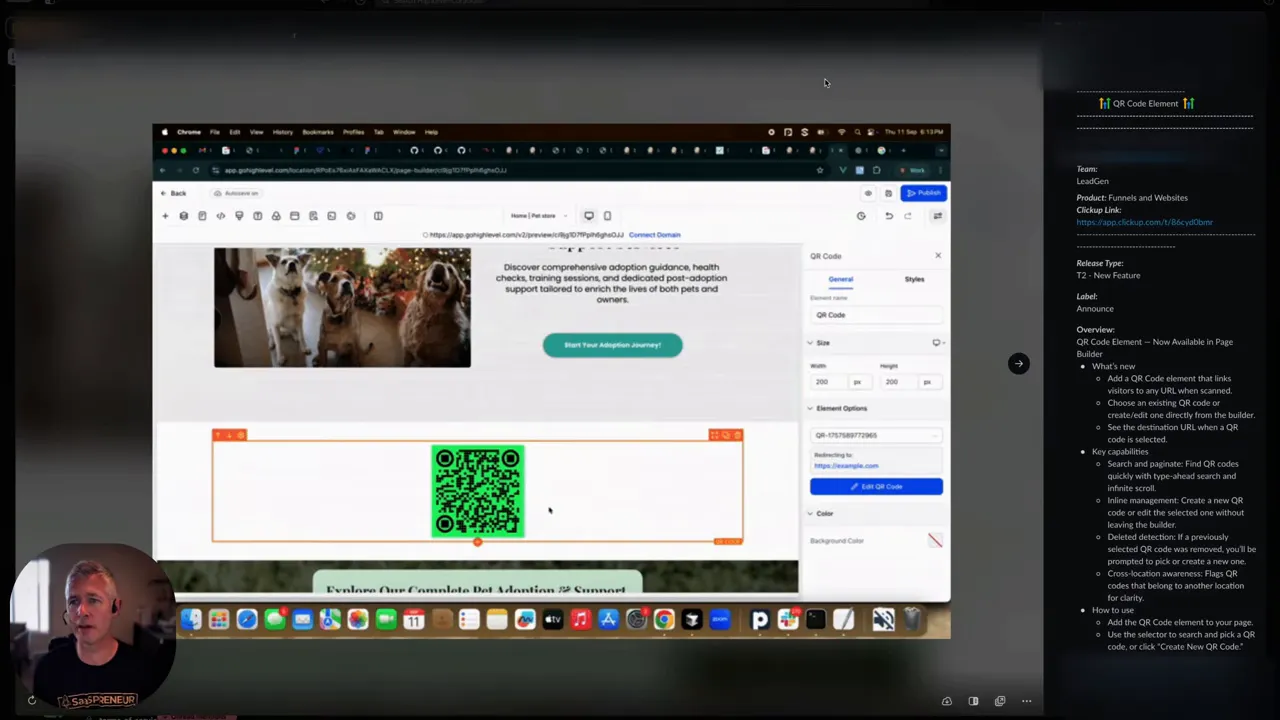
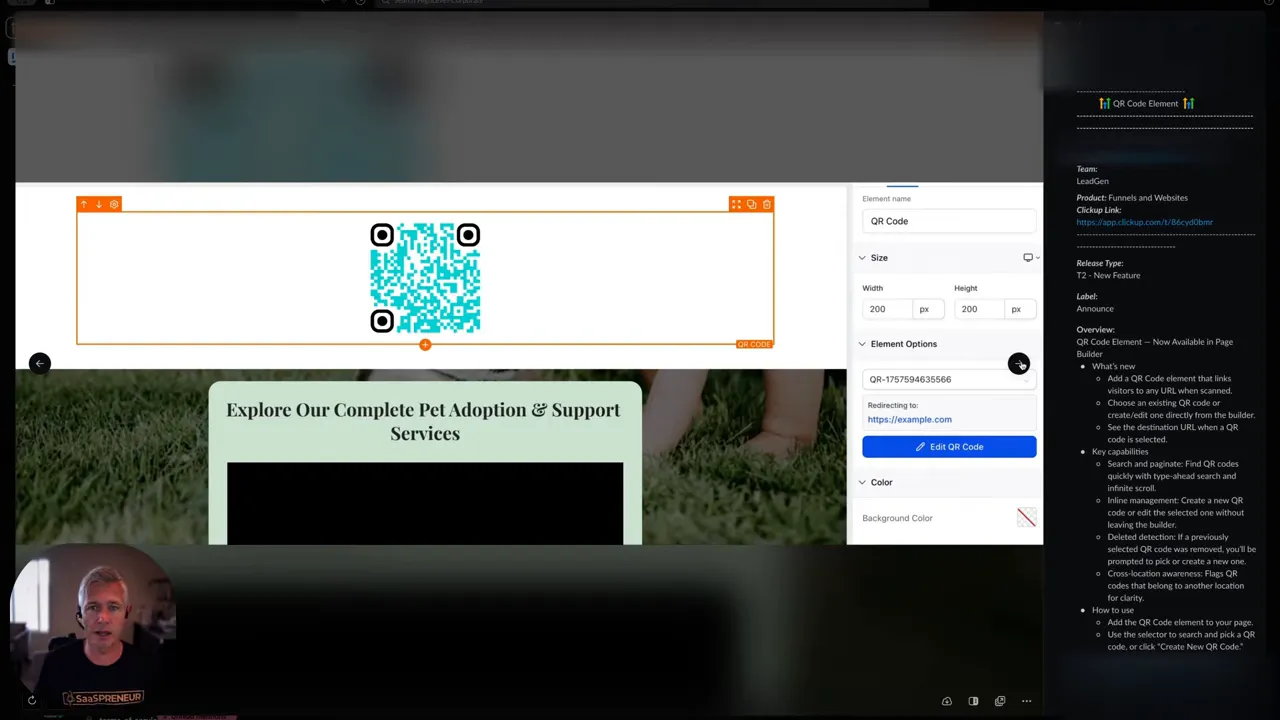
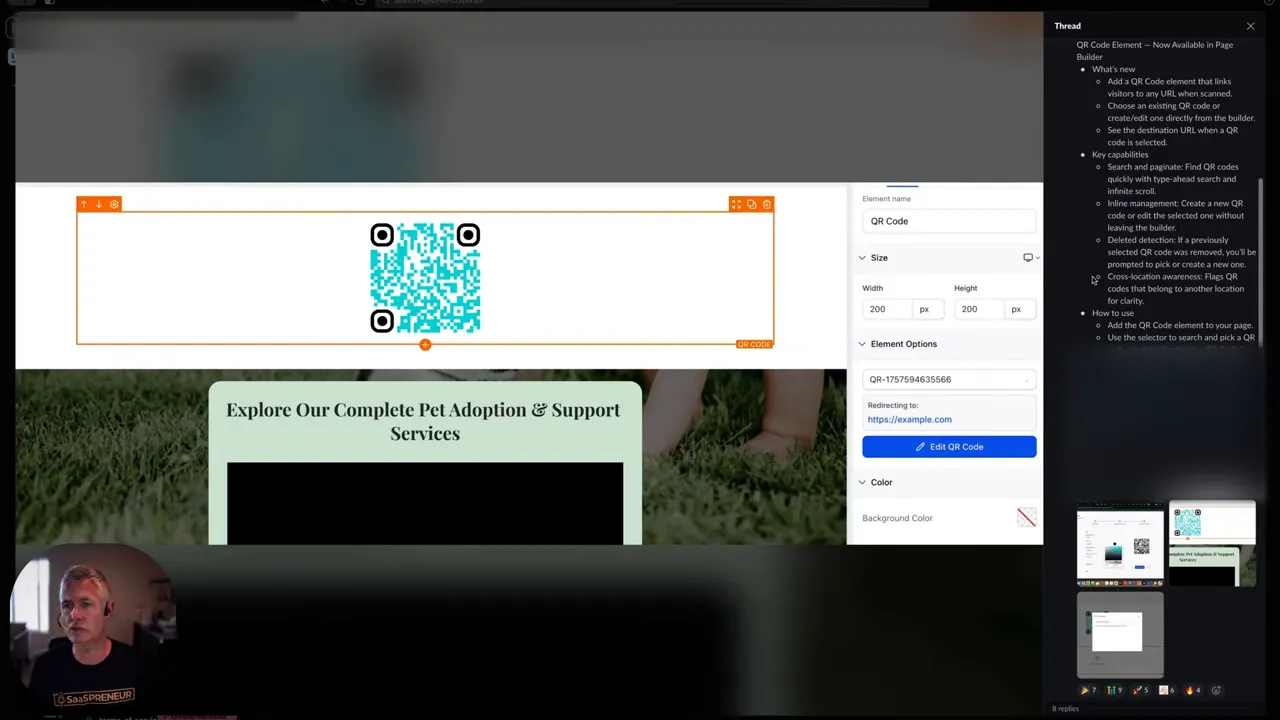
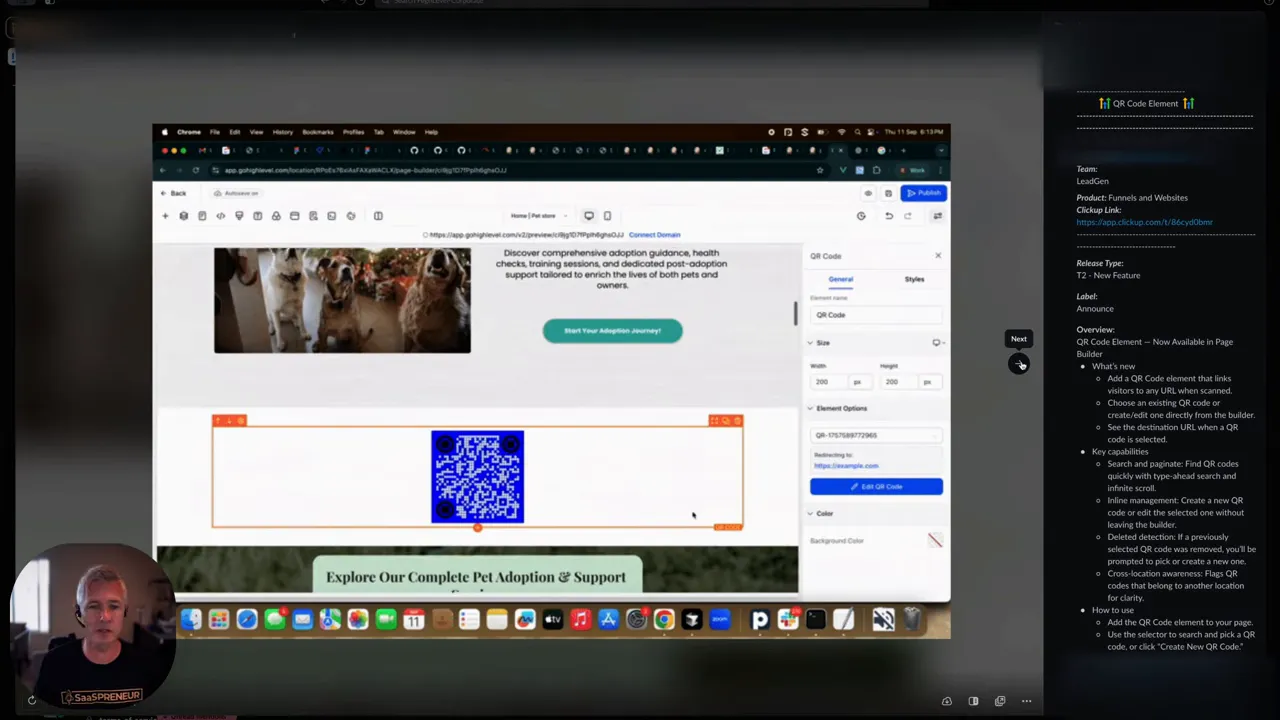
In the short update that inspired this article, the team announced a small but powerful change: a QR code element in the builder. That may sound minor, but it exemplifies GFunnel’s philosophy — bring essential tools into the builder so you don’t have to leave your workflow. When actions are built into your interface, you save time, reduce friction, and increase focus on optimization — not tool-hopping.
Marketing funnels are about moving people forward: awareness to interest, interest to action, action to repeat purchase. But to make that journey reliable, you need the right environment. GFunnel’s combination of marketing funnels, automation features, and business networking means you can build, automate, and scale without losing momentum. This article unpacks the strategic lessons behind that update and gives a roadmap for applying them to your business.
Video Insights: Strategies for Business Success
Entrepreneurs, use these strategic takeaways to improve conversions and reduce friction. From a single short announcement — “we added a builder element” — several recurring themes reveal how modern businesses win: automation, integration and convenience, speed of workflow, mobile-first tools like QR codes, and community-driven support. Below, I break these themes into actionable ideas you can use today.
Theme 1 — Automation and Time Savings
Automation is the single biggest lever for scaling up without proportionally increasing costs. When you automate repeatable tasks — from lead capture to follow-up and payment processing — you free up time to focus on growth activities: creating offers, partnerships, and optimization tests.
Sean: "It will make your life a lot lot easier and basically you can just drag and drop your QR codes in there and create them all at the same time."
That line captures the automation mindset: bring repetitive actions into the tool so they can be repeated reliably. Automation can vary from simple email sequences to multi-step campaign flows with segment-specific messaging. The goal is clear: reduce manual overhead and increase consistency in how leads move through marketing funnels.
Stat: Automation can reduce manual work by up to 50% when combined with a unified CRM and prebuilt workflows.
CTA: Marketers, boost your conversions by automating the follow-up steps inside your marketing funnels with GFunnel’s automation features.
Theme 2 — Integration, Convenience, and In-Builder Tools
One of the biggest productivity killers is tool switching. When you must export, import, copy, or jump between systems to complete a single task, your flow breaks down. The announcement about the QR code element stresses this: previously users had to leave the builder to create QR codes and then reinsert them. Now the element is in the builder, so that work is seamless.
Sean: "Before you had to actually leave the builder in order to use it and then come back... but guess what now it is in the builder."
That small UX improvement translates to less cognitive load, fewer errors, and faster iterations on marketing funnels. Integration is not just about connecting APIs — it’s about designing an experience where the features you need are available exactly where you need them.
CTA: Small business owners, streamline your funnel creation by using integrated elements (like QR codes) directly inside the builder so you can build and test faster.
Theme 3 — Mobile Optimization and QR-First Experiences
QR codes are a compelling example of mobile-first engagement. They bridge physical and digital experiences — menus at restaurants, in-store promotions, event signups, and more. Embedding QR code creation into the funnel builder means you can design cross-channel experiences that drive offline audiences into your marketing funnels.
Imagine a restaurant using a QR code on a table tent to send users to a short ordering funnel, capture an email, and then run a post-meal upsell automation. That is now much easier when the QR element is created inside the funnel builder.
CTA: E-commerce entrepreneurs, use QR-driven touchpoints to capture mobile traffic and feed prospects into your marketing funnels.
Theme 4 — Speed, Autosave, and Real-Time Workflows
Another hidden productivity element is platform speed. Waiting for autosave, slow UI responses, or lag between actions costs you minutes every day. GFunnel optimizes this with a web worker-based autosave system, delivering a fast autosave (103ms) that is up to 28x faster. Faster workflows mean more iterations, faster tests, and ultimately better marketing funnels.
Stat: Autosave improved to 103ms from ~2.861s — an increase of approximately 28x in responsiveness.
CTA: Developers and marketers, prioritize platforms with fast autosave to reduce lost work and speed up funnel testing cycles.
Theme 5 — Community and Ongoing Feature Expansion
The announcement hinted at ongoing feature expansion (for example, the QR element appearing in different builders like funnels and websites and soon email). That’s not just about shipping features — it’s about listening to community needs and iteratively improving the product. A platform that evolves based on user feedback is more likely to fit the real-world needs of small businesses and marketers running marketing funnels.
Stat: Niche communities accelerate product fit by surfacing high-impact feature requests and workflows.
CTA: Join GFunnel’s communities to influence product development and learn funnel strategies from peers: https://www.gfunnel.com/communities
GFunnel’s Ecosystem Solutions: Mapping Features to Business Themes
GFunnel is designed to be an integrated business platform that supports marketing funnels, CRM, analytics, automation, and community networking. Below I map each of the key themes from the video insights to GFunnel’s concrete features and show how they work in practice.
GFunnel’s Automation for Time Savings
Automation in GFunnel covers email sequences, SMS, task automation, pipeline triggers, and e-commerce post-purchase flows. By using automation templates inside marketing funnels, you can reduce manual follow-up by up to 50% — freeing your team to focus on higher-value work.
- Set-and-forget automation: Trigger flows when a lead submits a form, scans a QR code, or completes a purchase.
- Behavioral triggers: Personalize follow-up based on clicks, page visits, or purchase history.
- Multi-channel actions: Combine emails, SMS, and backend tasks to create cohesive marketing funnels.
Stat: Businesses often see a 20% conversion boost when they pair automation with targeted follow-up sequences.
CTA: Explore GFunnel’s automation features: https://www.gfunnel.com/automation-home
GFunnel’s Integration and In-Builder Elements for Seamless Workflows
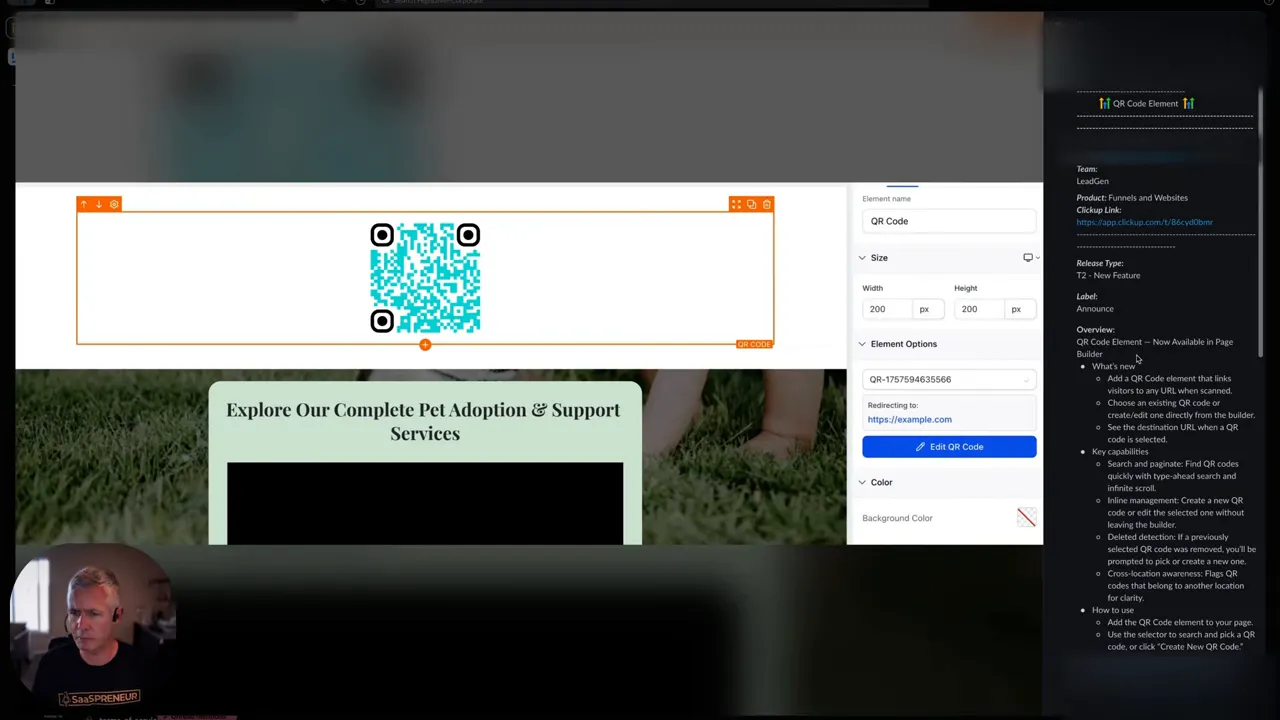
When features live inside the builder, you save time and reduce friction. GFunnel’s builder is designed to include elements like QR codes, forms, and payment blocks so you don’t have to leave your design canvas. This reduces context switching and speeds iteration on marketing funnels.
- Drag-and-drop elements: Build landing pages and funnels without code.
- Embedded QR creation: Create and attach QR codes directly to pages and funnel steps.
- Native payment processing: Capture payments inside the funnel to reduce drop-off.
Stat: Building and testing funnels inside one tool can cut time-to-live by 40% compared to using multiple disconnected tools.
CTA: Start building integrated funnels: https://www.gfunnel.com/funnel-home
GFunnel’s Real-Time Analytics for Data-Driven Optimization
To improve marketing funnels, you need to know where prospects drop off and where conversions happen. GFunnel offers real-time analytics dashboards that track engagement and sales across funnels, pages, and communities — enabling faster, data-informed decisions.
- Funnel-level metrics: Track conversion rates at each stage of the funnel.
- Real-time dashboards: Understand immediate campaign performance and campaign ROI.
- A/B testing insights: Run tests on pages and sequences to identify winning variants.
Stat: Real-time insights help marketers reduce funnel drop-offs by identifying bottlenecks quickly — often improving conversions by 10–25% within a few cycles of testing.
CTA: Monitor performance in real time: https://www.gfunnel.com
GFunnel’s Networking and Community for Business Growth
Business networking isn't a nice-to-have. For many entrepreneurs, the right community unlocks growth via referrals, partnerships, and mentorship. GFunnel’s built-in communities let you connect with other entrepreneurs, e-commerce pros, and niche experts to scale your marketing funnels with shared knowledge and resources.
- Niche communities (e.g., E-commerce Pros, SaaS Founders)
- Event calendars and group discussions to test ideas and get feedback
- Peer-driven templates and workflows to replicate success
Stat: Businesses that actively use communities to share funnel strategies report faster improvements and fewer costly mistakes — community members often adopt best practices 30% faster.
CTA: Join a community: https://www.gfunnel.com/communities
GFunnel’s Fast Autosave and UX for Rapid Iteration
One of GFunnel's standout technical advantages is the web worker-based autosave, shaving autosave latency to approximately 103ms — roughly 28x faster than slower autosave experiences (e.g., from 2.861s). This matters because faster autosave reduces the fear of losing work and encourages more frequent testing and editing of your marketing funnels.
- Less data loss and fewer interruptions
- Faster multi-step edits and collaborative workflows
- Encourages rapid A/B testing of funnel pages and sequences
Stat: Faster autosave correlates with an increase in iterative testing, shortening optimization cycles and typically improving funnel performance by measurable margins.
CTA: Experience the speed: https://www.gfunnel.com/funnel-home
Real-World Applications: Two Case Studies
Small business owners and e-commerce entrepreneurs need concrete examples showing how an integrated business platform translates into measurable results. Below are two case studies that demonstrate how marketing funnels built inside GFunnel drive revenue, save time, and deepen customer relationships.
Case Study 1 — E-commerce Store: Increased Conversion via QR-Enabled Product Launch
Background: A mid-sized online retailer specializing in niche home goods wanted a campaign to launch a limited-time collection promoted via pop-ups and influencer events. They needed a single system to capture email leads at events, convert online visitors, and run automated retargeting.
Approach:
- Created a funnel with a landing page, product gallery, and checkout flow inside GFunnel.
- Generated QR codes directly in the builder to include on printed flyers and influencer merch.
- Set up email and SMS automation to trigger after a QR scan or landing page visit, including abandoned cart reminders and post-purchase upsells.
- Used GFunnel’s real-time analytics to monitor QR scan conversions, landing page performance, and checkout drop-offs.
Results:
- QR-enabled in-person traffic converted at 18% on the first touch, feeding directly into the marketing funnels.
- Automation reduced manual follow-up by 50%, saving the team 15 hours per week.
- Real-time analytics identified a mobile checkout friction point; a quick UX tweak boosted conversions by 12% inside a week.
“GFunnel’s automation saved us hours weekly and turned event interest into measurable online sales.”
CTA: Build your product launch funnel and connect QR touchpoints: https://www.gfunnel.com/funnel-home
Case Study 2 — Local Restaurant: Streamlined Ordering and Customer Retention
Background: A local restaurant wanted to modernize ordering and capture repeat diner data. They needed an ordering funnel, a way to capture customer contact info, and post-order automation to encourage repeat visits and loyalty.
Approach:
- Built a simple ordering funnel with menu, selections, and payment integration in GFunnel.
- Placed QR codes on tables and receipts that linked directly to the ordering funnel.
- Used automation to send post-order offers and collect feedback.
- Monitored campaigns with real-time analytics to optimize top-performing offers and menu items.
Results:
- Table-to-online ordering increased average order size by 22%.
- Customer retention improved as automated post-order offers drove repeat visits at a rate of 14% within 30 days.
- Operational overhead decreased as staff no longer needed to manually manage follow-up campaigns.
“We doubled our repeat orders after automating follow-up and adding table QR codes — GFunnel made it simple.”
CTA: Scale restaurants with GFunnel’s restaurant ecosystem and QR-driven funnels: https://www.gfunnel.com
Why GFunnel Leads: A Practical Comparison
Small business owners evaluating platforms often weigh specialized tools against all-in-one solutions. GFunnel’s strength is being an integrated business platform that bundles tools you’d otherwise stitch together. Below is a practical comparison of traditional approaches versus GFunnel’s ecosystem across themes from the announcement and business needs — presented as a dynamic comparison list.
Traditional Business Tools vs. GFunnel’s Ecosystem
- Autosave Speed
- Traditional Methods: Slow (seconds), leading to lost edits and reduced iteration.
- GFunnel: Fast autosave (103ms), 28x faster — less interruption and quicker testing cycles.
- Automation
- Traditional Methods: Manual processes, many one-off scripts and integrations.
- GFunnel: Built-in automation; reduces manual work by up to 50% with prebuilt workflows.
- Networking
- Traditional Methods: Limited to local groups and separate platforms for collaboration.
- GFunnel: Niche communities and events integrated into the platform for ongoing support and collaboration.
- Analytics
- Traditional Methods: Third-party analytics dashboards with delayed insights and disconnected data.
- GFunnel: Real-time dashboards tied to funnel performance for immediate optimization.
- Tailored Solutions
- Traditional Methods: Generic tools requiring more setup and manual integration.
- GFunnel: Tailored solutions for e-commerce and restaurants, plus APIs for custom workflows.
CTA: Compare features and choose the right plan: https://www.gfunnel.com
Pricing, Affordability, and the Value Proposition
One of GFunnel’s selling points is affordability and the ability to start small and scale up. Plans range from a free tier for basic features to premium tiers that include CRM, API access, and advanced community features. The value comes not just in what you pay monthly but in how much time and manual effort the platform saves you — from automation to real-time analytics and simplified funnel creation.
Long-term, consolidating tools into a single ecosystem reduces subscription costs, integration headaches, and the technical debt that slows growth. GFunnel’s approach aims to be that consolidation point for entrepreneurs who want to scale marketing funnels and business operations simultaneously.
CTA: Explore affordable plans and start a free trial: https://www.gfunnel.com/create-account
Interactive Elements and Community Calls
Engagement is essential when you’re scaling. GFunnel encourages interactivity not just through features but through community-based learning and tools.
- Community groups for niche verticals: https://www.gfunnel.com/communities
- Events and webinars to learn marketing funnels best practices: https://www.gfunnel.com/events-home
- Built-in discussions and courses to sharpen skills: https://www.gfunnel.com/courses
Interactive suggestion: Take GFunnel’s “Test Your Business Growth Potential” quiz to identify the highest-impact funnel improvements for your business and get a recommended action plan.
Related Content
- GFunnel homepage (overview): https://www.gfunnel.com
- GFunnel funnel builder and features: https://www.gfunnel.com/funnel-home
- GFunnel automation features: https://www.gfunnel.com/automation-home
- GFunnel communities and networking: https://www.gfunnel.com/communities
Conclusion and Clear CTAs
Marketing funnels are the backbone of predictable growth. But they must be built inside a system that supports speed, automation, analytics, and collaboration. The small announcement about a QR code element being added to the builder is a practical demonstration of a larger principle: integrate essential features where people work so that building and optimizing marketing funnels becomes faster and less error-prone.
GFunnel is positioned to be that central hub — a business platform that merges marketing funnels with CRM, automation, e-commerce, real-time analytics, and community. With improvements like fast autosave (103ms), in-builder elements (QR codes), and robust automation, GFunnel shortens the path from idea to revenue.
Small business owners, e-commerce entrepreneurs, and marketers: build less friction and more conversion into your workflow. Start with one campaign, bring automation into it, connect your analytics, and share the results inside a community for feedback. When you do that repeatedly, marketing funnels turn into a repeatable engine for growth.
Ready to get started? Create an account and explore GFunnel’s funnel builder, automation, and communities: https://www.gfunnel.com/create-account
FAQ
Q1: How does GFunnel support building effective marketing funnels?
GFunnel provides a drag-and-drop funnel builder with integrated elements (forms, QR codes, payment blocks), automation workflows, and real-time analytics. You can build landing pages, capture leads, and automate follow-up inside the same platform to reduce friction and shorten your time to conversion.
Q2: What makes GFunnel more than just a funnel builder?
GFunnel is an all-in-one business platform that combines funnel building with CRM, automation, e-commerce tools, and community networking. This integration enables you to not only build marketing funnels but also manage customer relationships, payments, analytics, and peer collaboration without jumping between tools.
Q3: Does GFunnel offer features specifically for restaurants or local businesses?
Yes. GFunnel includes a restaurant ecosystem with online ordering, QR-driven menus, and customer data capture tools that help local businesses automate ordering and retention. The built-in automation can send post-order offers and loyalty reminders to increase repeat visits.
Q4: How fast is GFunnel’s autosave and why does it matter?
GFunnel’s web worker-based autosave operates at around 103ms, which is approximately 28x faster than slower autosave experiences. This speed improves workflow continuity, reduces lost edits, and encourages more frequent testing and iteration of marketing funnels.
Q5: How can I start using GFunnel and what support is available?
You can start with a free tier or trial to evaluate features. GFunnel provides extensive documentation, community groups, courses, and events for support. Sign up to explore the funnel builder, automation, and communities: https://www.gfunnel.com/create-account
Appendix: Practical Checklist for Building High-Performing Marketing Funnels with GFunnel
- Define the funnel stages (awareness, consideration, decision) and the conversion events for each stage.
- Build a landing page in GFunnel with a lead-capture form and an in-builder QR code for offline touchpoints.
- Create automation sequences triggered by form submissions, QR scans, and purchases.
- Integrate payment processing inside the funnel to reduce checkout friction.
- Monitor real-time analytics to identify bottlenecks and iterate quickly.
- Engage GFunnel communities to test copy, offers, and funnel structure and accelerate learning.
Final Notes and Next Steps
Transitioning from a collection of tools to an integrated business platform takes discipline, but the benefits are substantial. Faster autosave, in-builder features like QR code generation, robust automation, and real-time analytics all compound to improve the effectiveness of your marketing funnels and reduce operational drag. If you’re ready to scale smarter and build an engine that consistently pulls new customers into your business, explore GFunnel’s tools and community: https://www.gfunnel.com
“It will make your life a lot lot easier... you can just drag and drop your QR codes in there and create them all at the same time.” — Sean
Connect with peers, test a funnel this week, and measure results in real time. Small improvements compound — and with GFunnel you’ll have the tools to make those improvements faster, easier, and more predictable.
Need Help Implementing This? |
|
Schedule A Discovery Call With One Of Our Professionals |
| Access Now |


