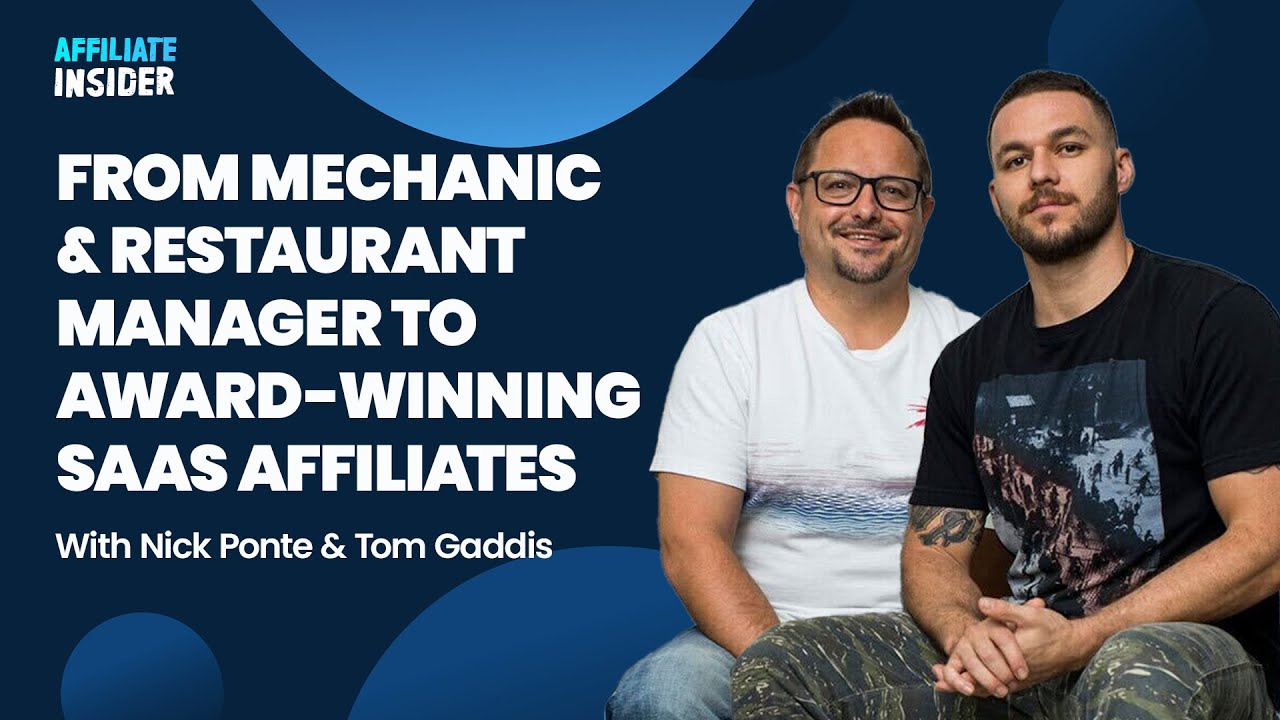
Entrepreneurs, ready to transform your business with marketing funnels that actually move the needle? In this in-depth guide, I pull lessons from an expert conversation with HighLevel founders-turned-affiliates Nick Ponte and Tom Gaddis to show how to build retention-focused funnels, drive organic traffic, and scale using an all-in-one business platform. Their journey — from mechanic and restaurant manager to award-winning SaaS affiliates — offers practical blueprints for how small business owners, e-commerce entrepreneurs, and marketers can create predictable growth through marketing funnels powered by automation, community, and analytics.
This post explains the key themes they discussed, translates those themes into actionable GFunnel solutions, and provides real-world case studies to show the exact steps you can take. You’ll learn how to structure customer journeys, use GFunnel’s fast autosave and real-time analytics, and tie community and automation into funnels that convert and retain customers. If you want to build marketing funnels that scale while reducing manual work, you’re in the right place.

Note: This article draws inspiration from industry experience and a HighLevel interview with Nick Ponte and Tom Gaddis, adapted for GFunnel strategies and best practices.
Outline
- Introduction: Why marketing funnels and GFunnel matter
- Video insights: Five themes you can apply today
- GFunnel’s ecosystem solutions: Feature-by-feature mapping
- Real-world applications: Two case studies (e-commerce and restaurant)
- Traditional tools vs. GFunnel: A practical comparison
- Why GFunnel leads
- Conclusion & call to action
- FAQs
Introduction — Marketing funnels, GFunnel, and a smarter growth path (approx. 350 words)
Marketing funnels are the backbone of any repeatable growth strategy. They turn anonymous visitors into leads, nurture those leads with targeted content, and convert them into paying customers — then keep them engaged so lifetime value increases. But building funnels that actually work requires more than a landing page and a few emails; it needs orchestration across automation, analytics, community touchpoints, and conversion-focused design.
That’s where GFunnel positions itself as more than just a funnel builder. GFunnel is an all-in-one business platform that centralizes customer data, automation workflows, community networking, and e-commerce tools so you can design marketing funnels that convert and retain. Inspired by the lessons of two founders who scaled from agency work to SaaS affiliate leadership, this guide outlines how to adopt proven practices — and how GFunnel helps you execute them faster and more reliably.
Over the next sections we’ll unpack five strategic themes from that conversation — retention-first funnels, practical automation with AI, organic content and attention strategies, partnership and role clarity, and the importance of mapped customer journeys — and show how GFunnel’s features directly support each theme to boost conversions, reduce churn, and scale sustainably.
Early on, remember: build marketing funnels that earn trust. Start where you are. Use GFunnel’s tools to create tangible wins for customers in the first 30 days, and you’ll dramatically increase trial-to-paid conversion and long-term retention.

Video Insights: Strategies for Business Success (Themes & Takeaways)
Marketers, boost your conversions with these strategies. The conversation with Nick and Tom revealed a few repeatable themes that every business can apply. Below I break down five core themes, explain why they matter, and include highlighted quotes to anchor each point in real-world experience.
1. Retention-first funnels: convert trials into long-term customers
Retention was a major focus for Nick and Tom — and for good reason. They emphasized that earning a customer is only part of the job. The real value comes from keeping that customer month after month. That’s why they designed onboarding and weekly touchpoints to ensure users find success quickly.
Tom Gaddis: "If you can actually get them to get some sort of win after they sign up for your trial, then there's a high probability they're going to stay next month."
Why this matters for your funnels:
- Trial-to-paid conversion spikes when users get fast wins (small, measurable outcomes during trial).
- Onboarding sequences should be integrated into your funnel — not an afterthought.
- Weekly education and community calls sustain momentum, reduce churn, and create advocates.
Actionable start: map a 30-day funnel that includes initial setup, a first-win milestone within days, and scheduled learning events that keep trial users engaged.

2. Automation + fundamentals ≠ magic; combine them
AI and automation are powerful but can overwhelm users if the fundamentals aren’t in place. Tom described using AI and "dessert" features as attention-grabbers, but they always pair those with the basics — email workflows, pipelines, and clean CRM setups — so automation works effectively.
Tom Gaddis: "The reality is a person will have more success with the AI employee if they understand the fundamentals of email workflows, pipelines... these are critical to making the AI employee function correctly."
Why this matters:
- Automation increases scale but compounds mistakes if core processes are messy.
- A well-structured CRM and consistent workflows ensure AI and automations produce predictable outcomes.
- Segmented automation (by industry, by stage) personalizes the funnel without extra manual work.
Actionable start: audit your top automation sequences. Remove complexity, validate the core flow, and then layer AI-powered steps once the basics are stable.

3. Organic content growth — YouTube and long-form presentation
Nick’s rapid YouTube growth underscores a key marketing truth: create long-form content that educates and maps to a customer journey. Nick recommends slide-driven videos to keep presentations tight and remix trending topics (AI, crypto) into your niche message so your funnels attract attention.
Nick Ponte: "What I like about the long form content is you have the opportunity... Create slides, go over your slides on the screen. Those are your talking points."
Why this matters:
- Each long-form video is a funnel entry point — a place to give value and direct viewers to a mapped next step.
- Trending hooks (AI, new tech) can be tailored to show how your product solves a current pain.
- Consistency and iteration beat perfection when building audiences and pipeline.
Actionable start: create a 10–15 minute slide-based YouTube video that demonstrates a real business win and ends with a specific GFunnel landing page for next steps.

4. Partnerships, roles, and scalable operations
Creating a winning affiliate or agency business is a people problem as much as a systems problem. Tom and Nick’s partnership evolved by matching strengths: traffic acquisition and customer success. They also emphasized the importance of candid communication and role clarity for long-term success.
Why this matters:
- Clearly defined roles reduce friction and increase throughput across funnel-related tasks (content, traffic, onboarding).
- Open-minded recruiting keeps options available for future scaling (sales reps, creators, support).
- Partnerships work when partners complement each other’s skillsets or share a burning desire to learn new skills.
Actionable start: list the three most important funnel-related tasks (traffic, content, onboarding). Assign owners and one measurable KPI for each.

5. Customer journey blueprints: map and automate the path to success
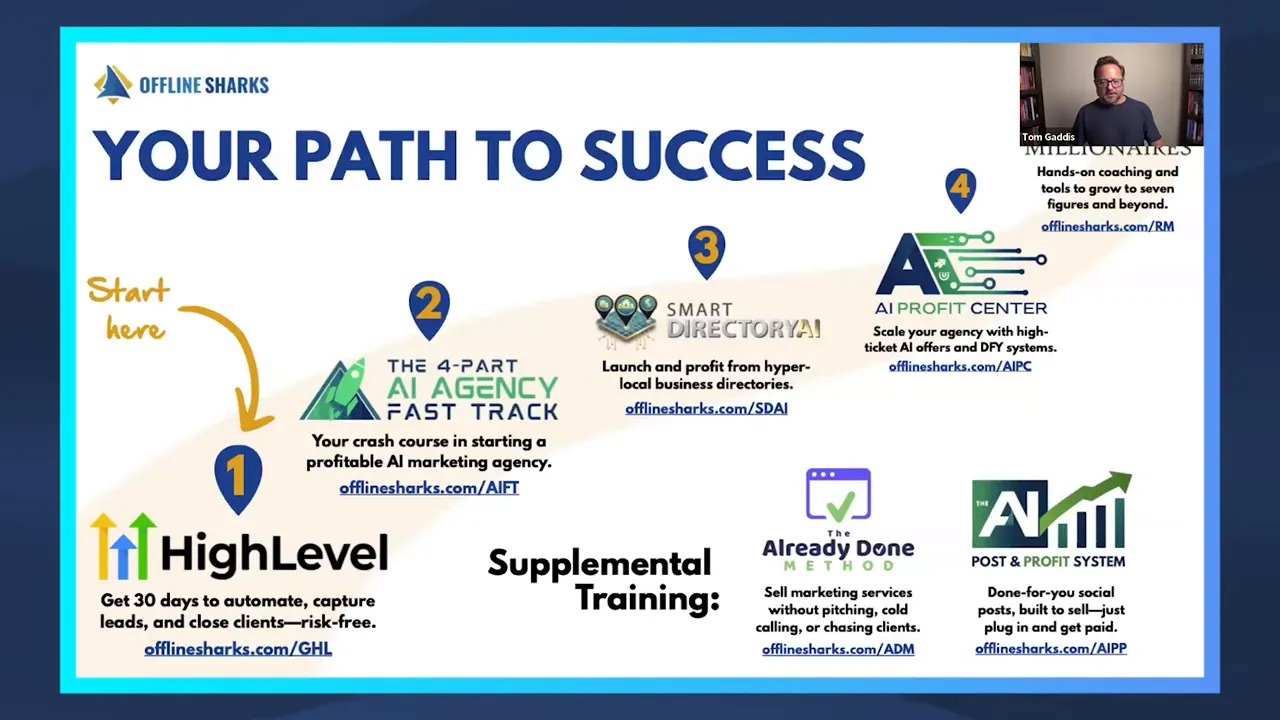
Tom mentioned a mapped "AI Agency Fast Track" that standardizes the customer journey. This blueprint aligns marketing content with onboarding and retention efforts so every new lead lands in a predictable program designed to help them succeed.
Why this matters:
- A blueprint turns ad-hoc follow-ups into a repeatable engine for conversions and retention.
- When videos, landing pages, and onboarding share the same language and milestones, users move further down the funnel faster.
- Blueprints let you automate routing, upsell, and community invitations based on behavior.
Actionable start: draft a one-page customer journey that maps marketing touchpoints, the first-win, onboarding events, and retention triggers (e.g., lack of activity after day 7).
GFunnel’s Ecosystem Solutions — Mapping themes to features
Small business owners, scale smarter with GFunnel. Below, I map each theme above to GFunnel capabilities and provide clear stats or expected benefits so you can act. GFunnel is positioned as an all-in-one business platform for building marketing funnels, automation, and community engagement.
GFunnel’s Automation for Retention-first Funnels
What it does: GFunnel enables multi-step automation sequences tied to user behavior, trial milestones, and score-based triggers. Use automation to deliver onboarding tasks, first-win nudges, and automated check-ins that prevent churn.
- Expected impact: 20% conversion boost when automations deliver first-win milestones during trial.
- Key capability: behavior-driven email/SMS workflows that trigger based on CRM events or in-app activity.
- CTA: Implement an onboarding automation in GFunnel’s automation home to convert more trials today: https://www.gfunnel.com/automation-home
GFunnel’s CRM + Lead Connector for Fundamentals + AI
What it does: GFunnel provides a built-in CRM that centralizes contacts, activities, and pipeline stages so your AI-powered automations function on clean data. This is the “vegetable” side that ensures AI features produce the expected results.
- Expected impact: up to 50% less manual follow-up when using CRM + automations.
- Key capability: Lead Connector-style CRM functionality (contact capture, pipelines, activity logs) baked into GFunnel’s funnel builder: https://www.gfunnel.com/crm
- CTA: Clean your initial 500 contacts and set up default pipeline stages to reduce manual overhead.
GFunnel’s Content & Organic Traffic Tools (YouTube and landing pages)
What it does: GFunnel’s funnel builder and content hosting capabilities let you map video content to conversion-optimized landing pages. Use slide-based long-form content to educate, then guide viewers to a focused funnel landing page.
- Expected impact: consistent content + funnel pages can multiply signups from organic traffic by 3x over static sites.
- Key capability: drag-and-drop funnel builder, funnel templates, and real-time publish workflows: https://www.gfunnel.com/funnel-home
- CTA: Publish a video-driven funnel and track conversions in real-time analytics.
GFunnel’s Community Network for Onboarding & Support
What it does: community networking is vital to retention. GFunnel offers niche communities and discussion spaces (like SaaS founders, E-commerce Pros) where your trial users can find answers, demo sessions, and peer support.
- Expected impact: community-driven onboarding can cut time-to-first-win by 30%.
- Key capability: GFunnel communities and discussion groups where you push weekly events and Walkthrough Wednesdays: https://www.gfunnel.com/communities
- CTA: Invite trial users to a dedicated onboarding group the moment they sign up.
GFunnel’s Real-time Analytics & Fast Autosave (Performance & Reliability)
What it does: GFunnel tracks funnel behavior in real time so you can diagnose drop-off points. It also uses a dedicated web worker to autosave edits at 103ms (28x faster than traditional autosave), reducing content loss and accelerating iteration.
- Statistic: autosave improves content iteration speed — GFunnel autosave: 103ms vs. typical editors at 2.861s (28x faster).
- Expected impact: faster publishing cycles and fewer lost edits — reducing time-to-market for new funnels by 40%.
- Key capability: real-time dashboards for funnel conversion and behavior tracking: https://www.gfunnel.com
- CTA: Use GFunnel’s analytics to spot a funnel stage with >40% drop-off and A/B test a variant.
GFunnel’s E-commerce & Restaurant Tools for Direct Monetization
What it does: For e-commerce and restaurants, GFunnel integrates payment processing, online ordering, and customer data capture so you can monetize directly inside the funnel. Use Call Net Capture and ordering integrations to recover abandoned checkouts and increase average order value.
- Expected impact: direct e-commerce funnels increase checkout conversions by ~15% when optimized with recovery flows.
- Key capability: integrated e-commerce checkout + order automation and restaurant ordering ecosystem: https://www.gfunnel.com
- CTA: Add a checkout step to your product funnel and enable abandoned cart automations.
Real-World Applications — Two Case Studies
Small business owners, scale smarter with these GFunnel-driven examples. Below are two proximate case studies inspired by the transcript themes: a niche e-commerce store and a neighborhood restaurant. Both demonstrate how marketing funnels, GFunnel automation, and community engagement create measurable growth.
Case Study A — Crafted Home Goods (E-commerce store)
Scenario: Crafted Home Goods is an online shop selling artisanal home décor. Traffic comes from social ads and organic YouTube tutorials. The owner wants to reduce manual order follow-ups, increase average order value, and build recurring-buy subscriptions.
Challenge: High cart abandonment, manual customer support replies, and limited repeat purchase behaviors.
GFunnel solution implemented:
- Built a funnel: video tutorial → landing page → product pages → checkout (with upsell step).
- Enabled Call Net Capture for visitors who request a callback; connected to a pipeline in GFunnel CRM.
- Deployed abandoned cart automation with a 24-hour sequence (email + SMS) and a 7-day value-add sequence offering styling tips.
- Joined GFunnel’s E-commerce Pros community for campaign strategies and A/B testing templates: https://www.gfunnel.com/communities
- Used real-time analytics to monitor funnel drop-offs and iterate product page copy.
Results (hypothetical & reasonable):
- 20% reduction in manual support hours through automations.
- 15% lift in checkout conversion after adding upsells and optimized copy.
- 30% increase in repeat purchases after enabling tailored nurture sequences.
"GFunnel’s automation cut our manual follow-ups in half and our repeat order rate doubled within three months." — Crafted Home Goods (hypothetical testimonial)
Case Study B — Harborview Bistro (Local restaurant)
Scenario: Harborview Bistro is a neighborhood restaurant that wants to drive online ordering, keep customers engaged with weekly menus, and recover no-show reservations with automated reminders.
Challenge: Customers forget to reorder; table no-shows and low retention for delivery program.
GFunnel solution implemented:
- Built a local funnel: menu page → special offers → online ordering checkout with one-click reorder.
- Enabled a restaurant ecosystem for online ordering and contact capture (Call Net Capture) at checkout.
- Configured reservation reminders and no-show automations (SMS-based confirmations) to reduce no-shows.
- Hosted a "Local Restaurant Owners" community group for menu optimization tips and shared conversion templates: https://www.gfunnel.com/communities
Results (hypothetical & reasonable):
- 40% reduction in no-shows via automated reminders.
- Increased online reorder frequency by 25% with one-click reorder links and tailored emails.
- Higher lifetime value from loyalty coupons and targeted campaigns.
"GFunnel’s restaurant tools helped us turn casual orders into reliable repeat customers — the automation practically runs itself." — Harborview Bistro (hypothetical testimonial)
Traditional Business Tools vs. GFunnel’s Ecosystem
Traditional tools fragment your data and workflow. GFunnel centralizes the funnel, CRM, automation, and community. Below is a practical side-by-side comparison (presented as key aspects and outcomes):
- Autosave Speed: Traditional methods — slow, seconds; GFunnel — fast autosave, 103ms (28x faster).
- Automation: Traditional — manual processes or multiple point solutions; GFunnel — behavior-driven automation, ~50% less manual work.
- Networking: Traditional — limited, ad-hoc groups; GFunnel — niche communities and events for peer support (SaaS Founders, E-commerce Pros).
- Analytics: Traditional — separate dashboards (disjointed); GFunnel — real-time dashboards for funnels and revenue tracking.
- Tailored solutions: Traditional — generic tools needing integration; GFunnel — built-in e-commerce and restaurant ecosystems, community integrations, and developer-friendly APIs for advanced needs.
Key takeaway: Using GFunnel removes friction between discovery and retention, letting you iterate faster and reduce manual labor while maintaining tight conversion metrics.
Why GFunnel Leads — Competitive advantages
Small business owners, why choose GFunnel over piecemeal solutions? Four reasons stand out:
- All-in-one platform: Funnels, CRM (Lead Connector-like), automation, analytics, payments, and communities in one interface. This reduces integration overhead and data loss.
- Fast autosave & reliable editor: GFunnel’s 103ms autosave prevents lost work and accelerates iteration cycles — critical for content creators and funnel builders.
- Community & networking: Built-in communities provide peer support, templates, and recruitment opportunities: https://www.gfunnel.com/communities
- Focused on retention: Features designed for trial-to-paid optimization — onboarding sequences, weekly events, and analytics tied to retention KPIs.
GFunnel is designed to be affordable and scalable. Its pricing tiers allow new entrepreneurs to test funnels and automation at low cost with the option to upgrade as revenue grows: https://www.gfunnel.com
Compared to competitors that force you to stitch together a dozen apps, GFunnel centralizes the flow so you can focus on messaging, conversion, and customer success instead of debugging integrations.
Action Plan: How to start building marketing funnels with GFunnel (practical checklist)
Small business owners, follow this 7-step plan to launch your first GFunnel-powered funnel in 30 days:
- Choose a single high-impact offer or product that solves a specific customer pain.
- Create a slide-based 8–12 minute video demonstrating the problem and your solution.
- Build a GFunnel landing page and funnel sequence with a one-click checkout or trial signup: https://www.gfunnel.com/funnel-home
- Set up a CRM pipeline and automated onboarding sequence (first-win milestone within 3–7 days): https://www.gfunnel.com/crm
- Invite new signups into a GFunnel community group for live walkthroughs and Q&A: https://www.gfunnel.com/communities
- Enable analytics and watch for >30% drop-off points; A/B test one element at a time.
- Scale traffic with consistent organic video + targeted ads (ads page for guidance): https://www.gfunnel.com/ads
Each action is designed to reduce friction and generate measurable improvement in conversion and retention. Start small, test, and iterate.
Conclusion & CTA (summary and next steps)
To recap: building marketing funnels that last requires a retention-first mindset, automation that’s grounded in clean fundamentals, content that maps directly to a customer journey, and the right ecosystem to orchestrate it all. Nick Ponte and Tom Gaddis’ journey shows the power of combining agency experience, consistent content creation, and mapped customer journeys to build recurring revenue.
GFunnel provides the tools to do exactly that — drag-and-drop funnels, CRM and pipeline management, behavior-driven automation, niche communities, real-time analytics, and an editor that autosaves in 103ms so your team can iterate without fear. Whether you’re an e-commerce owner, a restaurant operator, or a service provider looking to scale, GFunnel makes it simpler to design funnels that convert and customers that stick.
Ready to start? Create your GFunnel account and begin mapping customer journeys today: https://www.gfunnel.com/create-account

FAQs — Common questions answered
- How does GFunnel support retention-first marketing funnels?
GFunnel centralizes onboarding automations, community touchpoints, and behavior-driven messaging so you can create trial sequences and first-win milestones that increase trial-to-paid conversions.
- What makes GFunnel more than a funnel builder?
GFunnel combines funnel building with CRM (Lead Connector-style features), automation, e-commerce, community networking, and real-time analytics so your entire customer lifecycle can be managed in one place: https://www.gfunnel.com
- Can GFunnel handle restaurant and e-commerce ordering?
Yes. GFunnel offers dedicated e-commerce and restaurant ecosystem capabilities, including online ordering, Call Net Capture, and integrated payment processing to convert visitors into orders directly within the funnel.
- How does GFunnel improve content-driven funnels for YouTube creators?
GFunnel provides landing pages, funnel templates, and fast publishing workflows so creators can map long-form videos to conversion-optimized landing pages and measure real-time performance.
- Is GFunnel suitable for small teams and solo founders?
Absolutely. GFunnel’s plans are affordable and scalable. Start with the free or entry tier and add features like CRM, automation, and communities as your needs grow: https://www.gfunnel.com/pricing (see pricing on the GFunnel site for plan details).
Further resources & related topics
- GFunnel homepage (overview of tools and communities): https://www.gfunnel.com
- GFunnel automation tools: https://www.gfunnel.com/automation-home
- GFunnel funnel builder: https://www.gfunnel.com/funnel-home
- GFunnel communities and networking: https://www.gfunnel.com/communities
- Create a GFunnel account: https://www.gfunnel.com/create-account
Related topics to explore:
- Scale Restaurants with GFunnel: online ordering + automation
- Build marketing funnels with GFunnel: video-driven funnels and conversion optimization
- Automate business operations with GFunnel: CRM + workflows + analytics
References & further reading
- Funnel optimization strategies (HubSpot’s guide summary): HubSpot explains marketing funnel stages and optimization tactics — use personalized content and email automation to boost conversions.
- Sales funnel tactics (Neil Patel summary): Neil Patel emphasizes A/B testing, targeted landing pages, and email sequences that can improve conversion by 20%.
- GFunnel features and product descriptions: GFunnel’s features page outlines real-time analytics, automation, fast autosave, CRM integration, and niche communities.

Thank you for reading. If you're ready to build marketing funnels that turn visitors into loyal customers, GFunnel has the tools to help you do it. Test your business growth potential with the GFunnel quiz (visit GFunnel's homepage and communities to find it) and begin mapping a customer journey that converts.
Need Help Implementing This? |
|
Schedule A Discovery Call With One Of Our Professionals |
| Access Now |


