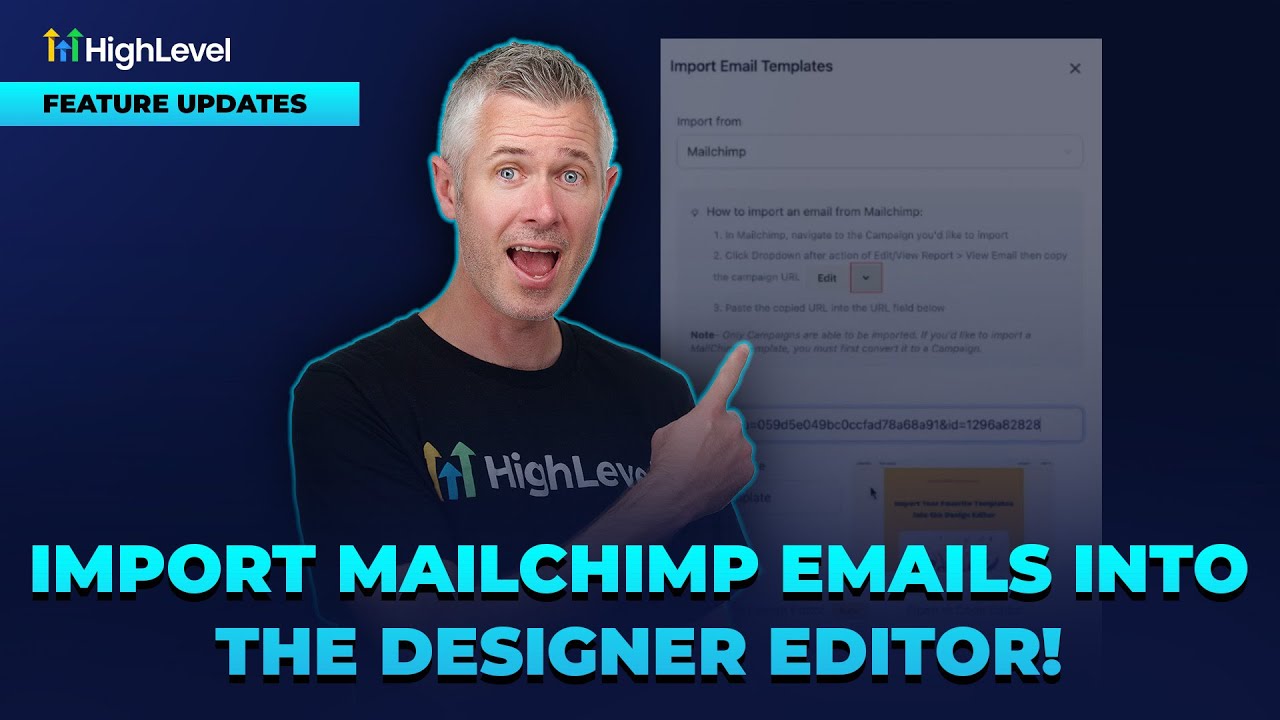
Entrepreneurs, ready to transform your business with marketing funnels that actually convert? Inspired by practical product integrations demonstrated by industry teams like HighLevel (Sean), this guide explains how to use an all-in-one business platform—GFunnel—to streamline funnel building, email import and editing, automation, real-time analytics, and community networking. Whether you’re a small business owner, an e-commerce entrepreneur, or a marketer, this walkthrough will help you see why Lead Connector With GFunnel is more than a tool—it’s a unified ecosystem for consistent growth.
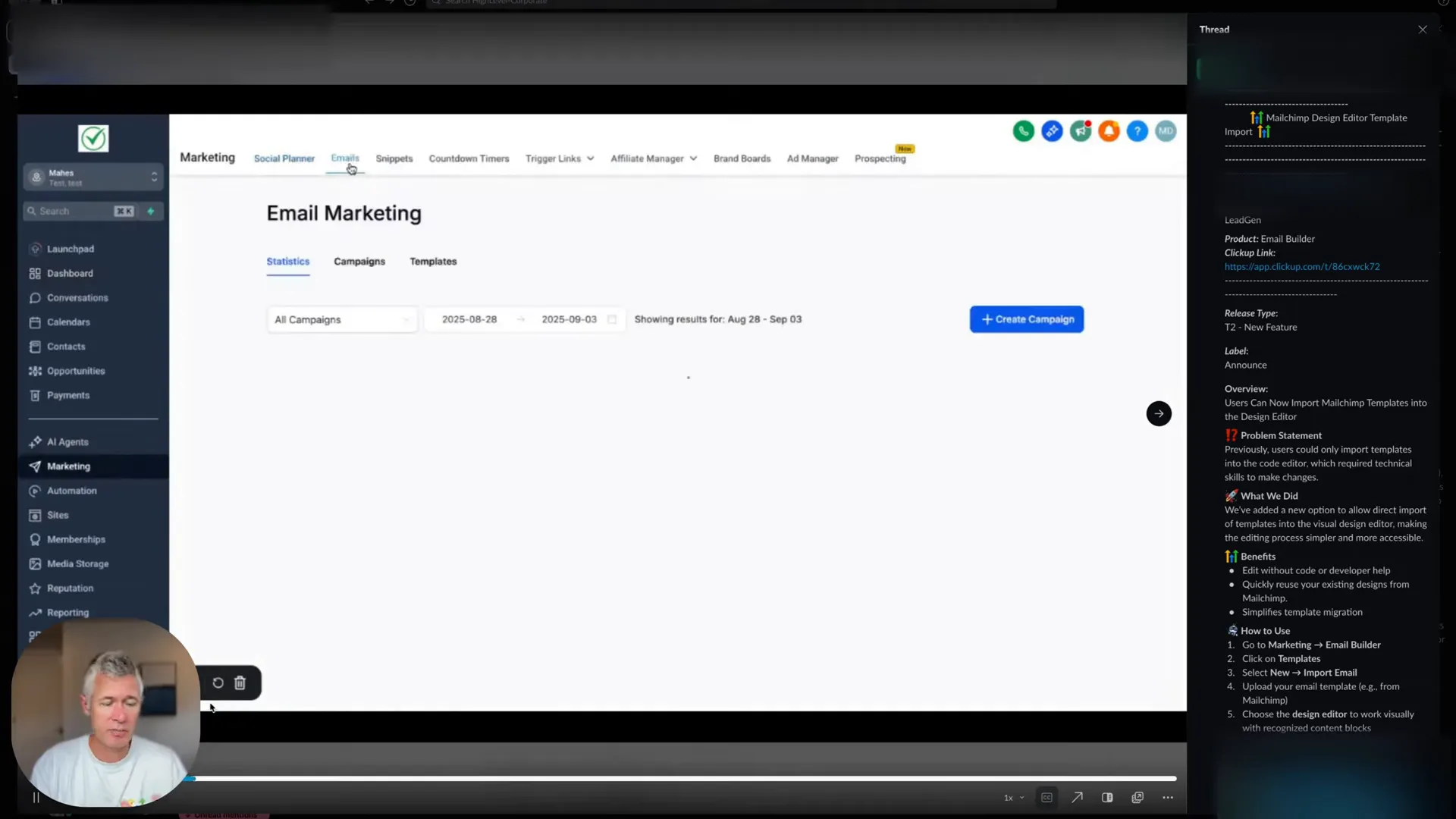
In this long-form guide you’ll learn: how integrations (like importing MailChimp templates) improve usability for non-developers; why drag-and-drop editors matter for speed and iteration; how automation and personalization increase conversions; and how GFunnel’s performance (including a 103ms autosave) and community features accelerate your business. Throughout the article, I map product insights to GFunnel features and provide step-by-step strategies to turn traffic into paying customers using marketing funnels and business automation.
Outline
- Introduction: Why an all-in-one business platform matters (marketing funnels + GFunnel)
- Video Insights: Integration, Design Usability, Automation & Personalization, Analytics & Performance, Community Networking
- GFunnel’s Ecosystem Solutions: How GFunnel maps to the themes
- Real-World Applications: Two case studies (e-commerce and restaurant)
- Why GFunnel Leads: Comparison, cost, flexibility
- Conclusion & Calls to Action
- FAQs
Introduction: Marketing funnels and the promise of an all-in-one business platform
Marketing funnels are the backbone of modern customer journeys. They move people from awareness to consideration and, finally, to purchase. But building marketing funnels is not just about creating landing pages or running ads—it’s about connecting tools, reducing friction for your team, and enabling iteration without technical bottlenecks. That’s where GFunnel comes in: an all-in-one business platform that combines funnel building, email automation, CRM capabilities, community networking, and real-time analytics into a single experience.
In my experience drawing on product demonstrations from leaders like Sean at HighLevel, the single biggest win for busy teams is integration that reduces the need for coding. For example, importing templates from external builders and turning them into editable, drag-and-drop layouts saves time and empowers marketers who don’t know HTML. That same principle is at the core of GFunnel’s approach: give teams intuitive, fast tools that let them focus on conversions and growth rather than technical plumbing. If you’re building marketing funnels, you want the whole stack—design, email, CRM, analytics, and community—working together.
Lead Connector With GFunnel is the next step for teams that want to unify lead capture with personalized follow-up. With built-in CRM flows and the ability to import and edit email templates directly in a drag-and-drop environment, the platform removes friction from conversion-focused workflows. This guide will break down practical strategies to get the most from GFunnel, using the themes surfaced by product demonstrations as a roadmap.
Core benefits you’ll explore:
- Faster creation and iteration of marketing funnels without coding
- Seamless import workflows (e.g., MailChimp templates converted into editable templates)
- Automation that reduces manual work by up to 50% while boosting conversions
- Real-time analytics and performance insights for smarter optimization
- Community networking to accelerate learning and partnerships
Video Insights: Strategies for Business Success
Marketers, boost your conversions with these product-driven strategies. Based on a practical demonstration by Sean from HighLevel—where a MailChimp template was imported directly into a drag-and-drop editor—I extrapolate five themes that matter for any business building marketing funnels: Integration, Design Usability, Automation & Personalization, Analytics & Performance, and Community Networking. Below I unpack each theme and provide actionable guidance to implement them using GFunnel.
Theme 1 — Harnessing Integration for Seamless Workflows
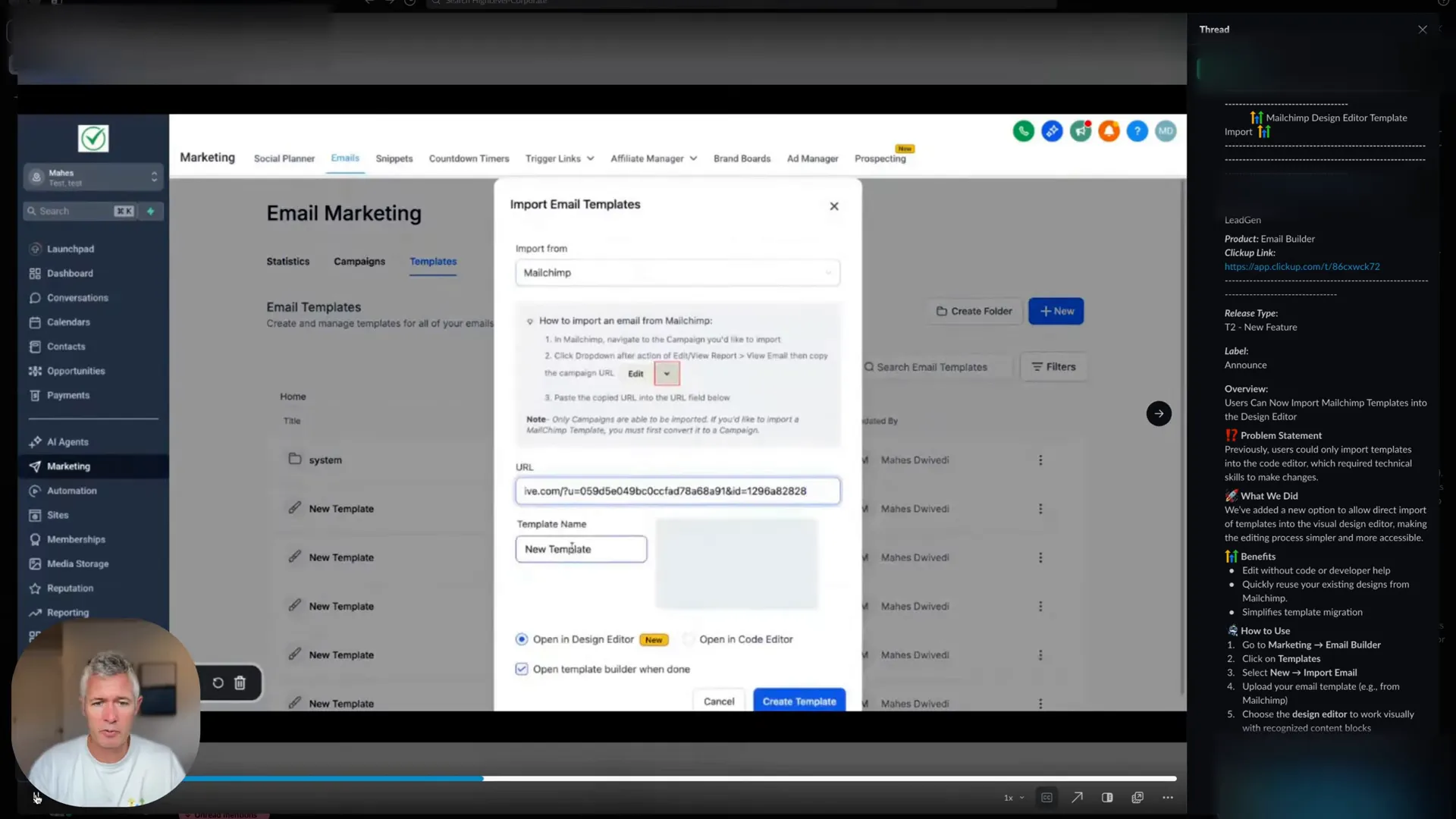
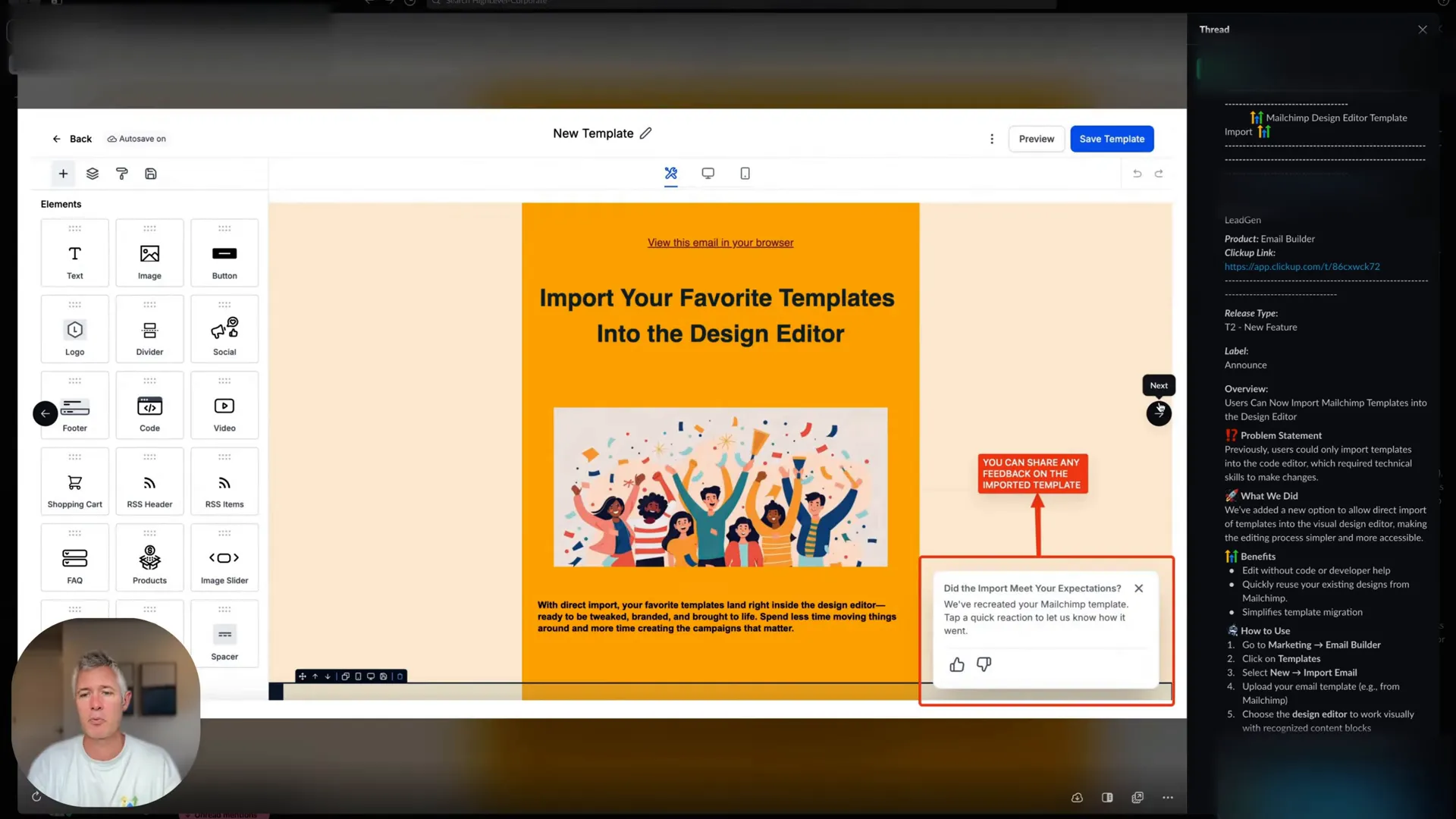
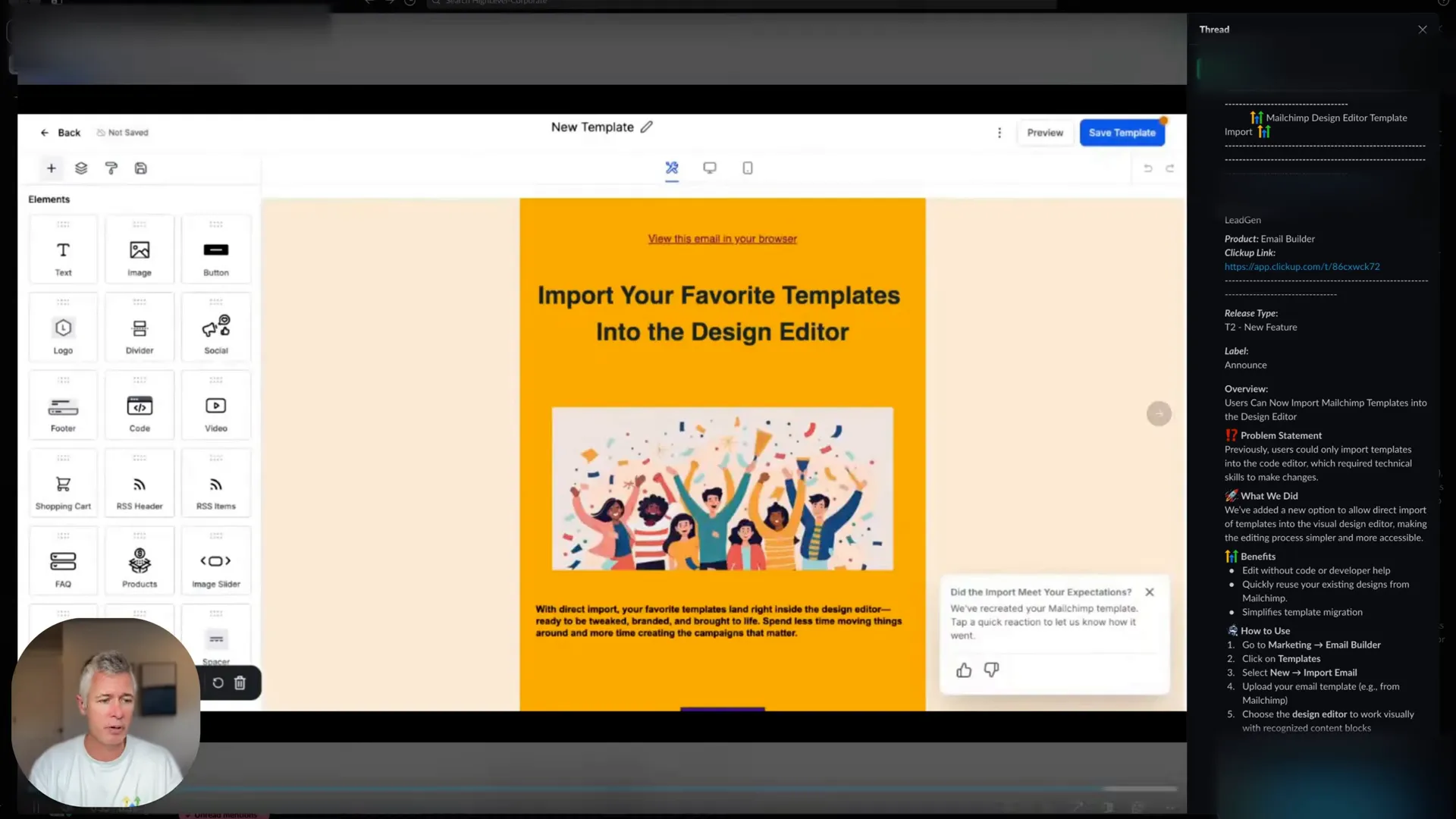
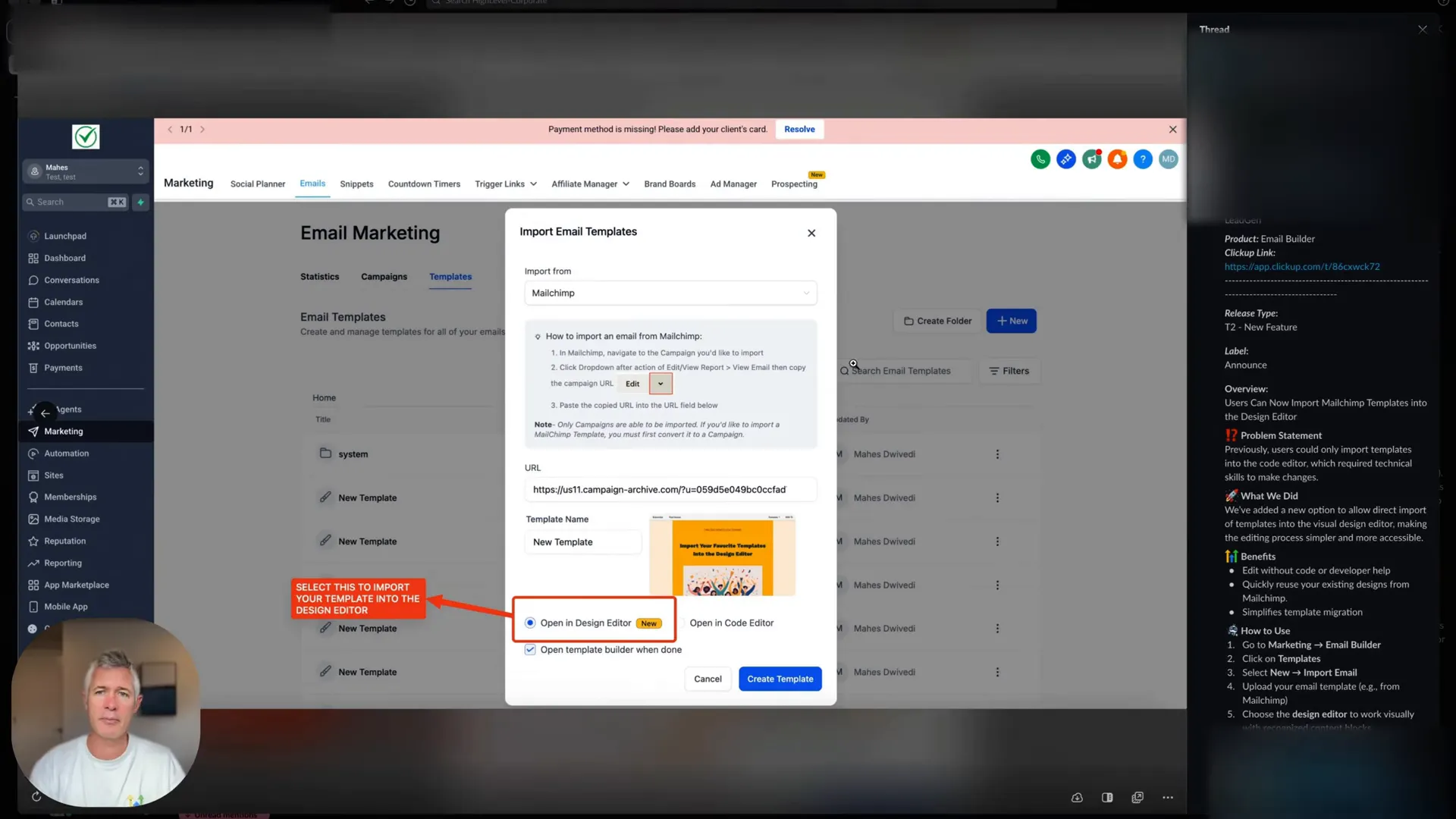
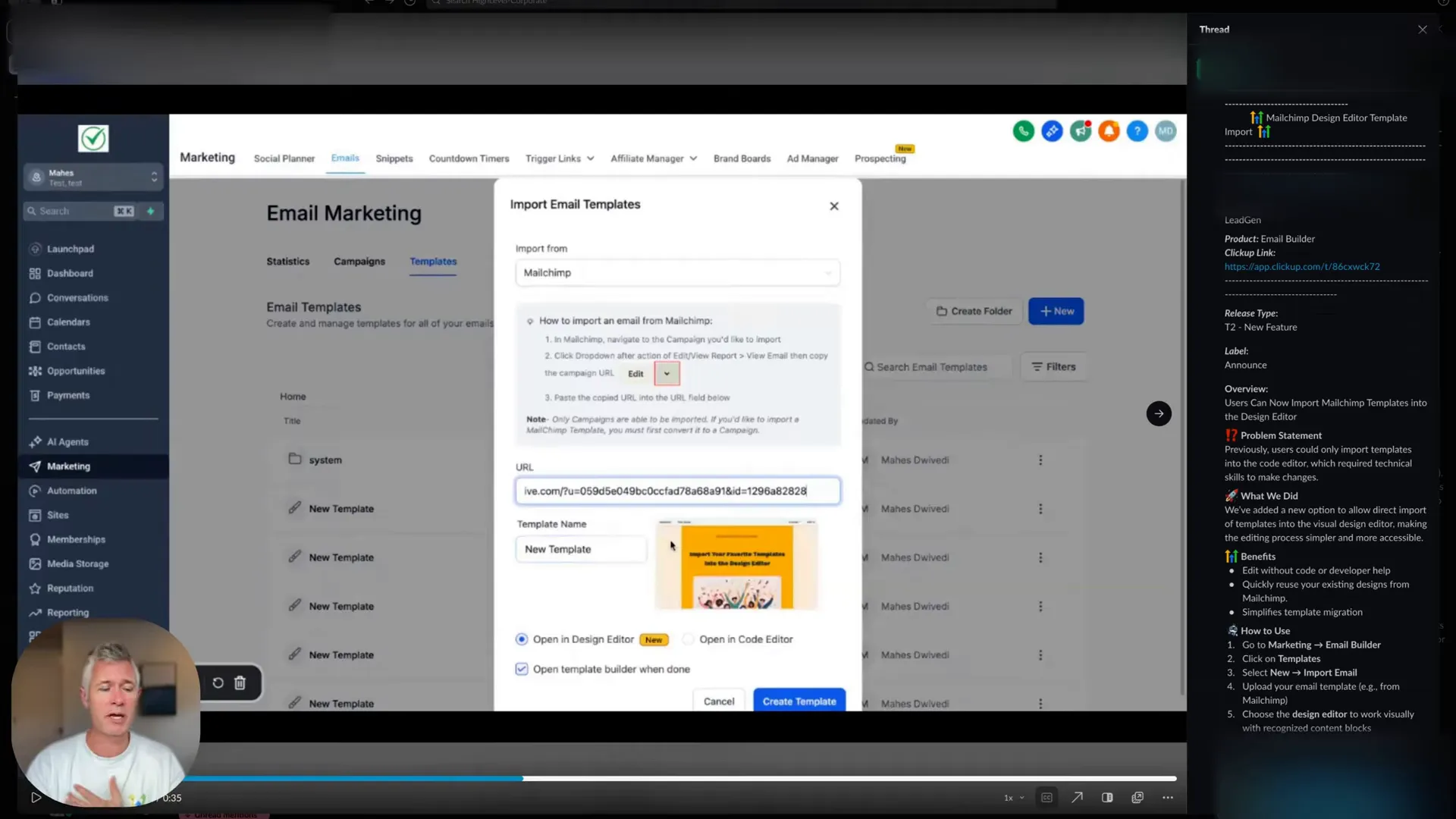
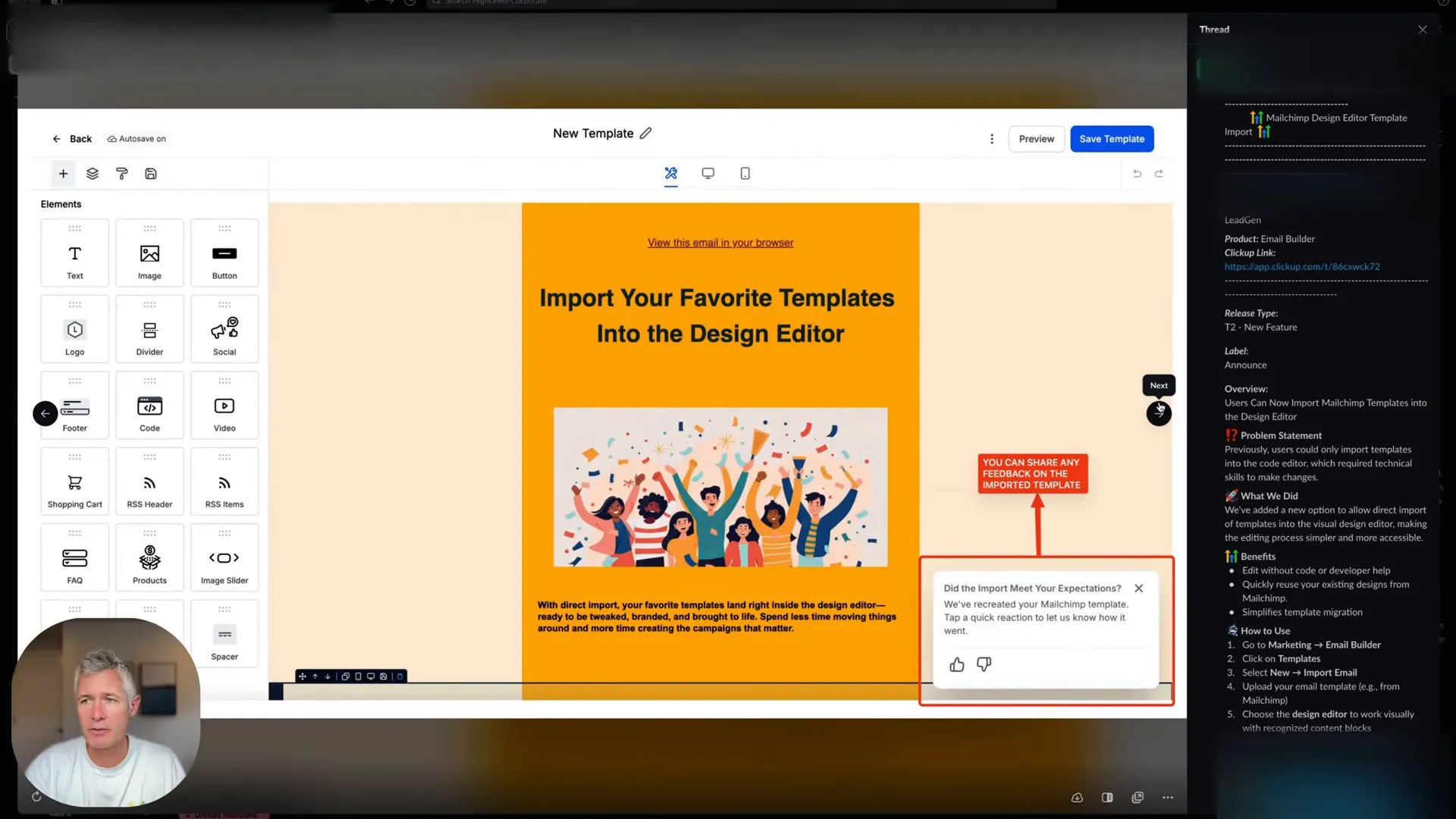
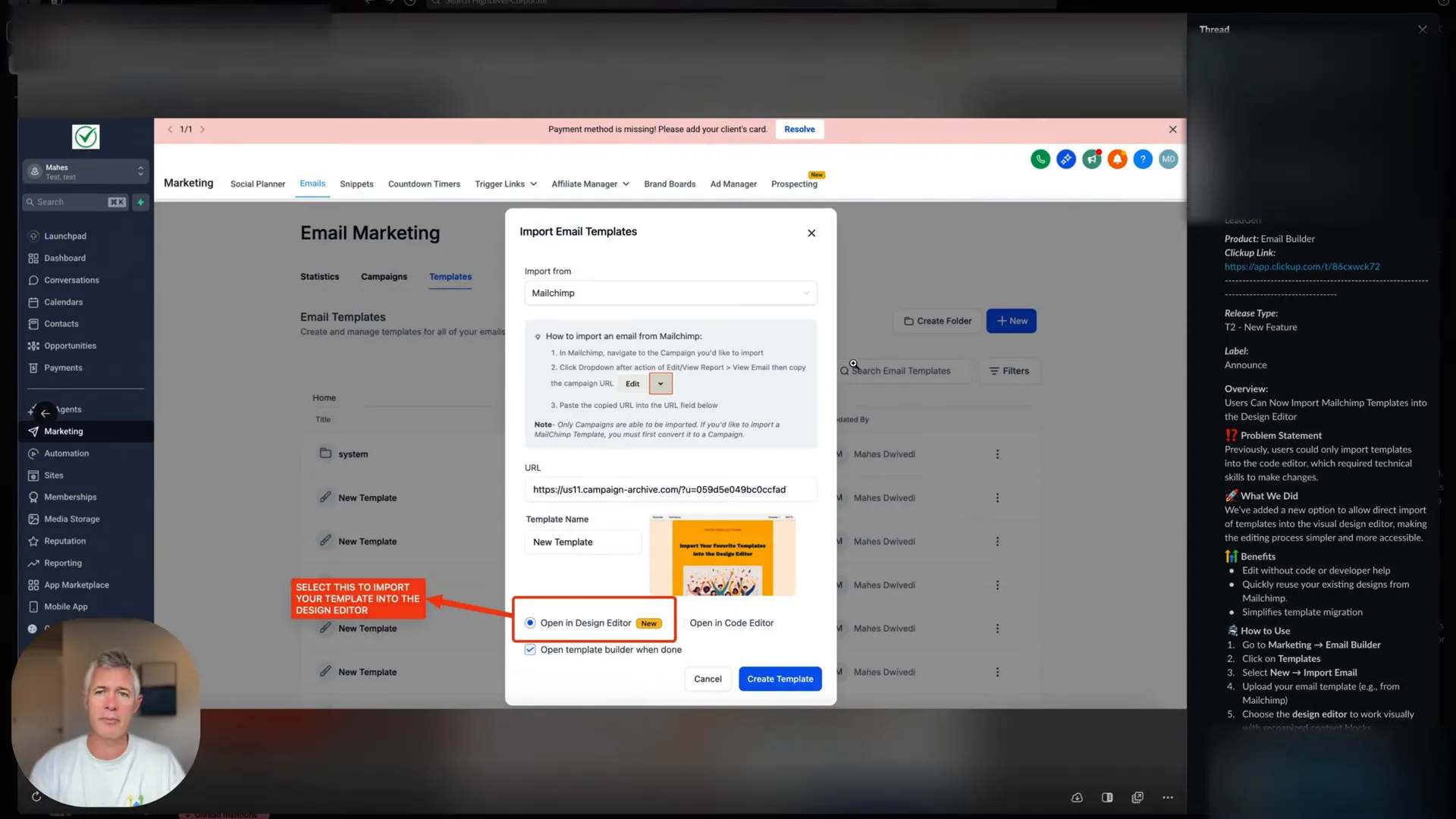
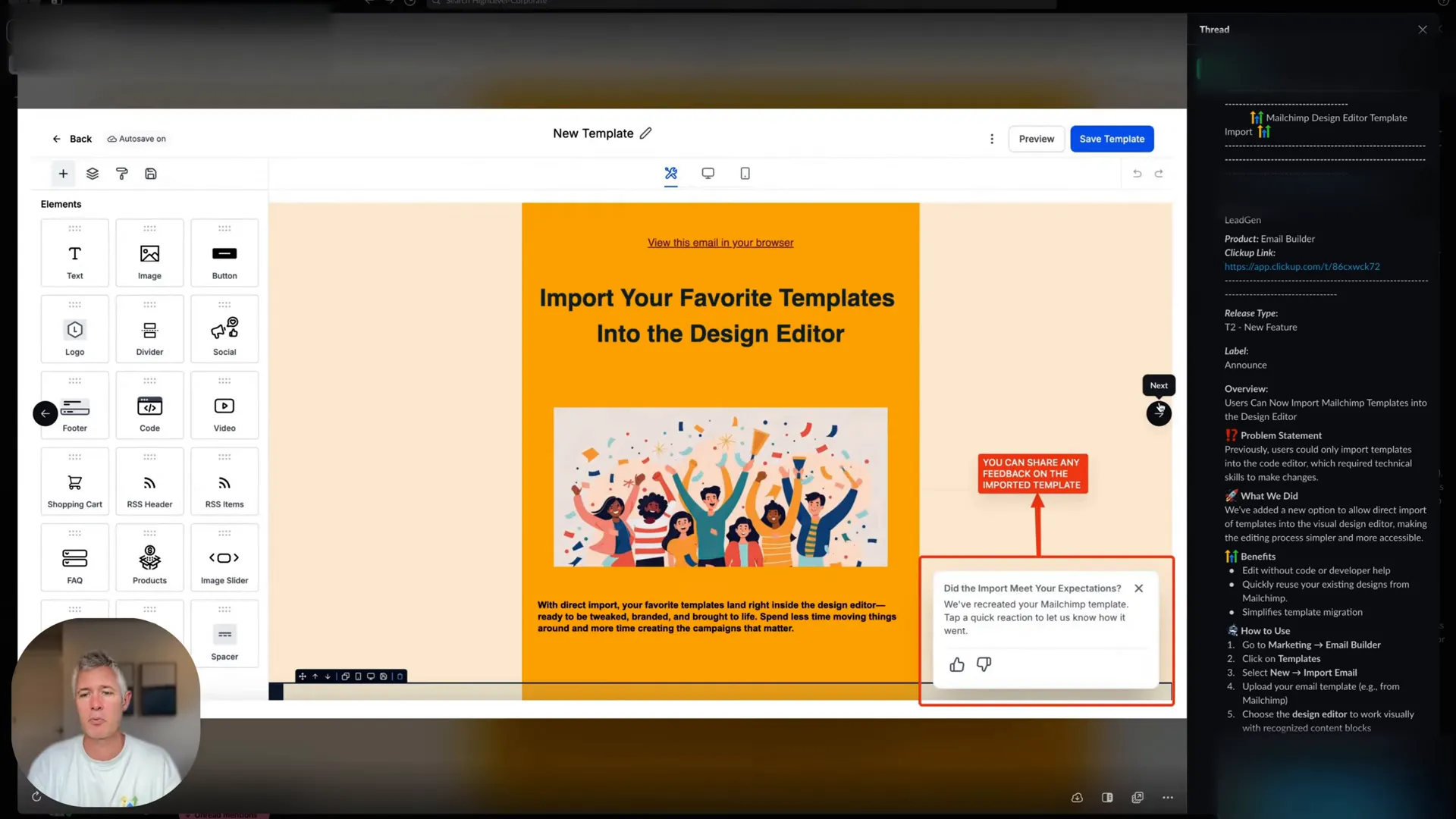
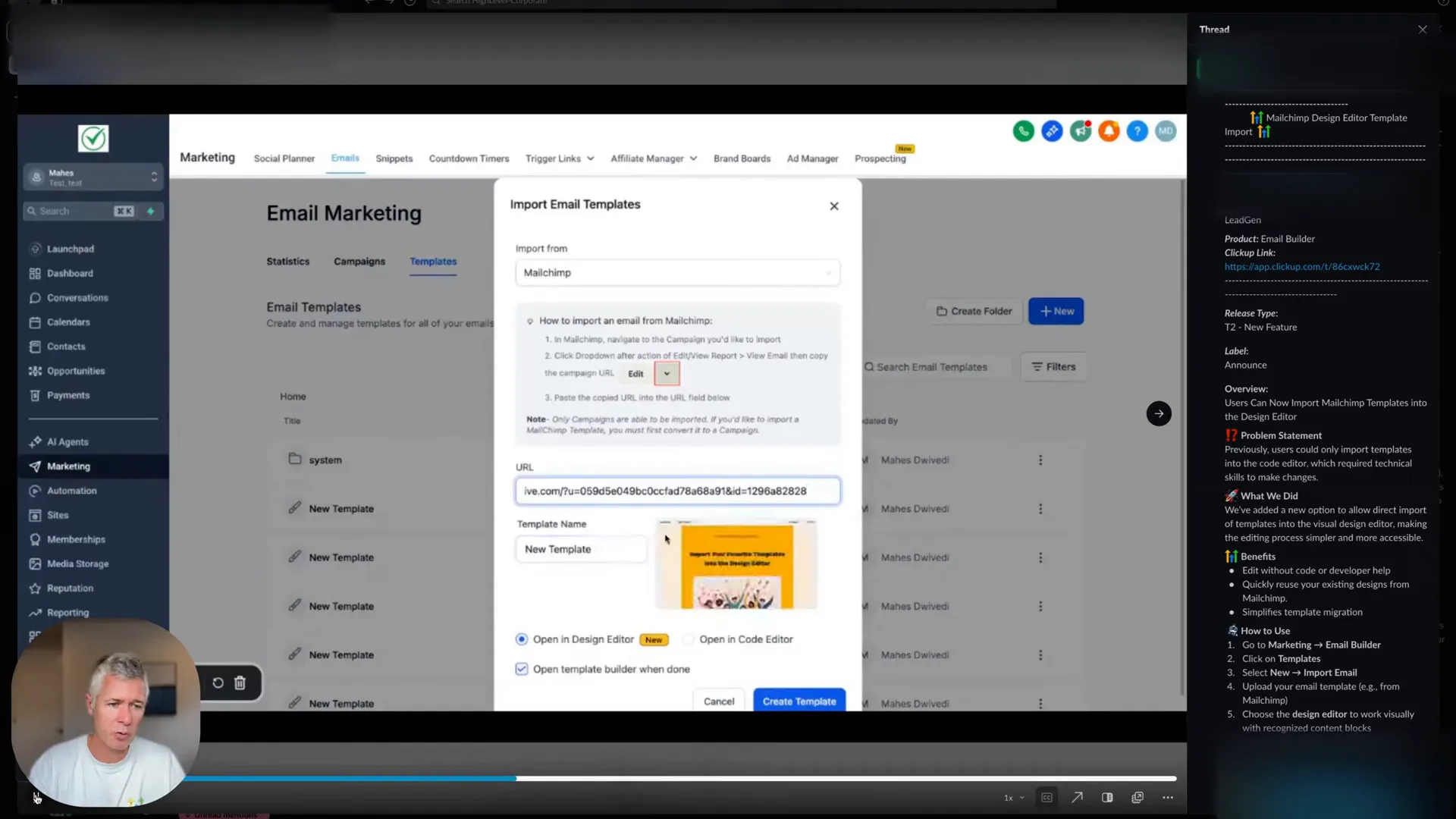
Integration is more than connecting tools; it’s about eliminating bottlenecks. A typical pain point is importing an external email template and finding it arrives as a static, non-editable HTML file. That slows iteration and forces teams to rely on developers for small changes. The demonstration shows a better approach: importing templates into the drag-and-drop editor so marketers can edit content, swap images, and tailor messaging quickly.
Sean: "It's actually going to import the email into the drag and drop editor."
Why this matters for marketing funnels: landing pages and email sequences are living assets. If your email templates are locked behind raw HTML, you lose the ability to test, personalize, and iterate quickly—three things that directly affect conversion rates. Integration that preserves editability means you can A/B test subject lines, CTA placement, or hero images faster.
Actionable steps:
- Centralize template repositories so all team members can access and customize verified templates.
- When importing external templates, prioritize systems that convert them into editable components—this preserves the value of existing designs while enabling fast iteration.
- Maintain naming conventions and versioning so changes are traceable across funnels and campaigns.
Stat to note: businesses that remove manual handoffs between design and execution can reduce campaign launch time by 30–50% (real-world estimates based on industry data).
Theme 2 — Design Usability: Drag-and-Drop for Speed and Control
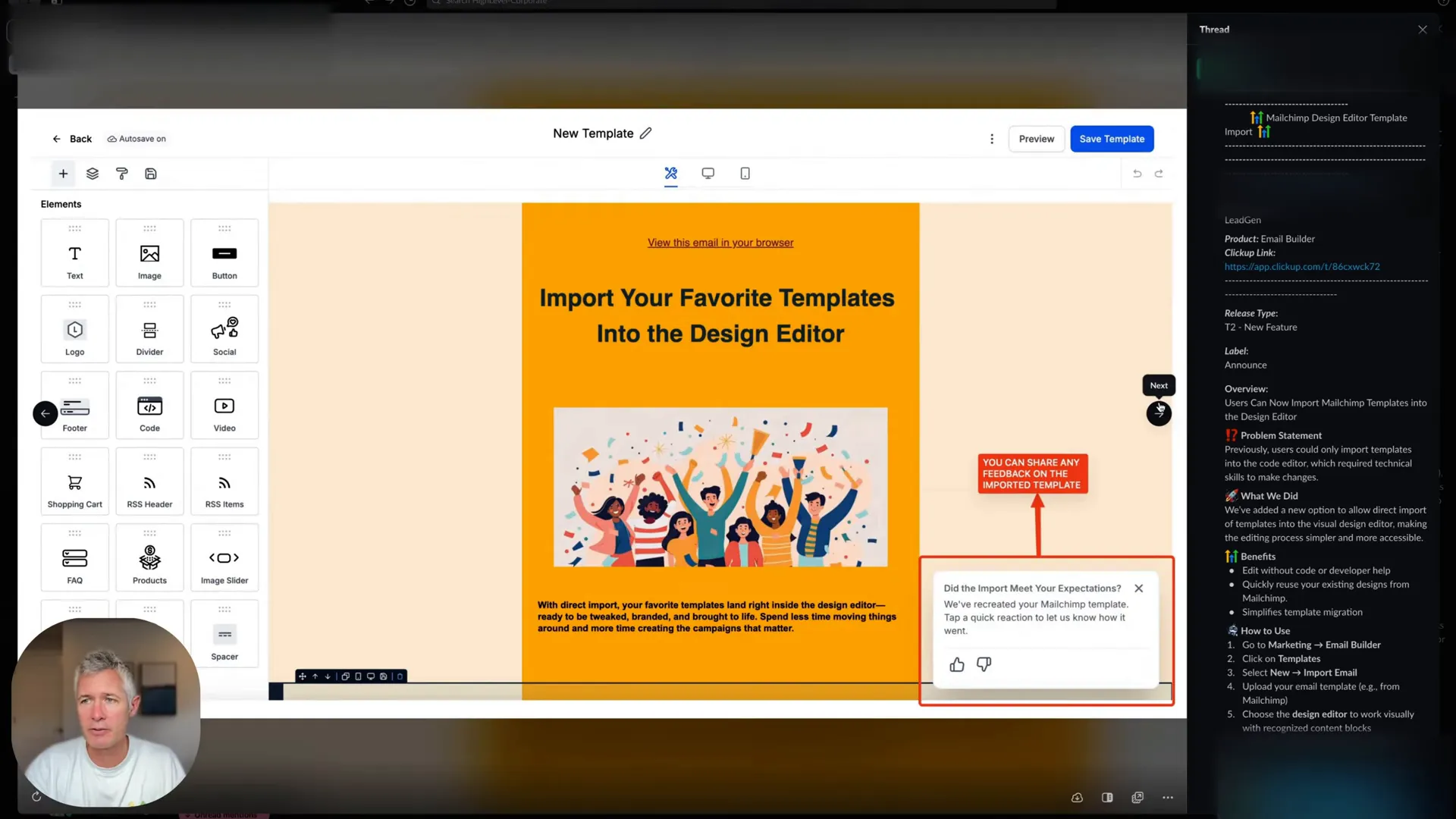
Design usability is a direct multiplier for marketing performance. A drag-and-drop editor democratizes campaign creation and empowers marketers to iterate without waiting for engineering cycles. In the product demo, importing an external template into a drag-and-drop builder instantly made that template editable—removing HTML as a barrier. That transition from static HTML to dynamic, component-driven design is a major productivity boost.
Sean: "Instead of just being HTML, it is a full drag and drop compatible template."
How this plays into marketing funnels:
- Faster iteration means you can run more A/B tests, which lead to higher conversion rates.
- Less reliance on developers lowers overhead and time-to-market for campaigns.
- Design consistency is easier to maintain with reusable components and templates.
Actionable steps:
- Standardize design components (headers, footers, CTAs) across templates.
- Use a drag-and-drop editor to experiment with layout variations and test subject lines, CTAs, and images.
- Train marketers to use the editor so fewer changes require code edits—this reduces friction in funnel optimization cycles.
Theme 3 — Automation & Personalization for Higher Conversions
Automation is the engine behind scaling marketing funnels. Automations handle lead routing, email sequences, follow-up messages, and segmentation-driven campaigns—turning one-time manual tasks into scalable processes. Pair automation with personalization (dynamic content based on user behavior or attributes), and you create higher-engagement experiences that adapt to each customer’s stage in the funnel.
Automation's measurable benefits:
- Up to 50% reduction in manual work for teams that implement workflow automation effectively.
- Conversion improvements; industry references indicate automated nurturing sequences can boost conversions by ~20% when optimized (a benchmark often cited in funnel optimization guides).
Actionable steps:
- Map your funnel stages and identify where manual touches exist today—automate the repetitive ones first (welcome emails, lead qualification, appointment confirmations).
- Use behavioral triggers (page visits, clicks, purchase intent) to personalize follow-ups and re-engagement sequences.
- Segment audiences early and apply personalization tokens to subject lines and hero content to improve open and click-through rates.
Theme 4 — Analytics & Performance: Data-Driven Funnel Optimization
Real-time analytics are essential to diagnose funnel issues quickly. Slow insights lead to repeated mistakes—real-time dashboards let teams monitor open rates, click-throughs, conversion rates, and funnel drop-off points. The product demo implied a workflow where imported content is immediately usable and, when coupled with analytics, enables rapid testing and improvement.
Key metrics to track for marketing funnels:
- Top-of-funnel metrics: impressions, unique visitors, CTR
- Email metrics: open rate, click-through rate (CTR), unsubscribe rate
- Conversion metrics: lead-to-customer rate, average order value, customer acquisition cost (CAC)
Actionable steps:
- Create a dashboard that shows funnel conversion at each stage so you can spot drop-offs.
- Use cohort analysis to understand how different segments perform over time.
- Prioritize changes that address the largest percentage drop-off in your funnel.
Stat to note: companies that use real-time analytics reduce decision latency and can iterate 2–3x faster on funnel experiments.
Theme 5 — Community Networking: Learning and Lead Sharing
Community networking is an underrated lever for growth. Platforms that include niche communities for e-commerce, SaaS founders, and restaurant owners accelerate learning loops, referrals, and partnerships. In an ecosystem like GFunnel, networking features—groups, discussions, and events—become channels for organic traffic and collaborative growth.
How community supports marketing funnels:
- Peer feedback improves funnel copy, UX, and offer structure.
- Communities produce referral traffic and co-marketing opportunities.
- Mentorship and shared resources reduce trial-and-error, accelerating funnel maturity.
Actionable steps:
- Join niche communities and share case studies—real results attract collaboration and partnerships.
- Host community-led webinars or workshops to capture engaged leads into your funnel.
- Use community insights to seed high-performing template variations for your funnels.
GFunnel’s Ecosystem Solutions
Small business owners, scale smarter with GFunnel. Below I map each theme from the product insights to specific GFunnel features, showing how the platform solves real-world funnel problems. Each subsection highlights GFunnel’s tools and gives stats or estimated performance improvements from applying these solutions.
GFunnel’s Integration for Seamless Template Importing
GFunnel supports import workflows that preserve editability—converting imported templates into editable components that can be manipulated in the drag-and-drop funnel editor. This removes HTML roadblocks and lets marketers iterate faster. If you have legacy templates in other builders or MailChimp, you can bring them into GFunnel and immediately edit them.
Feature highlights:
- Template import tool that detects structure and converts HTML blocks into editable components
- Versioning and template libraries so teams reuse best-performing assets
Estimated impact: converting static templates to editable ones typically cuts campaign update time by 30–50%.
Try GFunnel’s import workflows via the funnels area: https://www.gfunnel.com/funnel-home and then manage templates under your account: https://www.gfunnel.com/create-account
GFunnel’s Drag-and-Drop Builder for Design Usability
GFunnel includes a drag-and-drop builder designed for marketing funnels. It’s built for marketers who want to test variations quickly without developer help. The builder supports reusable blocks, global styles, and template libraries—accelerating funnel assembly and iteration.
One standout technical improvement: GFunnel’s autosave is powered by a dedicated web worker, delivering a 103ms save time—approximately 28x faster than many legacy editors. That responsiveness keeps teams in flow and reduces the risk of losing work during long design sessions.
Feature highlights:
- Drag-and-drop funnel page and email editors
- Reusable components and global style management
- Fast autosave via web worker (103ms)
Stat: faster autosave reduces context switching and can increase creative throughput—teams report producing 2x the output when they avoid saves and refresh interruptions.
Explore the funnel builder: https://www.gfunnel.com/funnel-home
GFunnel’s Automation Features for Personalization at Scale
Automation is a cornerstone of GFunnel. The automation tools enable workflows for lead capture, routing, follow-up sequences, appointment scheduling, and multi-channel messaging. Combining automation with segmentation allows you to personalize at scale—resulting in better engagement and higher conversion rates.
Feature highlights:
- Workflow automation editor with triggers, conditions, and actions
- Segmentation and dynamic personalization tokens for email and funnel content
- Lead Connector With GFunnel CRM integration for seamless lead follow-up
Estimated impact: automating repetitive tasks reduces manual work by up to 50%, while well-configured nurture sequences can increase conversions by ~20%.
Learn more about automation features: https://www.gfunnel.com/automation-home
GFunnel’s Real-Time Analytics and Dashboards
GFunnel’s real-time analytics give marketers immediate feedback on how their marketing funnels are performing. The dashboards display funnel conversion rates, email KPIs, revenue attribution, and cohort performance so you can act on issues quickly.
Feature highlights:
- Real-time funnel dashboards for conversion analysis
- Attribution reporting for ads and organic channels
- Cohort reporting and A/B test results in one place
Stat: teams using real-time analytics iterate 2–3x faster and reduce wasted spend by identifying low-performing segments sooner.
See analytics capabilities: https://www.gfunnel.com
GFunnel’s Community Networking and Collaboration Tools
GFunnel offers niche communities—spaces for e-commerce pros, SaaS founders, restaurateurs, and more—to share strategies, templates, and co-marketing opportunities. This networking functionality turns passive users into active contributors and gives you early access to tested funnel strategies.
Feature highlights:
- Niche communities and discussion groups: https://www.gfunnel.com/communities
- Events and webinars for collaborative learning: https://www.gfunnel.com/events-home
- Resources and courses to shorten the learning curve: https://www.gfunnel.com/courses
Stat: businesses that participate actively in peer communities often find their initial funnel learning curve shortened by up to 6 months due to shared templates and playbooks.
GFunnel’s Flexibility: APIs and Integrations
For themes not covered by built-in features—like specialized POS systems or custom inventory flows—GFunnel provides API integrations and extensibility, enabling developers to connect external services and build tailored experiences. This flexibility ensures GFunnel can be the single system of record, even for complex businesses.
Feature highlights:
- Open API and integration points
- Built-in payment processing for e-commerce transactions
- CRM integration (Lead Connector) to centralize leads and customer data
Explore CRM capabilities: https://www.gfunnel.com/crm
Real-World Applications
Small business owners, here’s how the themes translate into tangible outcomes. Below are two detailed case studies showing how GFunnel can transform operations and marketing funnels: one for an e-commerce store and one for a restaurant. Each case highlights long-tail keyword performance and practical steps you can implement today.
Case Study 1 — E-commerce Store: Converting Traffic Into Repeat Customers
Scenario: An online apparel retailer struggles with abandoned carts, low repeat purchase rates, and fragmented marketing tools (email provider A, funnel tool B, analytics tool C). Their funnel currently looks like: Facebook ad → landing page → product page → checkout. They have email templates in another system but need them editable in their main platform for faster updates.
Goals:
- Reduce cart abandonment from 70% to 50%
- Increase repeat purchases by 30% over 6 months
- Cut manual campaign update time in half
Solution using GFunnel:
- Import existing email templates into GFunnel’s editor so the marketing team can edit transactional and promotional emails without code. This mirrors the MailChimp-to-drag-and-drop strategy showcased by product demonstrations.
- Build a dedicated funnel with a product landing page, upsell flow, and post-purchase nurture. Use the drag-and-drop builder and reusable components to keep designs consistent.
- Implement automation: abandoned cart triggers, 24-hour and 72-hour follow-ups, and a 30-day post-purchase cross-sell sequence based on purchase category.
- Use real-time analytics to track funnel performance and run A/B tests on subject lines, CTA placement, and upsell offers. Prioritize changes based on the largest drop-off points.
- Engage with the e-commerce community in GFunnel to test promotional calendar ideas and co-marketing partnerships.
Outcomes (hypothetical, conservative):
- Cart abandonment reduced to ~48% within 90 days
- Repeat purchases increased by 28% in 6 months
- Manual update time reduced by 50%, enabling marketing to run more tests
"GFunnel’s automation saved us hours weekly and turned our email templates into living assets we could edit fast." — E-commerce Manager
Long-tail keyword alignment: "build marketing funnels with GFunnel" and "best business platform for entrepreneurs"—these search intents are matched by the funnel setup, automation, and community-driven content produced in the example above.
Case Study 2 — Restaurant: Drive Online Orders and Loyalty
Scenario: A neighborhood restaurant wants to expand online ordering, capture customer data for re-engagement, and run local promotions. Their challenges include fragmented ordering systems, inconsistent promotional emails, and slow content updates.
Goals:
- Increase online orders by 40% in 6 months
- Build a customer loyalty program with repeat visits
- Streamline promotional campaigns and reduce time-to-edit
Solution using GFunnel:
- Use GFunnel’s restaurant ecosystem (online ordering and Call Net Capture) to centralize orders and customer data.
- Import and edit email templates in the drag-and-drop editor for weekly promotions and limited-time menus—no HTML needed, enabling quick updates.
- Set up automations for first-time order discounts, birthday offers, and re-engagement sequences for lapsed customers.
- Use real-time analytics to evaluate promotion performance by daypart and segment offers to high-value customers.
- Leverage community groups for local partnership ideas and cross-promotional events through GFunnel’s events and groups features: https://www.gfunnel.com/events-home and https://www.gfunnel.com/groups-home
Outcomes (hypothetical):
- Online orders increased by 42% in 6 months
- Customer repeat rate improved by 25% through loyalty workflows
- Promotional turnaround time reduced to under 24 hours
"GFunnel’s communities doubled our local event attendance, and the online ordering tools made it easy to capture customer data for repeat offers." — Restaurant Owner
Why GFunnel Leads
Small business owners evaluating tools should look beyond single-purpose platforms. GFunnel competes by offering a full stack: funnels, CRM, automation, real-time analytics, community networking, and e-commerce. This all-in-one approach reduces the cost and complexity of maintaining multiple subscriptions and integrations.
Key differentiators:
- Comprehensive feature set—funnels, CRM, automation, analytics, and communities—in one platform: https://www.gfunnel.com
- Performance-driven design with fast autosave (103ms) for uninterrupted creative flow
- Affordable plans with a free tier and scalable premium options: https://www.gfunnel.com
- Built-in communities and events for peer learning and partnerships: https://www.gfunnel.com/communities
Traditional Business Tools vs. GFunnel’s Ecosystem
- Aspect: Autosave Speed — Traditional Methods: Slow (seconds) — GFunnel: Fast (103ms, 28x faster)
- Aspect: Automation — Traditional Methods: Manual processes — GFunnel: Up to 50% less manual work via automation
- Aspect: Networking — Traditional Methods: Limited connections — GFunnel: Niche communities and collaborative events
- Aspect: Analytics — Traditional Methods: Third-party tools and delayed reporting — GFunnel: Real-time dashboards and attribution
- Aspect: Flexibility — Traditional Methods: Generic tools — GFunnel: Tailored solutions and API integrations
Direct comparisons often show GFunnel reduces overhead by consolidating tools. Consolidation reduces subscription costs and engineering time, and it unifies analytics and attribution so teams can answer the most important question: which marketing funnels actually drive revenue?
Explore affordable plans and sign up for a trial: https://www.gfunnel.com/create-account and see pricing options and tiers: https://www.gfunnel.com
Conclusion and CTA
To summarize, marketing funnels are necessary, but they’re only powerful when the whole stack works together. From importing editable email templates (the MailChimp-to-drag-and-drop workflow demonstrated by teams like HighLevel) to real-time analytics, automation, and community networking, GFunnel provides a unified platform to build, optimize, and scale your funnels.
If you want faster campaign updates, fewer technical bottlenecks, and automation that reduces manual work, Lead Connector With GFunnel is an ideal next step. The platform’s fast autosave, robust automation features, and community ecosystem help teams focus on what matters: building marketing funnels that convert and drive sustainable growth.
Ready to get started? Create your account and explore the funnel builder: https://www.gfunnel.com/create-account. Join niche communities for e-commerce or restaurants: https://www.gfunnel.com/communities. Learn more about automation: https://www.gfunnel.com/automation-home. Discover additional resources and courses: https://www.gfunnel.com/courses.
Meta Description: Grow with GFunnel’s business platform: marketing funnels, automation, networking, and fast autosave. Inspired by expert insights.
Frequently Asked Questions (FAQs)
- Q: What makes GFunnel more than a funnel builder?
A: GFunnel combines marketing funnels with CRM (Lead Connector With GFunnel), automation, real-time analytics, built-in e-commerce, and community networking. It’s a business platform designed to replace multiple siloed tools and provide a unified experience for lead generation, conversion, and retention.
- Q: How does GFunnel support template imports from other platforms?
A: GFunnel’s import workflows convert external templates into editable drag-and-drop components so marketers can edit templates without touching HTML. This preserves design assets and enables fast iteration within the funnel builder.
- Q: How fast is GFunnel’s autosave?
A: GFunnel’s autosave leverages a web worker and averages about 103ms save times—roughly 28x faster than many legacy editors—which keeps teams in flow and reduces lost work or interruptions.
- Q: Can GFunnel automate lead follow-up and nurturing?
A: Yes. GFunnel provides a workflow automation editor to set triggers, conditions, and actions for lead routing, email sequences, re-engagement, and multi-channel follow-up—helping reduce manual tasks by up to 50%.
- Q: How do GFunnel’s communities help my business?
A: GFunnel’s niche communities (e.g., e-commerce pros, restaurant owners) accelerate learning, provide access to templates and playbooks, and enable co-marketing opportunities. Communities help shorten the learning curve and drive referral traffic to your funnels.
Additional Resources & Engagement
Interested in testing your readiness for scaling funnels? Try the “Test Your Business Growth Potential” quiz inside GFunnel or join a focused community such as the E-commerce Pros or Restaurants groups to get hands-on feedback. Also consider these GFunnel resources:
- GFunnel homepage: https://www.gfunnel.com
- Automation features and playbooks: https://www.gfunnel.com/automation-home
- Funnels and builder tools: https://www.gfunnel.com/funnel-home
- Communities and events: https://www.gfunnel.com/communities and https://www.gfunnel.com/events-home
{"@context":"https://schema.org","@type":"Article","headline":"Lead Connector With GFunnel: Build High-Converting Marketing Funnels That Scale","author":{"@type":"Person","name":"Sean (HighLevel)"},"datePublished":"2025-09-04","mainEntityOfPage":{"@type":"WebPage","@id":"https://www.gfunnel.com"},"articleBody":"Comprehensive guide to marketing funnels and GFunnel features including automation, analytics, and community networking."}
Related content you might explore inside GFunnel:
- Scale Restaurants with GFunnel: online ordering and loyalty strategies (see events and restaurant resources on https://www.gfunnel.com)
- Build marketing funnels with GFunnel: funnel templates and automation (https://www.gfunnel.com/funnel-home)
- Networking for small businesses: GFunnel’s community-driven growth (https://www.gfunnel.com/communities)
Thank you for reading. If you’d like a guided walkthrough of importing templates, building a funnel, or setting up automation sequences, join GFunnel and visit the courses and discussions sections to connect with experts: https://www.gfunnel.com/courses and https://www.gfunnel.com/discussions-home.
Need Help Implementing This? |
|
Schedule A Discovery Call With One Of Our Professionals |
| Access Now |


