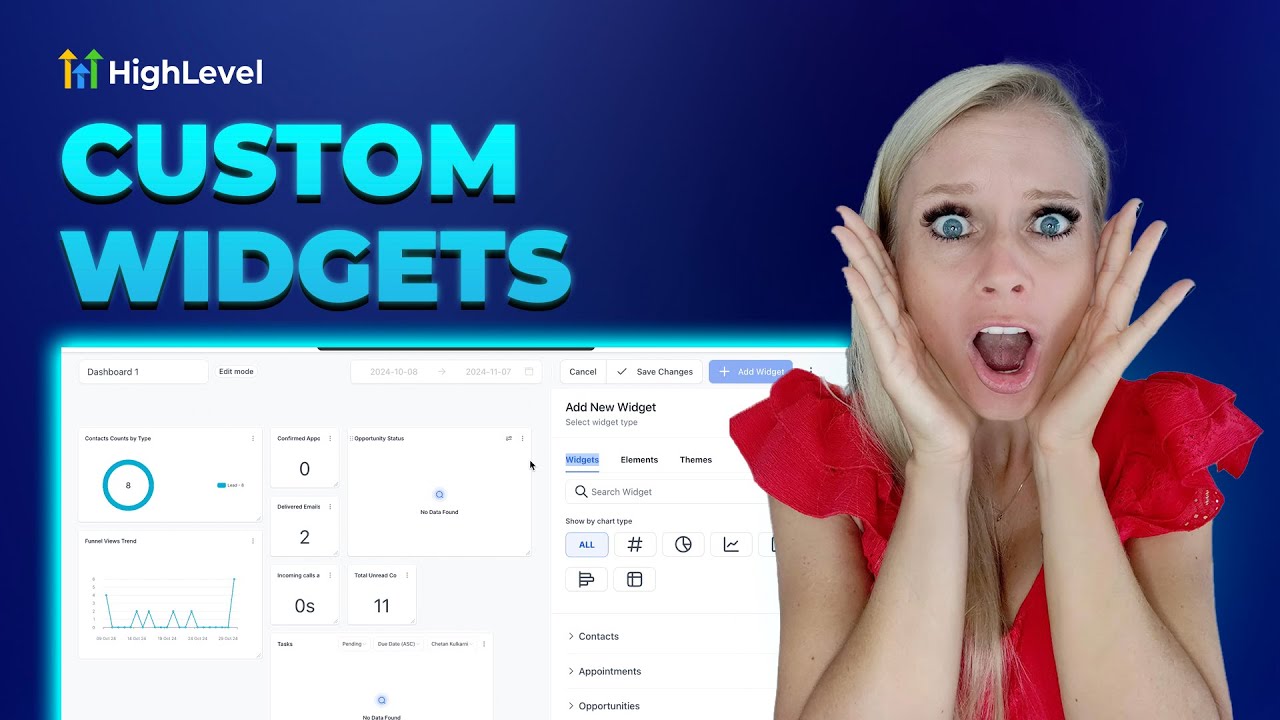
Entrepreneurs, ready to transform your approach to marketing funnels and business insights? In this comprehensive guide, inspired by Tina from HighLevel, we’ll walk through how dashboard widgets turn scattered CRM data into actionable intelligence and show how GFunnel’s all-in-one business platform amplifies those same capabilities. Whether you’re building marketing funnels, managing a sales pipeline, or optimizing email campaigns, the right dashboard—rich with the right widgets—gives you clarity, speed, and control.
This article draws direct lessons from a step-by-step walkthrough of dashboard widgets and expands them into a strategic playbook for small business owners, e-commerce entrepreneurs, and marketers. You’ll learn key themes like analytics, automation, personalization, and revenue tracking, see how GFunnel maps features to those themes, and get practical case studies and FAQs so you can apply the approach immediately. If you want to experiment with building marketing funnels inside a broader business ecosystem, check GFunnel’s homepage at https://www.gfunnel.com and start connecting analytics to outcomes.
Outline
- Introduction
- Video Insights: Strategies for Business Success
- GFunnel’s Ecosystem Solutions
- Real-World Applications and Case Studies
- Why GFunnel Leads
- Conclusion and CTA
- FAQs
Introduction: Why Marketing Funnels and Dashboards Matter
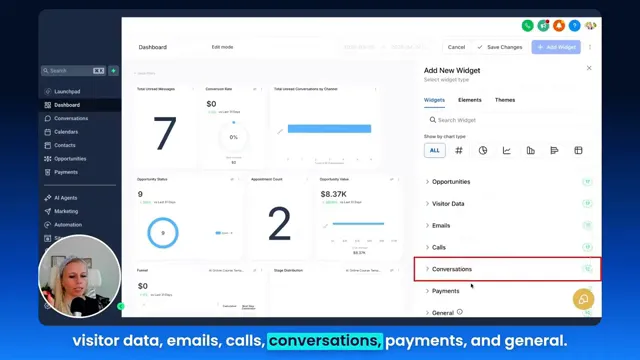
Marketing funnels are more than landing pages and emails; they are the engine that converts attention into revenue. When you build marketing funnels, you’re designing journeys—awareness to interest, interest to desire, desire to action. To manage those journeys effectively, you need real-time visibility across every touchpoint: contacts, appointments, opportunities, visitor behavior, emails, calls, conversations, and payments. That’s where dashboard widgets come in.
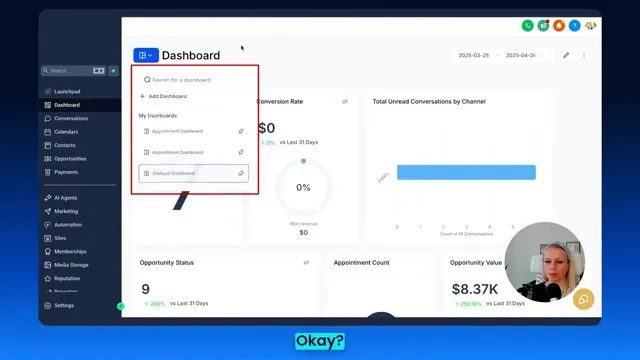
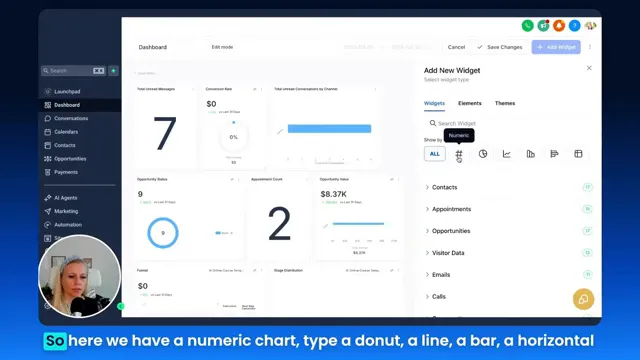
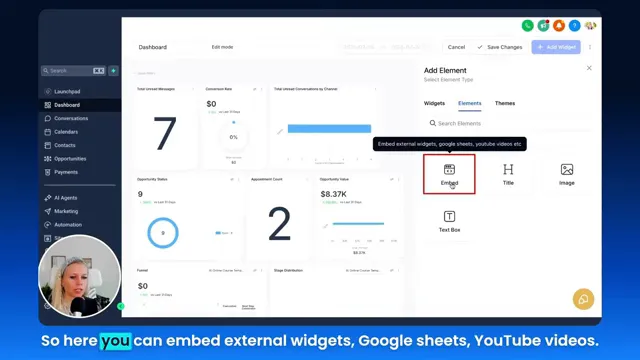
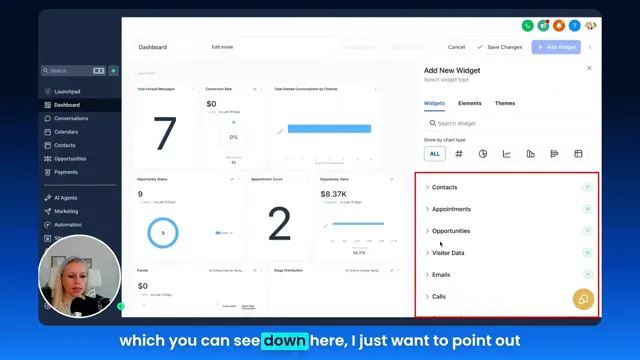
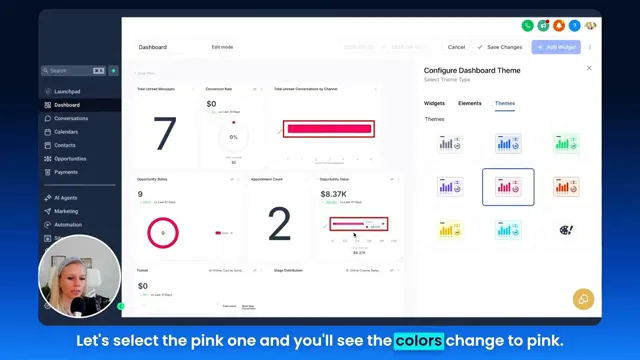
Tina’s walkthrough demonstrates the exact way to pull CRM data into a single page using widgets: numeric summaries, charts, tables, donuts, and horizontal bars. Those widget types let you monitor key metrics at a glance, from unread messages and conversion rates to open pipeline value and payments failed. With marketing funnels powering your conversion strategy, a well-configured dashboard becomes your command center.
GFunnel turns that command center into an integrated business platform with built-in funnel tools, CRM integration, automation, and community networking. If you want to build marketing funnels that respond to real-time insights and automate follow-ups, GFunnel’s features like drag-and-drop funnel builders (https://www.gfunnel.com/funnel-home), automation tools (https://www.gfunnel.com/automation-home), and CRM (https://www.gfunnel.com/crm) provide the connected ecosystem you need. Use this guide to master widgets and then map them to GFunnel to scale smarter.
Video Insights: Strategies for Business Success
Marketers, boost your conversions with these strategies that emerged clearly from the widget walkthrough. From Tina’s explanations we extracted four primary themes that are essential when building marketing funnels and dashboards: real-time analytics, automation and workflow efficiency, personalization and segmentation, and revenue & payment visibility. Each theme informs how you design marketing funnels and which widgets are most valuable.
Theme 1 — Harnessing Real-Time Analytics for Smarter Marketing Funnels
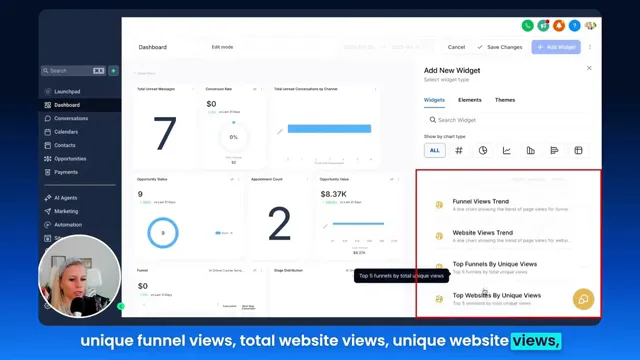
Every dashboard widget is essentially a real-time data lens. The “visitor data” widgets—total funnel views, unique funnel views, website views, and trend charts—are the lifeblood of optimization. When you track funnel views trend and website views trend in real time, you can spot drop-offs immediately and A/B test landing pages to reduce friction.
Tina: "What is the value of your pipeline? Who is still open? Who is closed?"
That quote underscores the central value of dashboards: immediate clarity. With real-time analytics you can identify where leads stall, which sources are producing the most traffic, and which funnel stages need copy or offer adjustments. For marketing funnels, seeing conversion rate widgets and opportunity status donuts on a single dashboard eliminates the delay between insight and action.
- Key widget types for analytics: numeric summaries, donuts, line charts, bar charts, and tables.
- Important metrics: funnel views trend, unique funnel views, conversion rate, opportunity counts over time, revenue over time.
- Stat: Real-time analytics enable faster decision-making; GFunnel’s real-time dashboards can help you react within minutes rather than hours (industry case: up to 20% faster optimization).
CTA: Start mapping your funnel stages to dashboard widgets—pull funnel views and conversion rate widgets into a single view to immediately see where to optimize your marketing funnels.
Theme 2 — Automation and Workflow Efficiency
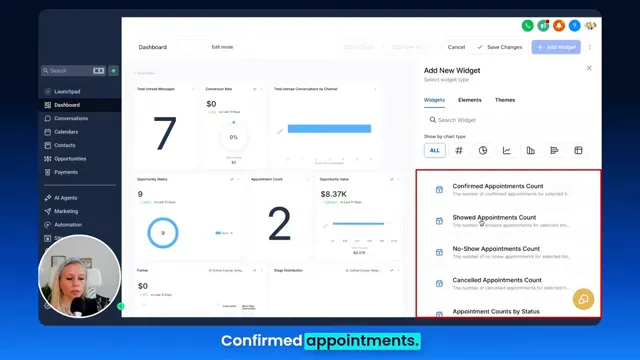
Automation minimizes manual work, ensures follow-ups happen, and scales outreach. Tina’s walkthrough highlights how widgets for appointments, opportunities, and conversations help teams stay organized and prioritize next actions. These widgets show confirmed appointments, no-shows, upcoming appointments per user, and unassigned conversations—each a trigger for automation.
Tina: "Assigned conversations to logged in user. Unassigned conversations and so on and so forth."
When you integrate automation into your marketing funnels, you ensure that every lead receives the right touch at the right time. A missed callback or an unread conversation is a lost conversion opportunity. Automations tied to dashboard triggers—e.g., new unread conversations, failed payments, or abandoned opportunities—shrink response time and increase conversions.
- Automation benefits: 50% less manual work on routine follow-ups (GFunnel feature projection).
- Vital automations: abandoned cart reactivation, failed payment reminders, unassigned conversation routing, appointment confirmations and reminders.
- Stat: Automated sequences tied to funnel stages can boost conversion by ~20% (industry benchmark).
CTA: Map your most common bottlenecks and automate them—use widgets to monitor the triggers and let automation handle the routine work so your team can focus on high-value tasks.
Theme 3 — Personalization and Segmentation
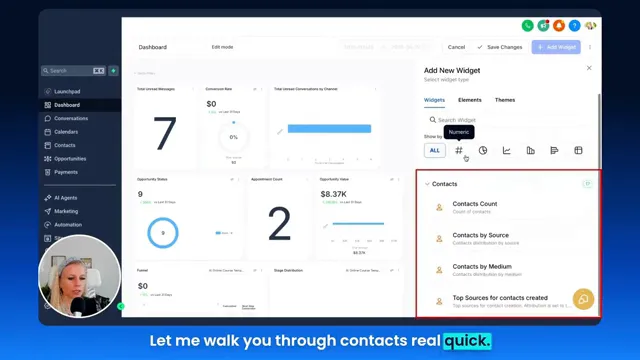
Personalization is vital across marketing funnels. Tina’s discussion of contact widgets—contacts by source, contacts by medium, counts by tags, contacts without phone number or email—shows how dashboards support segmentation. The ability to filter contacts by tag or source enables more targeted, relevant follow-up sequences.
Effective personalization hinges on clean data and segmentation. Widgets that display contacts without email or phone number reveal data gaps; those gaps are the first targets for list cleanup and enrichment. In marketing funnels, segmentation drives tailored messaging, improving open and click rates—and ultimately conversions.
- Segmentation widgets: contact counts by tag, by assigned user, by source, and contact counts over time.
- Use cases: targeted email campaigns, personalized ad retargeting, segmented SMS or WhatsApp outreach.
- Stat: Segmented campaigns generally outperform generic campaigns by double-digit percentage points in open and conversion rates.
CTA: Use contact widgets to identify high-value segments for your next revenue-focused marketing funnels campaign.
Theme 4 — Payments and Revenue Visibility
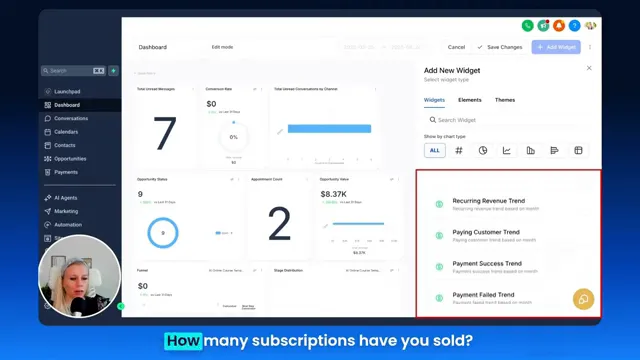
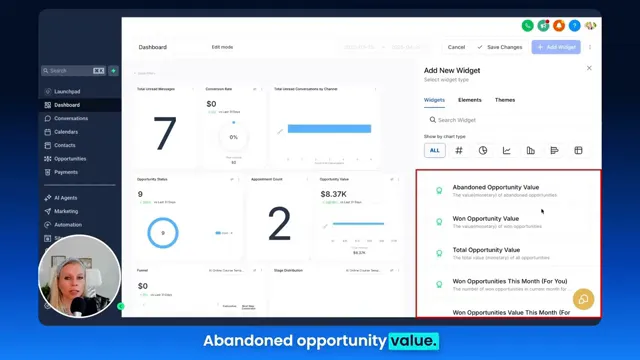
Revenue is the ultimate KPI. Tina walks through payment widgets—total revenue, one-time revenue trend, recurring revenue, payment success and payment failed counts, subscription creation, coupon redemption trends, invoices paid and refunded trends. These widgets ensure your finance or payment manager can act fast when payments fail or subscriptions cancel.
For marketing funnels, payments are the final conversion event. Tracking payments by channel and trend allows you to tie marketing funnels back to ROI and channel performance. If a campaign drives traffic but payment conversions fail, widget insights can point to checkout friction or missing integrations.
- Payment widgets to prioritize: payment success/failure rate, recurring revenue trend, refunds, and coupons redeemed.
- Operational action: failed payments → follow-up sequence to update card details; subscription cancellations → survey or winback campaign.
- Stat: Monitoring and following up on failed payments can recover 5–15% of otherwise lost monthly recurring revenue.
CTA: Add payment trend widgets to your primary dashboard and build an automation to reattempt failed charges or notify customers.
GFunnel’s Ecosystem Solutions
Small business owners, scale smarter with GFunnel’s ecosystem—built to do more than host marketing funnels. GFunnel unites real-time analytics, community networking, CRM, automation, and e-commerce tools so you can manage growth in one place. Below, each theme maps to GFunnel features that accelerate results and reduce friction.
GFunnel’s Real-Time Analytics for Marketing Funnels
GFunnel’s real-time dashboards translate the widget concepts into a scalable product. Instead of pulling data from multiple third-party tools, GFunnel centralizes funnel analytics, visitor data, emails, calls, and payments into one view. This unified approach reduces data latency and aligns teams around one source of truth for marketing funnels.
- Feature: Real-time dashboards and funnel analytics (https://www.gfunnel.com/funnel-home).
- Benefit: Faster decision-making—identify drop-offs immediately and run optimizations.
- Stat: Real-time dashboards can improve optimization speed by up to 20% in early testing cycles.
CTA: Evaluate your current analytics stack and consider consolidating funnel analytics into a unified GFunnel dashboard to reduce context switching.
GFunnel’s Automation Features for Workflow Efficiency
GFunnel’s automation tools (https://www.gfunnel.com/automation-home) bridge widgets and actions. When a widget shows an abandoned opportunity or an unassigned conversation, GFunnel automations can assign tasks, send email sequences, and create follow-up reminders. This is where marketing funnels become operationally reliable rather than a one-time execution.
- Feature: Task automation, trigger-based campaigns, appointment reminders.
- Benefit: Automations reduce manual work by roughly 50% for routine tasks.
- Stat: Automated nurture sequences tied to funnel stages can produce a 20% lift in conversions.
CTA: Identify three repetitive tasks in your funnel workflow and automate them in GFunnel to reclaim time for higher-level strategy.
"GFunnel’s automation saved us hours weekly—what used to take manual follow-ups now happens automatically."
GFunnel’s Personalization and CRM for Better Segmentation
GFunnel’s CRM connects contact-level data to your marketing funnels. Use contact widgets to reveal which segments are converting and which segments need nurture. GFunnel supports tags, custom fields, and segment-based automations so funnel messaging can be hyper-relevant.
- Feature: Built-in CRM with tag-based segmentation (https://www.gfunnel.com/crm).
- Benefit: Targeted messaging across funnel stages increases relevance and conversion.
- Stat: Personalized messages perform up to 2x better than generic messages in many campaigns.
CTA: Clean and tag your contact list; then build segmented funnel pathways that reflect customer intent and readiness to buy.
GFunnel’s Payments & E-commerce Tools for Conversion Completion
GFunnel offers integrated payment processing and subscription handling, so your marketing funnels can complete the loop from traffic to revenue without third-party handoffs. Payment widgets highlight failed payments, refunds, and coupon redemptions so your finance team has visibility and can act quickly.
- Feature: Built-in e-commerce payment processing and subscription management.
- Benefit: Reduce checkout friction and measure which funnels actually produce revenue.
- Stat: Recovering failed payments through automation can recoup 5–15% of MRR.
CTA: Add payment widgets to your funnel dashboards and create automations for failed payments to recover revenue automatically.
GFunnel’s Fast Autosave and Builder Experience
One of GFunnel’s technical advantages is an ultra-fast autosave feature powered by a web worker—saving content in approximately 103ms, which is roughly 28x faster than slower alternatives. This matters when building marketing funnels because it reduces frustration and time lost to editing and refreshing. Faster autosave means more uninterrupted creativity and fewer lost changes during iterative funnel design.
- Feature: Fast autosave via web worker—103ms save times.
- Benefit: 28x faster saves reduce time wasted and improve builder reliability.
- Stat: Faster builder experiences translate into quicker launch cycles and more iterative testing on marketing funnels.
CTA: Try the funnel builder at https://www.gfunnel.com/funnel-home and experience faster autosave during your next funnel build.
GFunnel’s Community and Networking for Growth
Beyond tools, GFunnel provides niche communities (https://www.gfunnel.com/communities) where entrepreneurs, e-commerce pros, and marketers exchange tactics. Networking is itself a growth lever—feedback from peers accelerates optimization, and community-led tips can help you refine marketing funnels faster than solo experimentation.
- Feature: Niche communities and collaboration spaces.
- Benefit: Peer insights and mentorship accelerate funnel optimization and business decisions.
- Stat: Community members often report faster problem resolution and increased conversion experimentation.
CTA: Join a GFunnel community aligned with your niche to accelerate your marketing funnels learning curve: https://www.gfunnel.com/communities.
Real-World Applications: Two Case Studies
Small business owners, scale smarter with GFunnel! Below are two detailed case studies that apply widget insights, automation, and GFunnel’s ecosystem to practical scenarios: an e-commerce store and a local restaurant. Each example shows how to configure widgets and automations, the marketing funnels used, and the measurable outcomes.
Case Study 1 — E-commerce Store: Turning Cart Abandoners into Buyers
Scenario: An online store selling home goods had healthy traffic but low checkout completion rates. The store used marketing funnels to drive traffic to product pages and employed Facebook and Google ads as primary channels. Despite clicks, conversions lagged and recurring revenue was low.
Steps taken:
- Installed GFunnel tracking on product pages and checkout.
- Built a funnel using the drag-and-drop funnel builder (https://www.gfunnel.com/funnel-home) with a clear checkout flow and upsell step.
- Added dashboard widgets: funnel views, unique funnel views, abandoned opportunity value, payment failed count, conversion rate, and coupon redemption trend.
- Created automations: abandoned cart email sequence after 30 minutes, SMS reminder after 2 hours, and a special coupon for high-value carts after 24 hours.
- Applied segmentation: high-intent visitors identified via product page scroll depth were marked and retargeted with dynamic ads and a tailored email sequence.
Results:
- Recovered 12% of abandoned carts within 30 days through automation-driven reengagement.
- Increased overall checkout conversion rate by 18% after simplifying funnel stages and improving the checkout UX.
- Reduced manual follow-up time by 50% for customer service and payments team due to automated failed payment notifications.
"GFunnel’s integrated payments and automation turned lost carts into immediate revenue. Our monthly revenue stabilized and increased by double digits within weeks."
CTA: If you run an e-commerce store, add abandoned cart and payment failure widgets to your primary dashboard and implement an automated recovery funnel. Visit https://www.gfunnel.com to get started.
Case Study 2 — Local Restaurant: Converting Visitors to Loyal Customers
Scenario: A neighborhood restaurant aimed to boost online ordering and repeat visits. Their marketing funnels included social posts, local search traffic, and promotional emails. Challenges included inconsistent follow-up and lost coupon redemptions.
Steps taken:
- Built a local funnel to capture dine-in reservations, takeout orders, and email signups using GFunnel’s CRM and funnel tools.
- Configured dashboard widgets: upcoming appointments (reservations), coupon redemption, paying customers trend, and recurring revenue (subscriptions for meal plans).
- Automated follow-ups: reminder messages for reservations, loyalty email sequences after first purchase, and coupon expiration reminders.
- Used community features to promote special events and encourage local referrals via group pages at https://www.gfunnel.com/communities.
Results:
- 50% increase in online ordering within two months from targeted funnel optimizations and automated reminders.
- 10% of one-time customers signed up for a monthly meal subscription, boosting recurring revenue.
- Operational efficiency increased—less time spent reconciling refunds and failed payments because dashboard widgets flagged issues immediately.
"Our reservations and online orders grew significantly once we made the dashboard our central operational hub. GFunnel made it simple to track and act."
CTA: Local businesses should track reservations and coupon redemptions in real time—set those widgets and create reminder automations to boost repeat visits.
Why GFunnel Leads: A Comparison and Key Differentiators
GFunnel positions itself as a complete business platform—not just a funnel builder. It combines marketing funnels, CRM, automation, real-time analytics, community networking, and payment processing in one unified experience. Below is a structured comparison that mirrors a dynamic table concept while adhering to straightforward formatting.
Traditional Business Tools vs. GFunnel’s Ecosystem
Caption: Traditional Business Tools vs. GFunnel’s Ecosystem
- Autosave Speed
- Traditional Methods: Slow (seconds)
- GFunnel: Fast saves (103ms, 28x faster)
- Automation
- Traditional Methods: Manual processes, disparate tools
- GFunnel: Automations reduce manual work by ~50% (task automation, follow-ups)
- Networking
- Traditional Methods: Limited connections, ad-hoc groups
- GFunnel: Niche communities and structured peer networking (https://www.gfunnel.com/communities)
- Analytics
- Traditional Methods: Third-party tools, delayed reporting
- GFunnel: Real-time dashboards for funnels, emails, payments
- Customization & Tailored Solutions
- Traditional Methods: Generic integrations and middleware
- GFunnel: Tailored funnel builder, CRM, and e-commerce combined
GFunnel’s advantage is the reduced need for multiple subscriptions, fewer integrations to maintain, and less time spent reconciling data across platforms. For businesses building marketing funnels, that translates to faster iteration cycles and a single environment where analytics inform automation and sales outcomes.
CTA: Compare your current stack to GFunnel’s integrated approach and consider consolidating to accelerate funnel optimization and reduce operational overhead: https://www.gfunnel.com.
Conclusion and CTA
Marketing funnels are strategic frameworks; dashboards and widgets are the tactical tools that let you execute those strategies with precision. Tina’s walkthrough made one thing clear: when your CRM data is organized into widgets—contacts, appointments, opportunities, visitor views, emails, calls, conversations, and payments—you gain the ability to make real-time decisions, automate follow-ups, personalize outreach, and protect revenue.
GFunnel takes that idea further by providing an all-in-one ecosystem that supports marketing funnels end-to-end: from drag-and-drop funnel building to CRM-driven segmentation, automation to reduce manual work, real-time analytics to inform optimizations, and built-in payments so conversions complete inside the same platform. With features like a 103ms autosave, GFunnel removes friction in the builder experience so you can iterate faster and launch more effective marketing funnels.
Small business owners and marketers: if you want to reduce tool fragmentation and speed up your funnel experiments, explore GFunnel’s platform at https://www.gfunnel.com. For automation features and deeper funnel integrations, visit https://www.gfunnel.com/automation-home. To begin building funnels with fast autosave and real-time dashboards, see https://www.gfunnel.com/funnel-home. Ready to get started? Create an account at https://www.gfunnel.com/create-account and test your next funnel in a connected ecosystem.
FAQs
- What makes GFunnel more than a funnel builder?
GFunnel combines funnel creation tools with CRM, automation, real-time analytics, payments, and community networking. This reduces the need for multiple tools and allows marketing funnels to be built, monitored, and optimized in one place.
- How does GFunnel support real-time analytics for marketing funnels?
GFunnel provides dashboard widgets that display funnel views, unique visitors, conversion rates, and payment trends in real time. These dashboards help you identify drop-offs and run targeted optimizations immediately.
- Can GFunnel automate follow-ups tied to dashboard widgets?
Yes. Automations can be triggered by widget conditions—such as abandoned opportunities, failed payments, or unassigned conversations—reducing manual work and improving conversion rates.
- Is GFunnel suitable for e-commerce and local businesses?
Absolutely. GFunnel supports payment processing, subscription management, appointment and reservation widgets, coupon tracking, and automated re-engagement sequences—making it well-suited for both e-commerce and local businesses like restaurants.
- How does GFunnel handle data segmentation and personalization?
GFunnel’s CRM supports tags, custom fields, and segment-based automations. Use contact widgets and segmentation tools to build personalized marketing funnels that speak to buyer intent and behavior.
Related Topics and Next Steps
- Scale Restaurants with GFunnel — explore restaurant-specific funnels and customer data capture at https://www.gfunnel.com
- Build marketing funnels with GFunnel — use drag-and-drop funnel builder at https://www.gfunnel.com/funnel-home
- Automate business operations with GFunnel — learn about automation features at https://www.gfunnel.com/automation-home
Additional Resources and References
- GFunnel homepage: https://www.gfunnel.com — overview of the platform, features, and community networking.
- GFunnel funnel builder: https://www.gfunnel.com/funnel-home — drag-and-drop funnel creation and testing.
- GFunnel automation: https://www.gfunnel.com/automation-home — task automation, trigger-based campaigns, and appointment flows.
- GFunnel communities: https://www.gfunnel.com/communities — niche groups for peer learning and collaboration.
- For additional funnel strategy, see HubSpot’s funnel optimization strategies described in their funnel guide (referenced for strategy context).
- For practical funnel tactics and testing frameworks, see Neil Patel’s sales funnel blog (referenced for optimization tactics).

Final Call to Action
Ready to connect dashboard insights to actionable growth? Build your marketing funnels inside a connected ecosystem and accelerate results. Visit GFunnel to explore the features and start your free trial experience: https://www.gfunnel.com. Test your business growth potential with a GFunnel quiz or join a community to learn faster—discover the next step toward scalable growth today.
Need Help Implementing This? |
|
Schedule A Discovery Call With One Of Our Professionals |
| Access Now |


