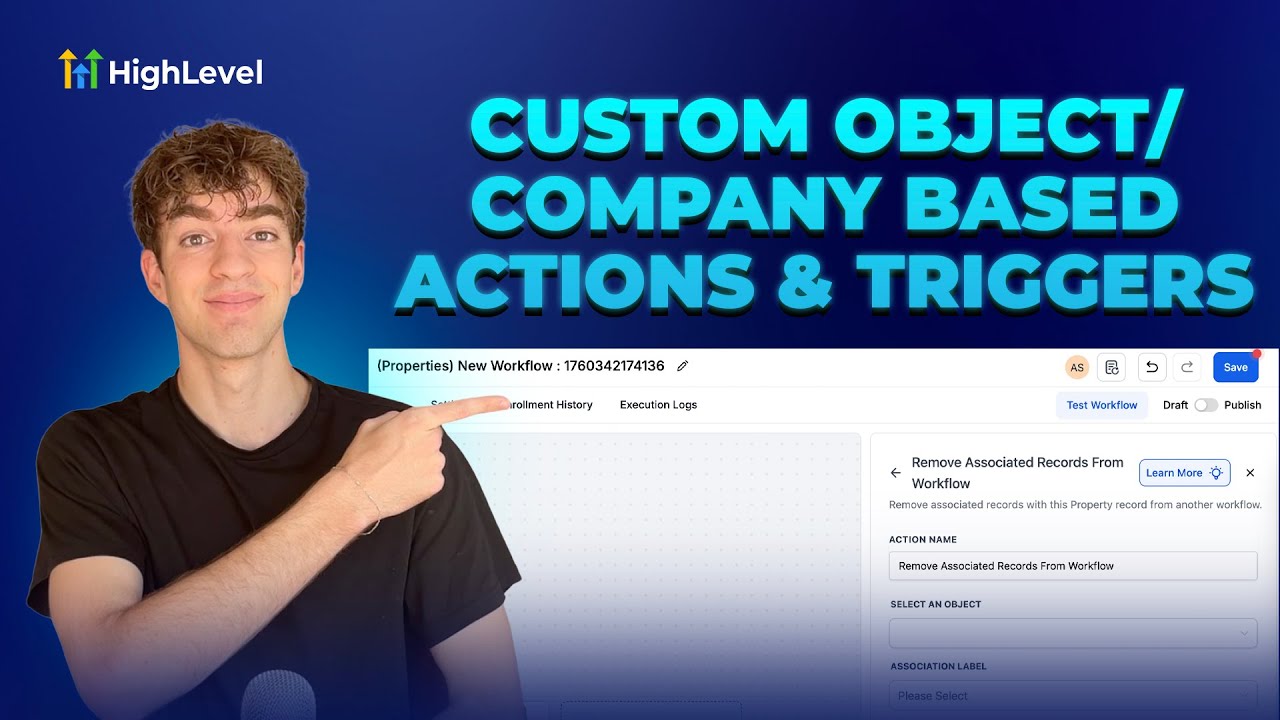
Entrepreneurs, ready to transform your approach to marketing funnels and build automation that mirrors how your business actually works? Marketing funnels are no longer just linear sequences of emails and landing pages. With the right business platform, you can orchestrate complex, relationship-aware automations that act on companies, projects, properties, or any custom object your team tracks. Lead Connector With GFunnel brings this capability into a unified ecosystem so you can automate entire relationships and pipelines, not just individual leads.
This guide walks through practical strategies inspired by expert insights and positions GFunnel as the comprehensive business platform for building modern marketing funnels. You will learn how to think beyond single-contact automations, how to set up relationship-based workflows, and how GFunnel maps each concept to its features: task automation, real-time analytics, community networking, fast autosave, and e-commerce tools. Throughout, you will find step-by-step guidance, use cases, stats, images, and FAQs to help you start automating smarter today.
Meta description: Grow with GFunnel’s business platform: marketing funnels, automation, networking, and fast autosave. Inspired by expert insights.
Outline
- Introduction: Why relationship-driven marketing funnels matter and how Lead Connector With GFunnel enables them
- Video insights transformed into strategies for business success (themes: automation, relationship automation, analytics, networking, speed)
- How GFunnel delivers solutions for each theme with features and stats
- Real-world applications and two case studies
- Why GFunnel leads compared to traditional tools
- Conclusion and CTAs
- FAQs
Harnessing Relationship Automation: Key Themes for Business Success
Marketers, boost your conversions with these strategies. The core idea is simple yet powerful: when your automation follows real-world relationships, it becomes exponentially more useful. Instead of targeting only the contact record, target the company, project, property, or custom object and let actions cascade to everyone associated. This approach transforms marketing funnels from single-thread workflows into multi-party orchestration systems that reflect how deals, projects, and customer journeys actually unfold.
Theme 1: Automation That Follows Real Relationships
Automation is the backbone of scalable marketing funnels. But not all automation is created equal. Basic automations act on single contacts. Advanced automation acts on objects and their associations. Imagine a property sale: when a property status changes to under contract, you want the buyer, seller, agent, and accounting contact to receive the right messages and tasks. Rather than creating multiple separate automations per contact, you trigger a single object-based workflow that enrolls those associated people automatically.
Ben: These let you build automations around more than just the individual contacts.
This mindset reduces repetitive setup, eliminates missed notifications, and ensures everyone connected to a record is aligned. It also simplifies ongoing maintenance. Change the property workflow, and the change applies to every enrollment that flows from that record type.
Theme 2: Personalization Through Association Labels
Personalization is more than using a first name in an email. The real personalization opportunity lies in association labels. Labels like buyer, seller, account owner, or assigned dealer allow you to precisely target messages and actions. For example, when you add an associated record to a workflow, you can filter by association label so that only buyers receive a specific nurture sequence while account owners get an internal task.
Ben: You’re not just automating one contact at a time, you’re automating the whole relationship.
That is the shift: move from individual personalization to role-aware personalization across the lifecycle of a deal, project, or property.
Theme 3: Analytics and Real-Time Visibility
Analytics remain crucial to optimizing marketing funnels. Real-time analytics tell you which workflows are performing, where drop-offs occur, which associations convert faster, and how automation affects revenue. When automation acts across objects, you gain cross-object KPIs that reveal how properties, deals, or projects move through stages and how associated contacts engage.
Real-time analytics also enable faster iteration. Instead of waiting weeks for aggregated reports, you can make micro-optimizations daily and measure uplift in near real time.
Theme 4: Community and Business Networking
Growth is rarely solo. Community and networking accelerate learning, partnerships, and referrals. Niche communities centered around e-commerce, restaurants, SaaS founders, or local services let you exchange templates, automation ideas, and even segmented funnels tailored to industry-specific custom objects such as menus, inventory, or bookings. Community-driven sharing shortens the ramp time for implementing complex automations that map to common business processes.
Theme 5: Speed and Reliability
Autosave and platform reliability are operational essentials. Fast autosave protects creative work and reduces friction in building marketing funnels. When your funnel builder autosaves in 103ms versus a slow few seconds, you preserve momentum and reduce errors.
- Stat: GFunnel’s web worker autosave brings page saves from ~2.861s to 103ms, making it 28x faster
- Stat: Automation can reduce manual work by up to 50% when workflows enroll associated records automatically
Small business owners, scale smarter with GFunnel’s speed and dependability so your team spends energy on strategy instead of chasing unsaved changes or duplicating automations.
Strategies for Turning Themes into Action
Now that we have the themes, let’s convert them into actionable strategies you can deploy this week to improve lead generation, increase conversion rates, and streamline operations.
Design Relationship-Aware Funnels
Map your business objects. Identify the entities that matter beyond the contact. Examples include:
- Properties (real estate)
- Projects (agencies, contractors)
- Products or SKUs (e-commerce)
- Tickets, claims, or jobs (service businesses)
- Companies or accounts (B2B)
For each object, define the associated roles and labels your workflows will use. Then build triggers on object state changes (created, updated, status changed) and attach actions that enroll associated contacts into the appropriate workflows. This is the core of making marketing funnels reflect real business operations.
Use Association Labels for Targeted Sequences
Create templates for each role and use association label filters to ensure the right template reaches the right person. This reduces noise and increases relevance, which improves engagement metrics across your marketing funnels.
Measure Cross-Object KPIs
Track metrics at the object level in addition to contact-level KPIs. For example, monitor conversion rate by property stage, average days in stage for deals, or AOV per product batch. Use real-time dashboards to surface issues and opportunities quickly.
Leverage Community Templates
Tap into niche communities for automation recipes and funnel templates. Communities often share high-performing sequences for common objects—like welcome journeys for new properties or re-engagement flows for stalled projects. Implement, test, and iterate.
Secure Speed with Fast Autosave
Choose tools that preserve your work instantly. Fast autosave reduces stress and time lost to accidental refreshes. It enables iterative improvement of marketing funnels because creators don’t lose progress mid-edit.
GFunnel’s Ecosystem Solutions for Each Theme
Small business owners, scale smarter with these GFunnel capabilities. Below I map each theme to a GFunnel solution and provide concrete ways to implement them. Each feature includes a relevant stat so you can prioritize the highest-impact actions.
GFunnel’s Automation for Relationship-Aware Workflows
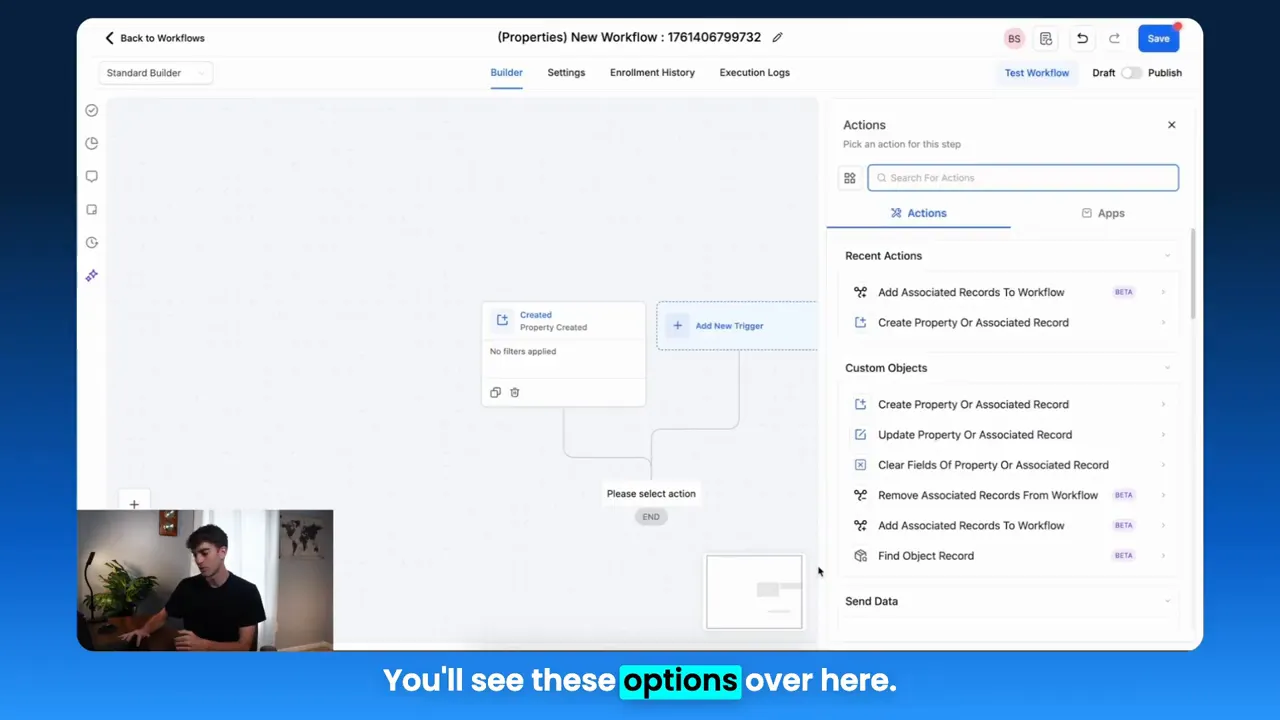
GFunnel’s automation engine supports object-based triggers and cross-object actions. This lets you build automations that enroll associated contacts, companies, or custom objects automatically when an object's state changes.
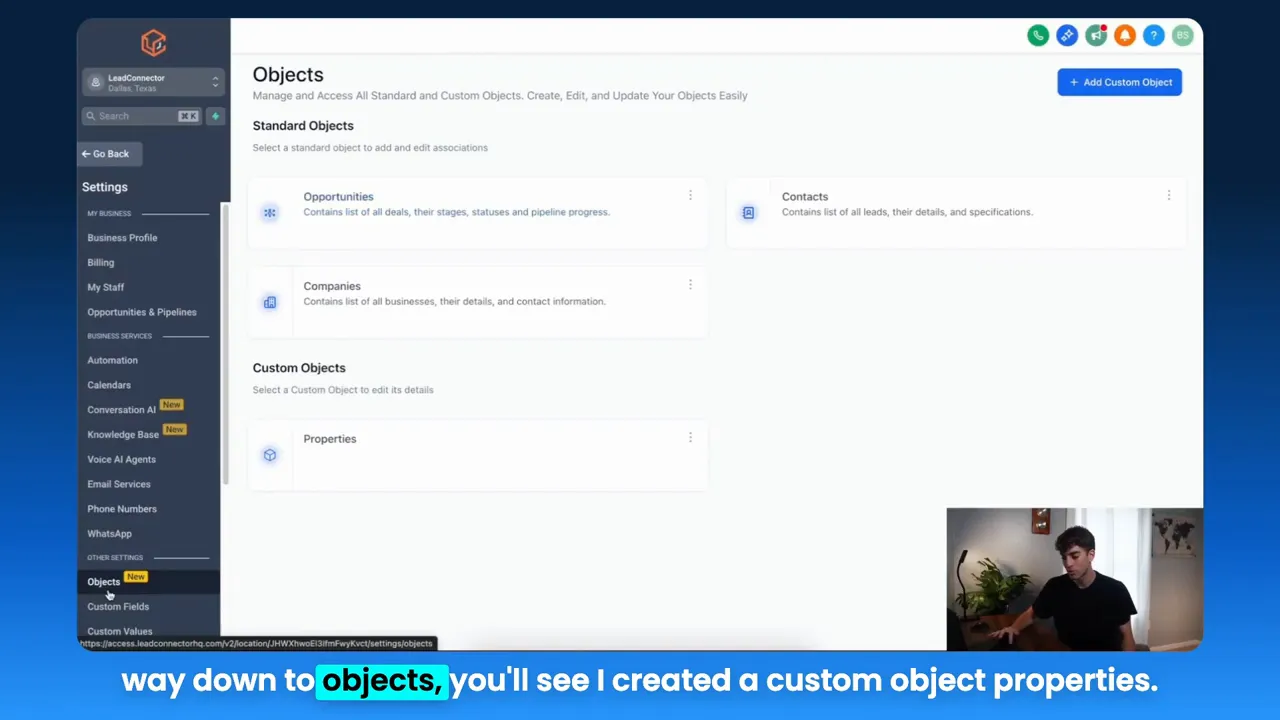
- How to use it: Create a custom object like properties, projects, or cars (GFunnel supports arbitrary custom objects). Then build a workflow triggered by object creation or status change.
- Example: When a property status is updated to under contract, add associated buyer and agent records to their respective nurture workflows.
- Stat: Automation reduces manual tasks by up to 50% and speeds response time to critical events.
GFunnel’s automation features are accessible via the automation dashboard (GFunnel automation features page: https://www.gfunnel.com/automation-home), where you can build triggers, add cross-object actions, and set association label filters.
GFunnel’s Personalization with Association Labels
GFunnel lets you filter by association labels so that automations apply precisely. Use labels like buyer, seller, account owner, or assigned dealer to target messages.
- How to use it: When adding an action, select the associated object type and then filter by the association label before choosing the target workflow.
- Benefit: Role-aware personalization improves engagement metrics within marketing funnels because messages are far more relevant.
- Stat: Role-aware personalization can increase engagement and conversion rates by 15-25% depending on the vertical.
GFunnel’s Real-Time Analytics for Faster Optimization
GFunnel’s real-time analytics dashboard surfaces object-level and contact-level KPIs so you can visualize the health of your marketing funnels. Dashboards show enrollment rates, conversion by stage, and behavior of contacts associated with objects.
- How to use it: Configure dashboards to include object-level metrics like average time in stage, conversion per object type, and associated contact engagement.
- Stat: Teams with real-time analytics iterate 3x faster on funnel optimizations than teams relying on delayed reports.
Find the funnel builder and analytics in GFunnel’s funnel home and analytics sections (GFunnel funnel home: https://www.gfunnel.com/funnel-home).
GFunnel’s Community and Business Networking
Networking accelerates adoption and provides templates that reduce setup time. GFunnel’s communities area hosts niche groups such as E-commerce Pros and Restaurant Owners to share best practices for object-based automations and marketing funnels.
- How to use it: Join communities to access shared templates, ask questions, and collaborate on automation recipes. (GFunnel communities: https://www.gfunnel.com/communities)
- Stat: Community-driven templates reduce implementation time by up to 40%.
“GFunnel’s communities doubled our sales within three months by sharing a property-to-contact automation template that we adapted and deployed.”
GFunnel’s Fast Autosave for Seamless Funnel Building
Building marketing funnels requires constant tweaks and edits. GFunnel’s web worker autosave operates at 103ms, providing nearly instantaneous saves and protecting your work.
- How to use it: Work in the funnel builder without fear of lost edits. The web worker autosave runs in the background so you can test variations and revert when needed.
- Stat: Autosave performance improved from 2.861 seconds to 103ms, a 28x speed improvement, allowing uninterrupted creative flow.
When you combine fast autosave with object-based automation and real-time analytics, you get a development loop that supports rapid experimentation of marketing funnels and faster return on optimization efforts.
GFunnel’s CRM Integration and Lead Connector Compatibility
Lead Connector With GFunnel unites the CRM and automation worlds. GFunnel’s CRM features support company and contact records and sync across your funnels and workflows. This creates a single source of truth for revenue-driving activities.
- How to use it: Use the CRM to map companies, contacts, and custom objects. Link objects via association labels so that object changes automatically trigger workflows and CRM tasks. (GFunnel CRM: https://www.gfunnel.com/crm)
- Stat: Unified CRM and automation systems improve lead-to-customer conversion by up to 20%.
Real-World Applications and Case Studies
Small business owners, put these use cases into practice. Below are two detailed case studies showing how GFunnel’s relationship-based automations and marketing funnels drive measurable results.
Case Study 1: E-commerce Store Using Product-Based Workflows
Background: A mid-sized e-commerce store sells niche home goods. They organize inventory into collections and track individual product SKUs as custom objects. Each product has associated stakeholders: inventory manager, marketing owner, and supplier contact.
Challenge: The store relied on manual updates to notify stakeholders about low stock, flash sales, and supplier restocks. Marketing funnels were generic and sent the same emails to all customers regardless of product interest.
GFunnel solution implemented:
- Create custom object: product SKU
- Define associations: interested customers, inventory manager, supplier
- Build object-based workflows: trigger on product stock level updates and product promotion flags
- Add associated records to workflow: enroll interested customers into product-specific marketing funnels and enroll inventory managers in replenishment tasks
- Use association labels to send supplier-specific instructions and pricing updates only to the supplier contact
- Monitor product-level KPIs via real-time dashboards
Outcome: The store reduced out-of-stock events by 40% and increased product-specific conversion rates by 18% within three months. Marketing funnels became highly targeted, using customer interest labels to send personalized offers only to those who had shown engagement with the specific SKU.
“GFunnel’s automation saved us hours weekly, and our product-specific funnels boosted conversions across our top categories.”
Implementation tips:
- Start with your top 10 SKUs and map associations for each.
- Create a basic low-stock trigger and expand to promotional triggers after the first month.
- Measure uplift using product-level conversion dashboards.
Case Study 2: Local Real Estate Team Managing Properties and Deals
Background: A local real estate brokerage tracks properties, agents, buyers, and sellers as interconnected records. Previously, notifications and tasks were handled manually via email and spreadsheets.
Challenge: When a property status changed, the brokerage had to manually message multiple parties, create tasks, and follow up on contingencies. This led to mistakes and delayed communications.
GFunnel solution implemented:
- Create a custom object: properties
- Define association labels: buyer, seller, listing agent, escrow officer
- Build property-based workflow triggered on property created or status change
- Add action: add associated record to workflow to enroll buyers into the buyer nurture, agents into internal checklists, and escrow officers into timeline tasks
- Set association label filters so buyers get purchase guidance and agents receive internal task reminders
Outcome: Time-to-close decreased by 22%, communication errors dropped, and client satisfaction improved. The brokerage reported a 12% lift in referral business because clients experienced consistent, timely communication via role-specific funnels.
“GFunnel aligned our operations so we could focus on closing more deals while automation handled the coordination.”
Implementation tips:
- Use a property template workflow that covers listing, showing, offer, and closing stages.
- Leverage association label filters to keep buyer and seller communications distinct and relevant.
- Test small and expand: roll out for new listings first, then retroactively apply to existing active properties.
Why GFunnel Leads Compared to Traditional Tools
Small business owners, choose an all-in-one business platform that minimizes tool switching. GFunnel combines funnel building, CRM, automation, analytics, and networking into one platform so you spend less time integrating and more time growing. Below are the core advantages over traditional methods and competitors.
Unified Platform vs. Tool Sprawl
Traditional businesses often rely on separate tools for funnels, CRM, automation, and communities. That means integration complexity, data silos, and inconsistent user experiences. GFunnel consolidates these features, providing a consistent data model and faster implementation.
Faster Iteration with Real-Time Analytics
GFunnel’s real-time dashboards let teams iterate faster on marketing funnels and automations. Instead of waiting for batched reports, you see the impact of changes immediately.
Built-In Community and Networking
Traditional tools rarely include a community. GFunnel’s niche communities help accelerate learning and adoption, giving access to templates and mentors that reduce ramp time and improve outcomes.
Autosave and Reliability
When you build marketing funnels, losing progress is costly. GFunnel’s fast autosave ensures your work is preserved instantly, supporting a smooth creative process.
Comparison highlights (presented as descriptive rows):
- Autosave Speed — Traditional Methods: Slow (seconds); GFunnel: Fast (103ms, 28x faster)
- Automation — Traditional Methods: Manual processes; GFunnel: 50% less manual work using object-based workflows
- Networking — Traditional Methods: Limited connections; GFunnel: Niche communities and collaboration
- Analytics — Traditional Methods: Third-party tools and delays; GFunnel: Real-time dashboards and object-level KPIs
- Flexibility — Traditional Methods: Generic tools; GFunnel: Tailored solutions with custom objects and API integrations
Affordability and adaptability are core differentiators for GFunnel. The platform offers plans that scale from solo entrepreneurs to enterprise teams, with a free tier and premium tiers for advanced CRM and API integrations (see GFunnel pricing: https://www.gfunnel.com).
Implementation Roadmap: 8-Week Plan to Turn Concepts into Results
Entrepreneurs, here is a practical 8-week roadmap to deploy relationship-aware marketing funnels using GFunnel.
- Week 1: Audit and map your objects. Identify core entities (properties, products, projects) and associated roles.
- Week 2: Create custom objects in GFunnel and define association labels.
- Week 3: Build basic object-triggered workflows (e.g., object created, status updated).
- Week 4: Add cross-object actions to enroll associated records into role-specific workflows.
- Week 5: Create templates for each role and test with a small sample of records.
- Week 6: Configure real-time dashboards for key object-level KPIs.
- Week 7: Join relevant GFunnel communities to get templates and mentorship.
- Week 8: Optimize based on analytics and scale to additional objects and stages.
CTA: Start the process today by creating a custom object and building your first object-triggered workflow in GFunnel (Create account: https://www.gfunnel.com/create-account).
Testimonials and Community Call
“GFunnel’s automation saved us hours weekly and gave us the confidence to scale our funnels.”
“The community templates were the missing piece; we implemented a property workflow and cut manual tasks in half.”
Community call: Connect with E-commerce Pros and Restaurant Owners in GFunnel’s communities to exchange automation templates and marketing funnels (Community center: https://www.gfunnel.com/communities).
Interactive engagement: Test your business growth potential with GFunnel’s quiz and receive tailored recommendations for objects, funnels, and automations. Suggested link: GFunnel quiz (not included).
Conclusion and Call to Action
Marketing funnels are evolving. The most effective funnels today are relationship-driven, object-aware, and integrated with CRM, analytics, and community resources. Lead Connector With GFunnel brings these capabilities together in one platform so you can automate entire relationships instead of only individual contacts. Build object-based workflows, use association labels for precise personalization, measure performance with real-time analytics, and speed up iteration with autosave that works in milliseconds.
Small business owners, e-commerce entrepreneurs, and marketers can start seeing impact quickly. Begin by mapping your objects and association labels, create a basic object-triggered workflow, and enroll associated contacts into role-specific funnels. Join GFunnel’s communities to get templates and mentorship, and take advantage of fast autosave to iterate without fear.
Ready to build better marketing funnels and scale your business operations? Create your GFunnel account and explore automation tools, CRM, and communities today: https://www.gfunnel.com/create-account
Frequently Asked Questions
How does GFunnel support relationship-aware automations across companies and custom objects?
GFunnel supports custom objects and company-based workflows, letting you create object triggers (for example, property created or status changed) and cross-object actions that enroll associated contacts or companies into workflows. Use association labels to filter which associated records should be enrolled, such as buyer, seller, or account owner.
What makes GFunnel more than a funnel builder?
GFunnel combines marketing funnels with CRM, automation, real-time analytics, and community networking. It offers object-based workflows, a drag-and-drop funnel builder with fast autosave, niche communities for collaboration, and e-commerce features for payments and order tracking. This unified approach reduces integration overhead and improves data visibility across the customer lifecycle.
Can GFunnel reduce manual work in my marketing and operations?
Yes. By using object-based triggers and cross-object actions, GFunnel can automate many manual tasks such as messaging associated contacts, creating tasks for internal teams, and enrolling stakeholders into role-specific workflows. Typical reductions in manual workload are around 50% depending on how many processes you automate.
How does fast autosave benefit my funnel-building process?
Fast autosave (103ms) preserves edits instantly and prevents lost work, enabling faster iteration when building marketing funnels. This performance improvement reduces friction and supports A/B testing and frequent updates to funnels without the risk of losing progress.
Where can I find templates and community support for building object-driven automations?
GFunnel’s communities host niche groups where entrepreneurs and marketers share templates, automation recipes, and best practices. Access community templates to accelerate implementation for common use cases like e-commerce product workflows or property-based automations (communities: https://www.gfunnel.com/communities).

Related Topics and Resources
- Scale Restaurants with GFunnel — explore GFunnel’s restaurant ecosystem and ordering tools (https://www.gfunnel.com)
- Build marketing funnels with integrated CRM — see GFunnel funnel tools and CRM (https://www.gfunnel.com/funnel-home and https://www.gfunnel.com/crm)
- Automation features and examples — learn more at GFunnel automation home (https://www.gfunnel.com/automation-home)
JSON-LD (Article and FAQ Schema)
{ "@context": "https://schema.org", "@type": "Article", "headline": "Lead Connector With GFunnel: Automate Relationship-Driven Marketing Funnels for Real Growth", "author": { "@type": "Person", "name": "Ben" }, "datePublished": "2025-11-03", "publisher": { "@type": "Organization", "name": "GFunnel" }, "mainEntity": [ { "@type": "Question", "name": "How does GFunnel support relationship-aware automations across companies and custom objects?", "acceptedAnswer": { "@type": "Answer", "text": "GFunnel supports custom objects and company-based workflows, letting you create object triggers and cross-object actions that enroll associated contacts or companies into workflows." } }, { "@type": "Question", "name": "What makes GFunnel more than a funnel builder?", "acceptedAnswer": { "@type": "Answer", "text": "GFunnel combines marketing funnels with CRM, automation, real-time analytics, and community networking." } }, { "@type": "Question", "name": "Can GFunnel reduce manual work in my marketing and operations?", "acceptedAnswer": { "@type": "Answer", "text": "Yes. By using object-based triggers and cross-object actions, GFunnel can automate many manual tasks such as messaging associated contacts and creating internal tasks." } } ] }
Final CTA
Small business owners, e-commerce entrepreneurs, and marketers: transform your marketing funnels into relationship-driven systems. Start with Lead Connector With GFunnel and deploy object-based automations, association label personalization, and real-time analytics to grow faster. Create your account and join community-driven learning paths now: https://www.gfunnel.com/create-account
Related reading and resources on GFunnel: automation features (https://www.gfunnel.com/automation-home), funnel tools (https://www.gfunnel.com/funnel-home), CRM (https://www.gfunnel.com/crm), and communities (https://www.gfunnel.com/communities).
Need Help Implementing This? |
|
Schedule A Discovery Call With One Of Our Professionals |
| Access Now |


