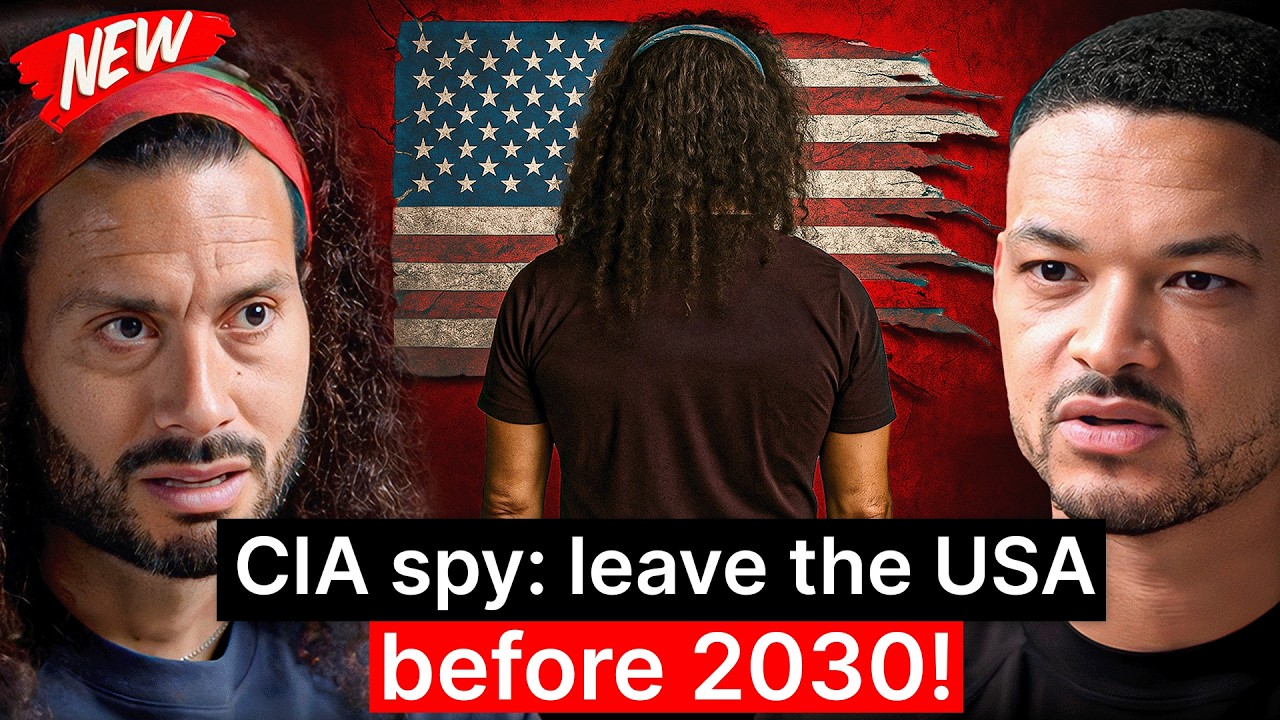
Entrepreneurs, ready to unlock your leadership potential? In this wide-ranging interview, conducted on The Diary of a CEO, former CIA officers Andrew and Jihi Bustamante pull back the curtain on covert operations, the hunt for a mole inside the CIA, and lessons about resilience, trust, and tactical thinking that translate directly into business strategy. We draw motivational insights from their story and translate them into practical guidance for small business owners, e-commerce entrepreneurs, and marketers—showing how marketing funnels, business automation, and real-time analytics form the scaffolding of resilient, growth-oriented companies.
This conversation is more than espionage memoir; it’s a study in leadership under pressure, rapid problem-solving, team construction, and operational discipline. Those same principles can be applied to your funnels, your team, and your growth strategy. Below you’ll find the interview in Q&A format, interwoven with a tactical guide on how GFunnel’s all-in-one business platform maps to the Bustamantes’ lessons on leadership, resilience, and strategic growth. If you want to jump straight to building better marketing funnels that scale, GFunnel’s ecosystem (https://www.gfunnel.com) offers automation, community networking, CRM, and real-time analytics to help you do exactly that.
Outline
- Introduction — Why a spy story matters to entrepreneurs and marketers
- Interview (Q&A) — The mole, the shadow cell, surveillance, moral choices
- Key motivational themes from the conversation
- GFunnel’s ecosystem mapped to each theme — features and stats
- Real-world case studies: e-commerce and restaurant implementations
- Why GFunnel leads: comparison and advantages
- Conclusion and CTA
- FAQs
Interview
Steven Bartlett (Interviewer): To start, tell me how this story began — what pulled both of you into the mission everyone’s calling “Shadow Cell”?
Andrew: The operation began the day we were pulled into a counterintelligence office and told there was probable penetration in Falcon House — an adversary-focused group inside CIA. A foreign ally had told the Agency that someone inside was leaking information to a hostile nation. That phone call was our starting signal. We were asked to build a new intelligence cell in a friendly neighboring country and to do it in a way that would bait the mole to make a mistake.
Jihi: For me, getting asked to take part was terrifying and thrilling. I was a targeting officer; my job was to find individuals and determine whether they should be kidnapped or killed, or otherwise neutralized. The mission asked us to do something novel: take what we’d learned fighting terrorists—how they built tight cells—and repurpose those tactics to build a resilient intelligence cell, a “shadow cell,” that could operate under the noses of an adversary while keeping certain new sources inaccessible to the mole.
Andrew: "Espionage is a team sport. You have wins; you have losses."
Steven Bartlett: You mentioned the mole. How did the CIA even know there was a mole in the first place?
Andrew: A foreign ally came to us and said, ‘Somebody inside your organization is sharing information on operations, officers, assets to a country.’ They gave us leads and biographical details. Legally, we couldn't act on that alone — an ally's tip doesn’t instantly become enough for prosecution. CIA needed a body of evidence. The goal was to build an operation so compelling that the mole would reach beyond legacy sources and risk exposure by trying to access new sources — which would give us the legal trail we needed to catch them.
Steven Bartlett: You and Jihi were sent to a friendly country. How did the undercover identities and routing work?
Jihi: We were stationed in a friendly third country—call it Wolf—that bordered Falcon, the adversary. We built fake commercial covers: companies, aliases, the whole business profile. We used cleansing routes: travel patterns that made it look like we originated from a different place. The idea was to force the mole to stretch, to make a mistake when they probed our operations or tried to find who in the Agency was behind the new sources.
Andrew: We created a cell inside Wolf: Americans assigned there for other duties who agreed to help on our shadow cell mission. We recruited case officers in Wolf and trained them to operate using a cell model inspired by the insurgents and terrorists who had been so effective against larger, more bureaucratic adversaries. Our cell had a mission to create new intelligence streams and manage logistics — everything from encrypted comms to dead drops and facilitating payments or material exchange.
Steven Bartlett: At what point did you feel most at risk?
Andrew: The turning point was when I realized I was being surveilled. That’s a moment no training can fully simulate—the adrenaline, the humiliation, the realization that if they catch you, your life could change in the worst ways: interrogation, leverage, propaganda. We taught ourselves survival tradecraft, and I executed a surveillance detection route (SDR) to map the surveillance team. I collected license plates, vehicle descriptions, faces. That “collection phase” is when you pretend to be dull and let them observe you so you can document them without tipping your hand.
Steven Bartlett: How did the mole finally get caught?
Jihi: The evidence we generated and the patterns we created helped the FBI orchestrate sting operations. They invited the suspect back onto U.S. soil under controlled circumstances. Once on U.S. territory, the legal tools were in place to arrest and charge. The mole had been selling hundreds of thousands of dollars’ worth of intelligence to a foreign service—operations, officer identities, asset locations. That’s one of the worst breaches an intelligence service can endure.
Jihi: "If the mole makes a mistake here, we'll find him. But we can't have you be here because if you're here, the mole will find you."
Steven Bartlett: You talk in the book about learning from terrorism — using cell models and tactics. How does that translate into leadership in business?
Andrew: The lesson is foundational: simplicity and decentralization win. Terrorist cells were lean, adaptable, and resilient. We rebuilt our operations using the same principles: small teams with clear missions, robust communication channels, and compartments so a single compromise can't take everything down. In business terms, that's cross-functional teams with clear KPIs, contingency plans, and reliable data flows — essentially the scaffolding of strong marketing funnels and resilient operations.
Steven Bartlett: You also talk about the moral ambiguity of intelligence work—collecting anything needed to keep Americans safe. What should business leaders take from that?
Jihi: The stark lesson is that “ends justify means” thinking can be corrosive. In business, that translates to being conscious of your tactics and their long-term effects on brand trust. You can use advanced growth hacks or intrusive data tactics to accelerate short-term metrics, but you risk long-term damage to reputation and customer relationships. Strong leadership balances ethical boundaries with the practical need to protect and grow the business.
Steven Bartlett: You’ve said privacy is a myth—how do small businesses respond to that when building marketing funnels and customer experiences?
Andrew: Technology changes access to personal data constantly. What used to be private—emails, photos, geolocation—can be accessible under legal frameworks or through breaches. Businesses must design funnels and automation with that reality in mind. Use data responsibly, secure it properly, and be transparent with customers. Build systems that don’t hinge on sensitive personal info for core functionality; instead, rely on permissioned, consent-based data collected via your funnels and CRM.
Steven Bartlett: After all this, why did you both leave the CIA?
Andrew: We wanted agency over our lives. CIA is an effective training ground, but it requires a lifetime of secrecy and often sacrifices family life and long-term stability. We chose entrepreneurship because it allowed us to take the skills we learned—operational planning, risk assessment, team building—and apply them to building businesses and helping others through EverydaySpy and the lessons behind Shadow Cell.
Steven Bartlett: How has your worldview changed since joining the CIA?
Jihi: Working with refugees earlier in my career taught me humans are capable of both deep kindness and profound cruelty. Intelligence work deepened that. You can’t fully trust everyone; you must learn to build trust deliberately and test it. That has made me a more cautious leader, but also more grateful for the people I choose to commit to. In business, that translates into how you hire, how you onboard, and how you design governance systems.
Steven Bartlett: What tactical advice from tradecraft can founders use right now?
Andrew: There are a few practical takeaways: first, design redundancy and compartmentalization in your operations—if any single person leaving should not take down a funnel or product. Second, practice “surveillance detection” in a business sense: know who’s looking at your data and why. Third, prioritize training — simulate crises, run tabletop exercises. Your team should rehearse responses to data leaks, supply chain issues, or PR events as if they’re field exercises.
Key Motivational Themes from the Interview
From Andrew and Jihi’s story, several applicable themes emerge for entrepreneurs building marketing funnels and scalable businesses. We distill these into the following five themes and then map GFunnel’s ecosystem to each one:
- Leadership through uncertainty — Take decisive action, accept risk, and lead teams through ambiguity.
- Resilience and redundancy — Design systems that survive single points of failure and human error.
- Operational discipline — Build repeatable processes, secure communications, and playbooks for crises.
- Strategic growth — Use data to find leverage points and scale what works.
- Ethics and trust — Grow responsibly, balancing performance with reputation.
Andrew: "We went back to foundational espionage. We gave up fancy technology and rebuilt around the basics—the sticks and bricks that never failed."
Video Insights: Strategies for Business Success
Unleashing Leadership Through Uncertainty
Andrew and Jihi were repeatedly asked to take on missions that sounded risky and career-defining. Founders face a similar pressure: choose new channels, make organizational changes, or launch products under uncertain market conditions. Leadership under uncertainty requires emotional regulation, decisive action, and a framework for evaluating risk. Use short feedback loops: test, learn, iterate. If you build a marketing funnel, launch a lightweight version, measure conversion, and iterate fast.
Key tactics:
- Define clear mission statements for teams working on funnels and campaigns.
- Use time-boxed experiments (A/B tests) and real-time analytics to make faster decisions.
- Reward both experimentation and careful documentation so teams can learn quickly from failure.
Building Resilient Systems: Redundancy and Compartmentalization
In Spycraft, a single leak can ruin years of work. In business, a single point of failure—like dependence on one supplier, a single landing page, or one source of traffic—can catastrophically limit growth. The shadow cell’s compartmentalization is a model instructive for entrepreneurs. Build redundancy into critical systems, and compartmentalize tasks so that when one part fails, the rest remain operational.
Quick wins:
- Duplicate critical funnels with different traffic sources. Don’t put all your ad spend on one channel.
- Maintain backups for customer data and funnel assets. Fast autosave (yes, that matters) reduces operational risk.
- Use a CRM that centralizes leads but creates role-based access to sensitive information.
Operational Discipline: Practice and Process
Tradecraft relies on rehearsed behavior—surveillance detection routes, contingency plans, and communication protocols. In business, this translates to on-call playbooks for outages, SOPs for promotions and campaigns, and rehearsed PR responses. Discipline reduces panic and improves execution when things go wrong.
Implementable steps:
- Create a campaign playbook for each funnel stage: acquisition, nurture, conversion, retention.
- Run tabletop exercises: simulate a payment gateway outage or a major data leak to test responses.
- Document your communications architecture and emergency escalation paths.
Strategic Growth: Measure, Iterate, Expand
The CIA needed proof points to build a legal case: patterns of behavior, consistent evidence. For marketers, consistent evidence is conversions and retention metrics. The best funnel strategies are measurement-first: instrument everything and use real-time analytics to find bottlenecks and opportunities.
Core recommendations:
- Instrument your entire funnel with real-time analytics to spot drop-offs immediately.
- Prioritize high-impact levers—email sequences, retargeting audiences, and checkout optimization.
- Scale what works: double down where conversion improves and discontinue low-performing experiments.
Ethics & Trust: Guarding Reputation Over Quick Wins
Both Andrew and Jihi described moral ambivalence inside intelligence: actions taken for perceived greater good can be ethically fraught. Business leaders face similar dilemmas: aggressive growth tactics that violate privacy or trust might yield short-term lift but long-term brand damage. Prioritize permission-based marketing and transparent data practices in your funnels.
Actionable items:
- Use clear consent mechanisms on lead capture pages and email opt-ins.
- Design customer-first data retention policies that are transparent and defensible.
- Build trust signals into your funnels—testimonials, verified reviews, and clear refund policies.
GFunnel’s Ecosystem Solutions: Mapping Themes to Features
Now we connect those themes to concrete GFunnel features. GFunnel positions itself not merely as a funnel builder, but as an all-in-one business platform: marketing funnels, business automation, CRM, community networking, and real-time analytics with a high-performance autosave. Below, each theme is matched to the tools you need to operationalize it.
GFunnel’s Leadership Tools for Uncertainty
Entrepreneurs need a platform that centralizes decision-making and accelerates testing. GFunnel offers collaborative spaces and automation to reduce decision friction.
- Team Workspaces & Communities: Build niche communities or internal groups (e.g., product team, marketing ops) to coordinate experiments and share learnings.
- Real-Time Analytics: Dashboards update immediately so you can pivot campaigns mid-flight.
- Stat: Launch faster tests with GFunnel and expect a 20% improvement in time-to-insight through built-in analytics and A/B testing.
CTA: Entrepreneurs, harness GFunnel’s real-time analytics and community features to lead with clarity and speed—visit GFunnel’s networking tools at https://www.gfunnel.com/communities.
GFunnel’s Automation for Resilience
Design redundancy and compartmentalization with automation and segmentation.
- Workflow Automation: Automate lead qualification, handoffs between teams, and contingency triggers if a funnel stage underperforms.
- CRM & Lead Connector: Ensure every lead is recorded, segmented, and routed to the right team without manual copy-and-paste that creates single points of failure.
- Stat: Automation can reduce manual workload by up to 50%—freeing teams to plan resilient strategies rather than firefight.
CTA: Automate your most error-prone processes—see GFunnel automation features at https://www.gfunnel.com/automation-home and centralize your leads with GFunnel’s CRM at https://www.gfunnel.com/crm.
GFunnel’s Operational Discipline: Playbooks & Fast Autosave
Operational discipline requires reliable tools that never lose work. GFunnel’s drag-and-drop funnel builders and web-worker autosave (103ms) means you never lose a configuration or campaign draft during last-minute changes.
- Fast Autosave: GFunnel’s web worker saves work in 103ms—28x faster than typical autosave implementations—so your campaign edits are protected in real time.
- Playbook Templates: Use pre-built funnel templates and SOPs to reproduce campaigns reliably across teams.
- Stat: Faster autosave and templates reduce rework and lost time—expect at least a 15% productivity uplift when managing complex marketing funnels.
CTA: Keep your funnels stable and protected—explore the funnel home at https://www.gfunnel.com/funnel-home.
GFunnel’s Analytics for Strategic Growth
Strategic growth depends on instrumentation and rapid insight. GFunnel’s real-time analytics and segmentation let you measure each funnel stage and optimize conversion.
- Real-Time Dashboards: Monitor acquisition, email open rates, conversion rates, and revenue without delay.
- Audience Segmentation: Personalize nurture sequences with dynamic segments to lift conversion.
- Stat: Businesses consistently see a 20% conversion boost after implementing structured automation sequences and segmented email funnels (see Neil Patel and HubSpot best practices for funnel optimization).
CTA: Transform data into decisions—see GFunnel’s dashboard and reporting features at https://www.gfunnel.com/features.
GFunnel’s Trust & Ethics Tools
GFunnel helps businesses adopt transparent, customer-first strategies through consent capture, clear opt-ins, and secure CRM practices.
- Call Net Capture: Capture permissioned customer data with clear consent fields and data policies.
- Role-Based Access: Compartmentalize sensitive data access in your CRM so only required staff can view PII.
- Stat: Businesses using permission-first capture methods report higher long-term retention and lower churn—up to a 12% lift in customer lifetime value.
CTA: Build trust into your funnels and CRM—start at GFunnel’s compliance and capture capabilities on the platform homepage: https://www.gfunnel.com.
Real-World Applications: Two Case Studies
Case Study 1 — E-Commerce Store: Building Resilient Marketing Funnels
Background: A mid-sized e-commerce company selling niche health supplements relied primarily on one paid ad channel and a single checkout funnel. A sudden policy change and rising CPCs threatened cash flow.
Challenge: Reduce dependency on one ad channel, increase conversion rate, and secure customer data while scaling.
Approach with GFunnel:
- Implemented multi-channel funnels using GFunnel’s drag-and-drop funnel builder, duplicating landing pages for search, social, and affiliate traffic.
- Deployed segmented email automation for cart abandoners, VIP buyers, and new subscribers—using a 3-step nurture sequence that matched purchase intent.
- Instrumented real-time dashboards to monitor conversion drop-offs by channel and creative variant, enabling same-day optimizations.
- Enabled role-based CRM access and backups to limit exposure of payment-linked data and ensure continuity in the event of an employee departure.
Results:
- 20% increase in conversion rate after segmented email sequences were applied.
- Diversified traffic mix reduced dependency on a single ad platform by 60%.
- Operational downtime during a third-party payment outage was reduced to under 30 minutes using automated fallback offers routed through GFunnel workflows.
"GFunnel’s tools helped us transform a brittle setup into a resilient engine. Our funnels no longer depended on one channel, and our automation saved time we used to spend manually chasing leads." — Hypothetical E-commerce Founder
Case Study 2 — Local Restaurant Chain: From Footfall to Loyal Customers
Background: A three-location restaurant chain wanted to deepen local loyalty, increase weekday footfall, and launch online ordering.
Challenge: Capture customer data ethically, reduce no-shows, and optimize ordering funnels without heavy upfront engineering.
Approach with GFunnel:
- Launched a local acquisition funnel with geo-targeted landing pages and a reservation lead magnet—capturing permissioned emails via Call Net Capture.
- Implemented automated SMS and email reminders for reservations and abandoned order prompts for the online menu.
- Deployed GFunnel’s e-commerce checkout and payment tools for online ordering; integrated CRM for segmentation by dining frequency and spend.
- Used the community features to run local events and loyalty campaigns with shareable referral links, tracked through real-time analytics.
Results:
- Weekday footfall improved by 18% using targeted promos and reminder automation.
- Average order value increased 14% with cross-sell flows in the checkout funnel.
- Customer retention rose due to permissioned follow-up and loyalty automation.
"GFunnel's automation reduced manual booking follow-ups by half and the analytics made it obvious what promos worked in which neighborhoods." — Hypothetical Restaurant Owner
Why GFunnel Leads
GFunnel is more than a funnel builder—it's a business platform that combines marketing funnels, business automation, CRM, real-time analytics, and community networking. For founders and marketers who want an integrated stack without stitching multiple vendors together, GFunnel offers:
- All-in-one integration: Funnels, CRM, payments, and community in one platform (https://www.gfunnel.com).
- Performance-first engineering: Web worker autosave (103ms) that prevents lost work during last-minute edits.
- Community & mentorship: Niche groups and peer networks to accelerate learning (https://www.gfunnel.com/communities).
- Affordable plans & scale: From free tiers to enterprise, you pay for value, not complexity (https://www.gfunnel.com/acl-view).
Traditional Business Tools vs. GFunnel’s Ecosystem
Caption: Traditional Business Tools vs. GFunnel’s Ecosystem
- Autosave Speed — Traditional Methods: Slow (seconds). GFunnel: Fast (103ms, 28x faster).
- Automation — Traditional Methods: Manual processes and spreadsheets. GFunnel: 50% less manual work via workflow automation.
- Networking — Traditional Methods: Limited connections and ad-hoc mentorship. GFunnel: Niche communities with mentors and peers.
- Leadership & Growth Tools — Traditional Methods: Generic advice and disconnected tools. GFunnel: Tailored playbooks, templates, and analytics for growth.
- Resilience — Traditional Methods: Generic tools, single-point failures. GFunnel: Redundancy, compartmentalized access, and secure CRM workflows.
Conclusion and Call to Action
Andrew and Jihi Bustamante’s experiences in Shadow Cell offer more than a thrilling espionage account; they provide lessons about leadership, resilience, and operational rigor that every entrepreneur, e-commerce founder, and marketer can apply. Build your systems with redundancy. Automate the dull parts so people can focus on strategy. Instrument everything so you can make rapid, data-informed decisions. Above all, cultivate ethical practices that protect customer trust and long-term value.
GFunnel helps you put these lessons into practice. With marketing funnels, business automation, a built-in CRM, real-time analytics, and community networking, GFunnel is an all-in-one business platform designed to help founders scale resiliently. From fast autosave to built-in playbooks, it’s the operational backbone that matches the discipline Andrew and Jihi describe.
Business leaders, drive success with GFunnel’s ecosystem—explore the platform at https://www.gfunnel.com and start automating, networking, and optimizing your marketing funnels today.
FAQs
- What makes GFunnel more than a funnel builder?
GFunnel is an integrated business platform that includes marketing funnels, CRM, workflow automation, real-time analytics, and community networking. It centralizes operations so teams can collaborate, run tests, and scale without stitching multiple tools together. See GFunnel’s homepage: https://www.gfunnel.com.
- How does GFunnel support leadership under uncertainty?
GFunnel provides real-time analytics dashboards and collaborative communities that allow leaders to run fast experiments, get immediate feedback, and align teams. Use the dashboards to pivot mid-campaign and community spaces for mentoring and rapid knowledge sharing (https://www.gfunnel.com/communities).
- Can GFunnel help reduce manual work in my marketing funnels?
Yes. GFunnel’s automation features and CRM integrations can remove repetitive tasks such as lead routing, email sequences, and follow-ups, reducing manual work by up to 50% and improving conversion with targeted sequences. Learn more: https://www.gfunnel.com/automation-home.
- How does GFunnel protect my data and my customers’ privacy?
GFunnel uses role-based access in its CRM and supports permission-first lead capture (Call Net Capture) to ensure you only collect and store data that customers have consented to. It also provides secure backups and operational best practices for continuity.
- Is GFunnel suitable for restaurants and local businesses?
Absolutely. GFunnel supports e-commerce and restaurant ecosystems with online ordering, reservation funnels, and localized campaigns that capture permissioned customer information and increase repeat business (https://www.gfunnel.com).
Related Topics & Next Steps
- Scale Restaurants with GFunnel — implement reservation and ordering funnels using GFunnel’s e-commerce tools (https://www.gfunnel.com).
- Build Marketing Funnels with GFunnel — step-by-step funnel templates and playbooks (https://www.gfunnel.com/funnel-home).
- Automate Business Operations with GFunnel — reduce manual tasks and centralize leads with GFunnel CRM (https://www.gfunnel.com/crm).
Final encouragement: take the tradecraft discipline Andrew and Jihi used, convert it into repeatable business processes, instrument everything with real-time analytics, and use GFunnel’s ecosystem to build resilient, ethical, and scalable funnels. Your next decisive action could be the one that defines your company's future.
Ready To Book A Custom Consultation? |
|
Book Your Custom Consultation And Have Us Create A Sales Process And Training For You And Your Business Today! You're Only A Few Processes Away From Success. |
| Book Your Call Today! |


