
If you feel drained after conversations, constantly explaining yourself, or frustrated that your words don’t carry weight, you’re not alone. In a world that rewards speed and volume, there's an overlooked strategy that outperforms chatter: disciplined silence combined with acute observation. This article translates timeless lessons inspired by Napoleon Hill into a practical playbook you can use today—at work, in relationships, and in leadership. You’ll learn why restraint is not weakness, how to cultivate presence that attracts trust, and the micro-habits that transform noise into clarity.
This piece is written in the spirit of classic Hillian principles—desire, faith, persistence, and accurate thinking—applied to the modern environment of negotiation, team leadership, and digital business. Along the way, I’ll share tactical exercises (three-second pauses, Level-10 listening, behavior journaling), tools for modern implementation (including practical uses for platforms like GFunnel), and short routines you can adopt immediately to protect your attention and sharpen your influence.
Table of Contents
- The Quiet Advantage: Why Speaking Less Wins
- Chapter 1 — Foundations of Success: Desire, Faith, and Accurate Thinking
- Chapter 2 — Napoleon Hill’s 13 Steps to Riches: Applied to Communication
- Chapter 3 — Real-World Applications: Case Studies and Modern Tools
- Chapter 4 — Mindset Techniques: Autosuggestion, Visualization, and Practice
- Chapter 5 — Reading People Without Words: Energy, Micro-Expressions, and Tone
- Practical Micro-Practices: The 3-Second Rule, Level-10 Listening, and Journaling
- FAQs
- Conclusion — Commit to Silence First, Clarity Next
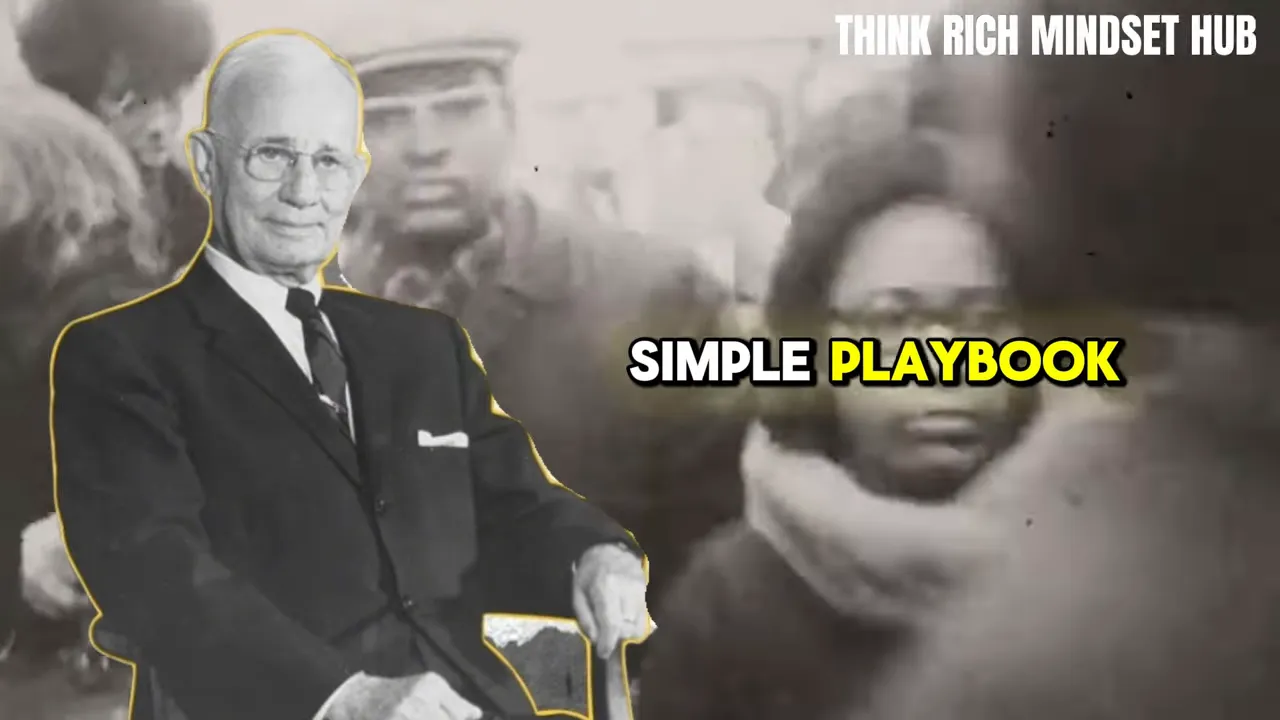
The Quiet Advantage: Why Speaking Less Wins
Most people equate confidence with volume, speed, and constant opinion. They believe presence is produced by projection—louder, faster, more. But true confidence lives in the spaces between words. Silence is not the absence of power; it is the control of it. When you speak less, you see more: motives, patterns, micro-expressions. You store energy instead of leaking it. This is the quiet advantage.
"You don't need more words. You need more weight behind the few you choose."
What does weight behind words mean? It means intentionality. Each sentence you issue should serve an objective—clarify, reframe, redirect, reassure, or finish a thread. When your statements are rare, they land. People lean in; they assume you have thought deeply. You shift from chasing attention to commanding it.
The psychology is simple: noise is cheap; attention is expensive. When everything around you is loud, stillness becomes power. It forces others to pay attention because your calm reveals their chaos. This is the foundation of executive presence, leadership under pressure, and influence that persists long after the conversation ends.

Chapter 1 — Foundations of Success: Desire, Faith, and Accurate Thinking
Napoleon Hill’s work begins with the foundational law of achievement: a burning desire. Without desire—an emotionally charged aim—consistent discipline withholds. But desire alone is incomplete. Hill paired desire with faith, persistence, and accurate thinking. The modern communicator needs a similar foundation: a clear aim for each interaction, the faith to allow silence to do its work, and the discipline to evaluate truth rather than reaction.
The Definite Chief Aim of Conversation
Every important conversation should begin with a purpose. Hill called a concentrated life aim the “definite chief aim.” Apply the same to dialogues:
- Before entering a meeting: name the outcome you want—alignment, decision, insight.
- Before a difficult talk: decide whether you want to change the person’s mind, preserve the relationship, or gather information.
- Before a one-on-one: resolve to listen more than you speak unless your contribution is essential to the outcome.
When you start with purpose, you reduce impulsive contributions. Each word becomes a strategic step toward the outcome.
Faith: Belief in the Power of Presence
Faith, as Hill used it, is the belief that your mental attitude will produce results. Applied here, faith is the conviction that being quiet and deliberate will pay off. You have to trust that silence will enable clarity, that pausing will preserve trust, and that withholding a reaction can strengthen relationships. This is not passivity—it's intentional patience.
Accurate Thinking: Quiet Your Inner Dialogue
Accurate thinking is about seeing reality, not wishing it were so. You cannot understand others if your mind is louder than their voice. Silence allows you to quiet inner rehearsals and observe more precisely—tone, micro-expression, pattern. Napoleon Hill emphasized separating facts from opinions; in conversation, this means listening for behavior and consistency, not persuasive words alone.

Chapter 2 — Napoleon Hill’s 13 Steps to Riches: Applied to Communication
Hill’s original 13 steps to riches map neatly onto the art of restraint and understanding. Below, I translate each principle into practical communication habits.
1. Desire — Define Why You Speak
Desire becomes the filter: speak only when your words move you closer to your aim. Ask before you speak: does this sentence support my desired outcome?
2. Faith — Trust in the Pause
Trust that withholding immediate reaction will not cost you the moment. Often silence reveals the deeper truth. Faith prevents you from rescuing ego at the expense of meaning.
3. Autosuggestion — Reframe Internal Scripts
Autosuggestion is about cultivating internal repetitions that shape behavior. Replace the internal script “I must show I know” with “I will listen to learn.” Rehearse calm and precision so it becomes habitual.
4. Specialized Knowledge — Prepare, Then Listen
Nothing replaces preparation. Bring specialized knowledge, then listen to how others integrate facts. Your knowledge increases influence when used to clarify, not to dominate.
5. Imagination — Use Silence to Reframe Problems
Creative solutions often appear in silence. When others exhaust noise, a quiet, imaginative reframing—one clear sentence—can redirect the whole room.
6. Organized Planning — Structure Conversations
Apply disciplined planning to high-stakes conversations: agenda, desired outcomes, possible objections. Planning reduces the impulse to blurt and increases the quality of rare contributions.
7. Decision — Speak When Intentional
Decide when to contribute. People who think quickly often decide hastily. Use a pause to convert immediate intuition into deliberate decision.
8. Persistence — Practice Silence Daily
Silence, like any skill, requires repetition. Start small: three-second delays, two-second replies, 30-second listening exercises. Persistence builds the muscle of restraint.
9. Power of the Mastermind — Curate Quiet Alliances
Mastermind groups aren’t about everyone speaking all the time. They’re about structured input from diverse minds. In modern business, build mastermind interactions with clear rules: fewer interruptions, designated reflection time, and follow-up actions. Platforms like GFunnel can help organize groups and track commitments (see GFunnel at https://www.gfunnel.com).
10. The Mystery of Sex Transmutation — Channel Energy
Hill used this principle to discuss channeling powerful drives into productive work. In communication, channel emotional energy—frustration, urgency—into disciplined questions, clear proposals, or written follow-ups rather than impulsive replies.
11. The Subconscious Mind — Train Your Inner Listener
Your subconscious picks up emotional signals when you quiet the conscious commentator. Train it with daily silence practices to surface better insights during conversations.
12. The Brain — Focused Attention Amplifies Thought
Attention is a resource. Concentrated listening increases mental clarity and produces more precise input when you do speak.
13. The Sixth Sense — Intuition Through Stillness
The sixth sense appears as a quiet flash of insight—after careful listening. Silence is the gateway to intuition that guides strategic communication.

Watch this exploration of timeless principles in action.
Chapter 3 — Real-World Applications: Case Studies and Modern Tools
Translating theory into action requires contexts where the payoff is visible. Below are modern scenarios where speaking less and understanding more creates measurable advantages.
Leadership and Boardrooms
Imagine a product review meeting where everyone competes to be heard. The usual result is fragmented decisions and defensive postures. Now imagine a leader who sits back, listens at Level-10, and waits for the right moment to speak. They ask a clarifying question that reframes the issue—suddenly the team aligns. Decisions are clearer, the meeting is shorter, and people leave with a sense of direction. This is not hypothetical. Leaders who use space as a tool are repeatedly the ones others turn to in crises.
Negotiation
In negotiation, the impulse to speak often costs leverage. Silence creates a psychological gap where the other party supplies information to fill it. Practically: after a proposal, wait three seconds. If the counterpart adds to their position, you likely revealed what they value most. Later, you use that information to create mutual gain.
Coaching, Therapy, and Mentorship
Trust grows fastest when people feel attended to, not interrogated. A few moments of presence produce longer-term loyalty and openness—exactly what mentors and therapists need. The three-second rule and two-second reply create emotional space that prompts authenticity.
Entrepreneurship and Digital Business
Founders who guard their attention focus on growth conversations (recruiting, product-market fit, revenue) and ignore draining noise (endless defenses, gossip, drama). Organizing conversations by category—growth, neutral, draining—lets you allocate energy effectively. Use tools to automate low-value interactions: calendars, funnel builders, CRM automations. For example, GFunnel provides community, CRM, and automation tools that reduce conversational noise by routing questions to the right place and documenting commitments (see GFunnel at https://www.gfunnel.com).

Chapter 4 — Mindset Techniques: Autosuggestion, Visualization, and Practice
Mindset is the undercurrent that makes habits stick. Use these techniques to rewire reflexive speaking into deliberate presence.
Autosuggestion: Reprogram the Rehearsal
Autosuggestion is a repeated, purposeful self-message. Replace the internal script “I must prove I’m smart” with “I will listen to understand.” Repeat this before meetings, after a deep breath, and during micro-practices. Over weeks, you’ll notice the inner urgency to speak dissolving.
Visualization: Practice Outcomes, Not Lines
Rather than rehearsing clever retorts, visualize outcomes: how the conversation will feel when aligned, what a successful decision looks like, the exact next step you want. Visualization trains your mind to favor outcomes over performance. It short-circuits the need to overshare.
Micro-Practices that Build Presence
- Three-Second Rule: Delay your response by three seconds. Breathe. Redirect from emotional speed to intellectual precision.
- Two-Second Reply: In one-on-one conversations, wait two full seconds after the other person stops speaking before replying. Often they will add something deeper in that time.
- 30-Second Silence: When someone vents or gossips, remain silent for 30 seconds. Listen. Observe whether the emotion dissolves or intensifies.
- Behavior Journal: For seven days, write down one notable behavior per day for a person you interact with. Focus on patterns rather than single events.
- Nightly Reflection: At the end of the day, pick three interactions to review: what did you sense beyond words? What part of you showed up?
These practices train emotional regulation, increase attention span, and upgrade your social intuition.

Chapter 5 — Reading People Without Words: Energy, Micro-Expressions, and Tone
Most communication happens beneath language: tone, rhythm, micro-expression, posture. Learning to read these non-verbal signals gives you a significant advantage.
Energy First
Every person carries a vibration—an emotional frequency produced by their thoughts, beliefs, and mood. You’ve felt it before: walking into a room and sensing something is off. That is energy speaking. The quieter your mind, the more accurately you read it.
Micro-Expressions
Micro-expressions are very short facial expressions that reveal the emotion beneath words. A twitch of the lips, a flicker in the eye, a jaw clench—all happen before conscious filtering. You don’t need to research every expression; you just need to be present. Your subconscious will pick up more than your conscious mind ever could when you give it silence and attention.
Tone Trumps Words
Words tell a story; tone tells the truth. The same phrase can mean different things based on pitch, cadence, and breath. Learn to hear the difference between “I’m okay” that expands the space and “I’m okay” that contracts it. Respond to the feeling behind the words, not the words themselves.
Body Language and Context
Body signals—crossed arms, leaning in, pacing—are meaningful when observed over time. Don’t judge someone on one gesture. Observe patterns: how their posture shifts with certain topics or people. That gives you insight into priorities, fears, and boundaries.

Practical Micro-Practices: The 3-Second Rule, Level-10 Listening, and Journaling
Below is a condensed daily and weekly practice plan to integrate these principles into your life. Follow it consistently for six weeks and you will notice measurable changes in your composure, decision quality, and relational trust.
Daily Practices (10–20 minutes)
- Morning 60-second autosuggestion: repeat “I will listen to learn, not to win.”
- Three-Second Pause: apply in at least five interactions during the day.
- Two-Second Reply: use in every one-on-one conversation.
- Nightly Reflection (5–10 minutes): review three conversations and note one pattern each.
Weekly Practices (30–60 minutes)
- Behavior Journal: write one person’s repeated actions per day, review at week end.
- Mastermind Session: practice structured silence—each member listens for two minutes before commenting.
- Skill Drill: observe 10 people in public spaces for micro-expressions and energy shifts without judgment.
Measurement
Set simple metrics: number of interruptions avoided, number of times others asked for your opinion, and subjective trust ratings from teammates or loved ones. Track these weekly. Quiet authority is measurable through external signals (invited opinions, leadership offers) and internal stability (less reactivity, more clarity).

How to Use Digital Tools to Preserve Your Attention
In the digital age, attention is constantly under siege. Systems and tools can help you protect your energy and automate low-value communicative tasks so you can focus on growth conversations.
- Use CRM systems to capture commitments and follow-ups so you don’t need to verbally repeat them in meetings. (Example: GFunnel CRM features can centralize conversations and actions.)
- Automate scheduling and frequently asked responses to reduce reactive email and chat. (Explore GFunnel at https://www.gfunnel.com for automation and funnel solutions.)
- Create standards for communication in your teams: designate times for deep work, a shared document for asynchronous updates, and a protocol for quick decisions via short checklists.
Automation doesn't replace presence; it preserves it. By routing routine interactions through systems, you minimize noise and keep your voice for high-impact moments.
FAQs
What does "Silence first. Clarity next." mean in practice?
It means begin interactions by listening and observing. Use small pauses to convert raw emotion into intentional response. Speak only when your words clearly advance the outcome. The practice turns impulsive replies into strategic contributions.
How long does it take to build the habit of pausing?
Habits change with consistent repetition. Micro-practices like the three-second pause and two-second reply, when applied daily, can become second nature within 4–6 weeks. Nightly reflection accelerates the process by converting experience into insight.
Is silence manipulative or authentic?
Silence is a tool. When used to observe and understand, it is authentic. When used to withhold information for coercive advantage, it becomes manipulative. The ethical use is clear: silence to understand, then speak to serve clarity and mutual benefit.
How do Napoleon Hill’s principles apply to modern entrepreneurship?
Hill’s core ideas—definite chief aim, mastermind collaboration, persistence, accurate thinking—map directly onto modern entrepreneurial strategies. Use definite aims to prioritize growth conversations, mastermind alliances to accelerate collective problem-solving, and automation tools (CRM, funnels) to amplify consistent execution. For entrepreneurs, GFunnel (https://www.gfunnel.com) offers integrated tools that align with Hill’s emphasis on organized planning and collaboration.
Can silence build trust?
Yes. Trust grows when others feel heard. Listening deeply communicates respect, safety, and presence. Over time, consistent listening and congruent actions create unshakable bonds.

Conclusion — Commit to Silence First, Clarity Next
In a culture that valorizes sound and speed, choosing silence is a radical act of discipline. Napoleon Hill taught that accurate thinking, persistence, and the mastermind principle lead to lasting success. Applied to communication, these principles become the art of restraint: pause, observe, and speak only to add value.
"Silence first. Clarity next."
Practical takeaway: begin your next important interaction with one deep breath. Set a clear intention. Listen at Level-10. Delay your response by three seconds. Watch for micro-expressions and behavior patterns. Treat words as currency—spend them only when they earn your credibility. Use systems to reduce noise and protect your attention (e.g., CRM, automation, and community tools such as GFunnel at https://www.gfunnel.com). Over time, your silence will become your signature: calm, precise, and influential.
Start today. Implement the three-second rule in your next meeting. Keep a seven-day behavior journal. Practice nightly reflection. Watch how your presence changes how people respond to you. The most powerful leaders and creators are not those who talk the most; they are those who think the most, listen the most, and speak with weight.
Recommended Next Steps
- Begin a seven-day behavior journal: each day, note one person’s repeated action and a pattern you observe.
- Apply the three-second rule in five interactions tomorrow and record your experience using nightly reflection.
- Use automation to filter routine communication—consider exploring GFunnel for CRM and automation solutions at https://www.gfunnel.com.
- Practice Level-10 listening in your next important meeting: no interruptions, two-second replies, and structured follow-up.

Further Reading and Resources
- Napoleon Hill — Think and Grow Rich (classic principles of desire, faith, persistence)
- Practical automation and community tools: GFunnel (https://www.gfunnel.com) — explore CRM, automation, and group features
- Behavior journaling templates and mastermind guidelines — create a private document to track patterns weekly
Your influence will not be measured by how often you speak, but by how deeply you understand and how strategically you respond. Speak less. Understand more. Let your silence become your strength.
Need Help Implementing This? |
|
Schedule A Discovery Call With One Of Our Professionals |
| Access Now |


