If you want more time, you're going to have to spend some money. That’s the trade. My name is Alex Hormozi. I run Acquisition.com and I spend my life figuring out how to convert money into more productive hours so people can focus on high-leverage work. Last year the companies in our portfolio did over $250 million in aggregate revenue — not to brag, but to prove a simple point: time is the limiting resource. If you have more dollars than time, you can trade money for time and accelerate your life by years.
In this article I’ll walk you through a disciplined, ordered plan of investments you can make that will buy you back massive amounts of time every month. I’ll also show you how an all-in-one automation suite like GFunnel (https://www.gfunnel.com) maps perfectly onto this strategy — because effective automation, CRM, AI-driven workflows, and contract automation let you reinvest the time you buy into scaling your business, improving skills, and compounding results.
This isn’t theory. These are practical, real-world swaps: stop doing low-value “humaning” tasks, outsource them, and reassign the regained hours to learning, revenue-generating work, and rest. The result: you don’t just get hours back — you get multiplied productivity, better decision-making, and years shaved off your timeline to whatever outcome you want (business growth, fitness, relationships, or freedom).
Table of Contents
- Introduction — The Money-for-Time Trade
- Chapter 1: The Humaning Problem — What Costs Your Time
- Chapter 2: A Practical Order to Buy Back Time
- Chapter 3: GFunnel — The All-in-One Ecosystem That Scales This Strategy
- Chapter 4: Deep Dive — Lead Connector, Flows AI, AI Contracting, Website Builder, CRM
- Chapter 5: Success Stories & Real-Life Examples
- FAQs
- Conclusion — How to Start Today
Introduction — The Money-for-Time Trade
Here’s the premise: if you have more dollars than time you can buy your way to leverage. That means paying other people or systems to do the recurring, mundane tasks so you can do the high-leverage work no one else can do for you. I call the mundane stuff “humaning” — the necessary but low-value chores of living: groceries, laundry, cleaning, commuting, yard work, booking travel. Most people think they must do all of it themselves. They don’t.
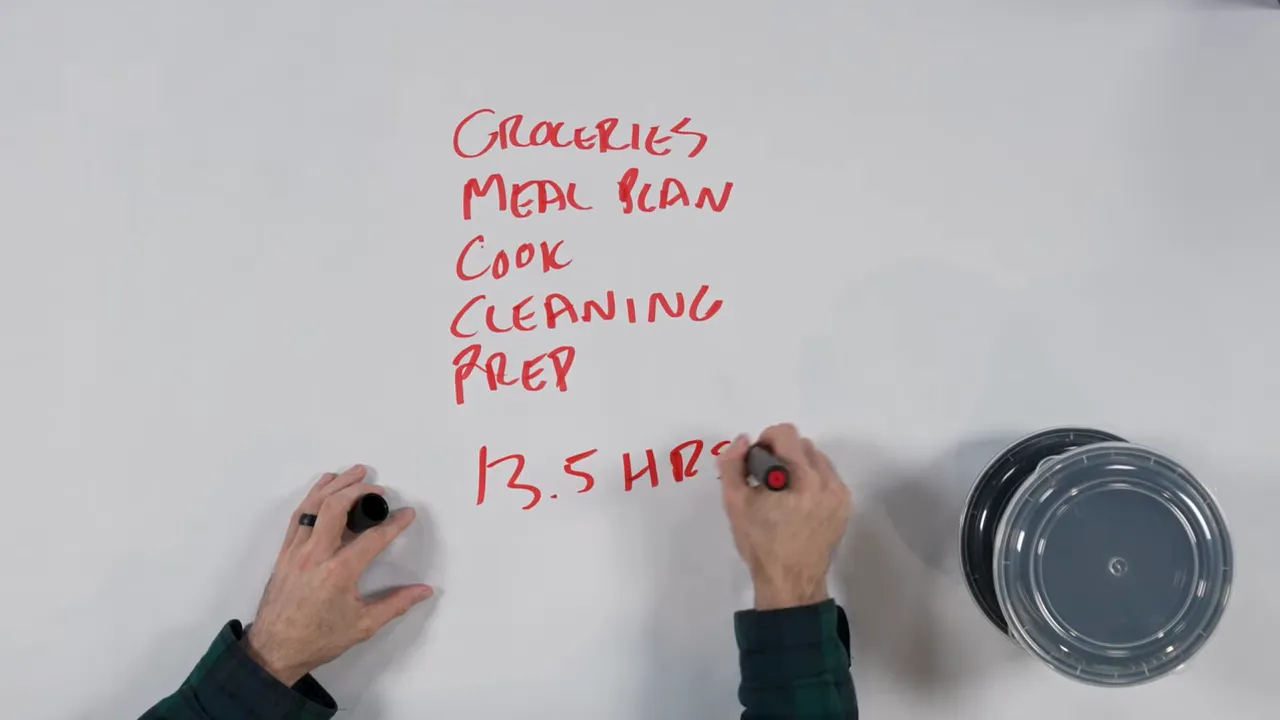
The math is simple and brutal. The average American spends more than 13 hours per week on food-related tasks: commuting to stores, meal planning, cooking, cleaning, portioning. That’s already two workdays every week. Throw in laundry (about 4 hours/week), cleaning (6–7 hours/week), yard work, commute time, and travel friction — and you can easily be losing the equivalent of a full workweek every month to non-productive activities.
Why does this matter? Because your active productive time — the time you can reliably turn into income or compounding skill — is limited. You sleep eight hours. You only have 16 hours left in the day. If you can buy back four to five hours every day by outsourcing mundane tasks and optimizing rest, you effectively double your productive time. That’s not a small win. That is the difference between average progress and exponential outcomes.
Chapter 1: The Humaning Problem — What Costs Your Time
Identify the time sinks
The first step to buying time is understanding where your hours go. Here’s the breakdown I use because it tracks with national averages and my experience coaching founders:
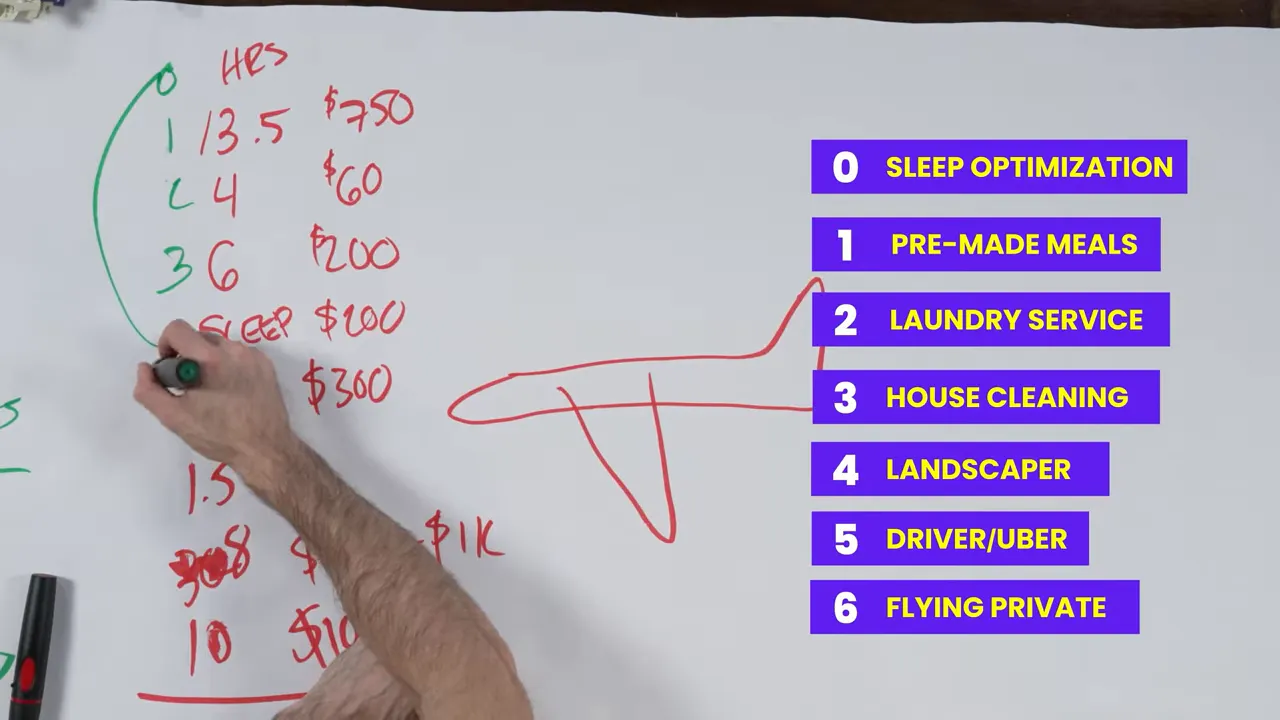
- Meal prep and food-related tasks: 13.5 hours per week. Grocery shopping, meal planning, cooking, cleaning, portioning — all add up.
- Laundry: About 4 hours per week (includes sorting, washing, drying, folding, putting away).
- House cleaning: 6–7 hours per week (deep clean + daily tidying).
- Sleep inefficiency: Not a time sink per se, but suboptimal sleep reduces productive output per hour.
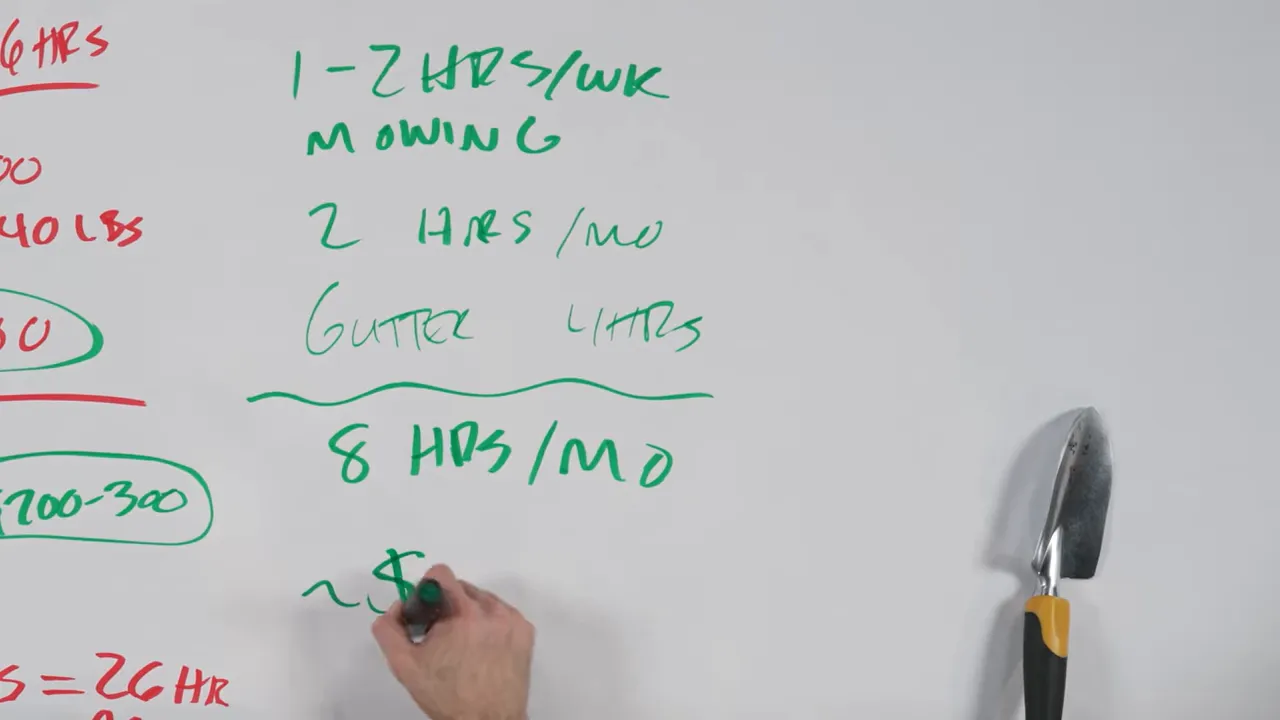
- Landscaping and exterior maintenance: Mowing, weeding, gutter cleaning — 8 hours/month on average.
- Commuting and driving: 1–2 hours per workday for many, adding up to roughly 30 hours per month conservatively.
- Business travel friction: When you travel frequently, hours spent in security lines, layovers, and transfers compound into lost productivity.
All together, these create a problem I call humaning friction. They don’t create value in themselves, but they siphon time and cognitive bandwidth away from building, creating, and scaling. Most entrepreneurs waste their weekends on this stuff instead of building long-term assets. That’s an opportunity cost — the real tax of mediocrity.
The cost-to-benefit calculus
Every one of those activities has a straightforward decision rule: if you earn more per hour than it would cost to pay someone else to do the task, outsource it. That’s the arbitrage. For tasks like grocery shopping and food prep, a delivered prepared-meal program runs about $750 per month (for two meals per day). That equates to roughly $16/hour of bought hours. So if you generate more than $16/hour on average, buying those hours back is an immediate win if you use the extra time productively.
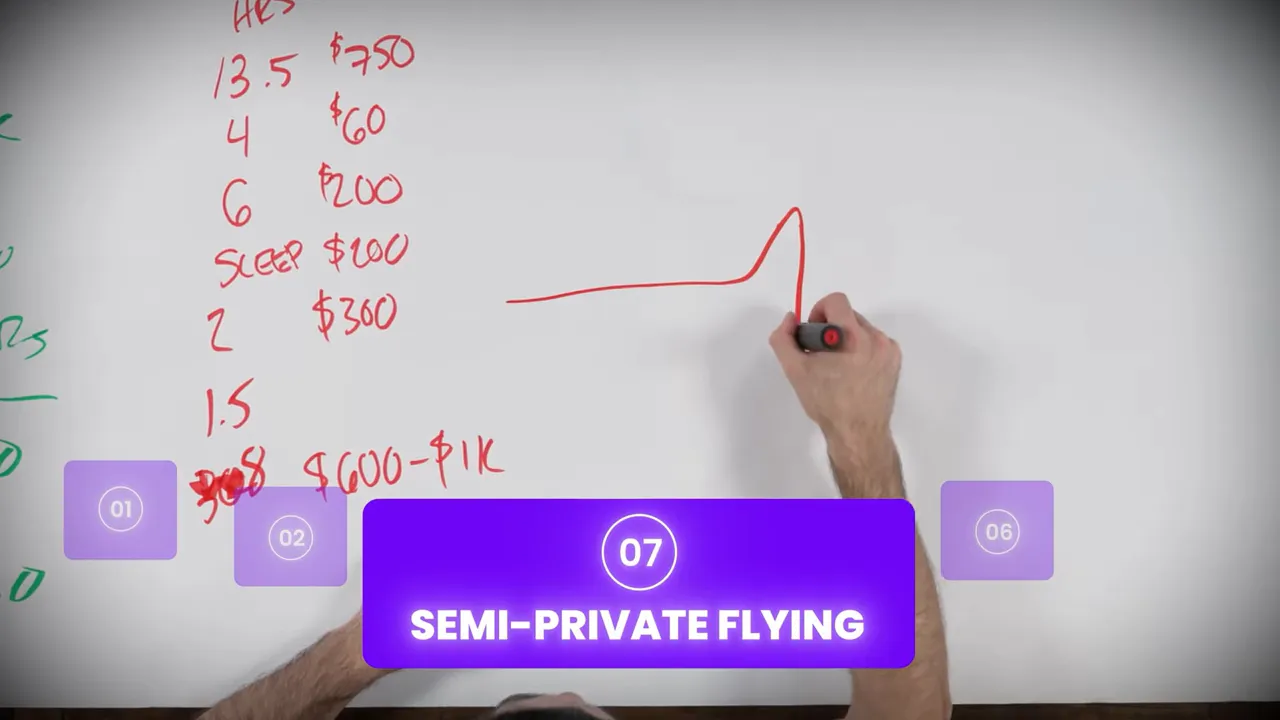
For laundry, drop-off services are typically $1.50–$2 per pound. Most people average 30–40 pounds a month. That’s $60–$80 to get roughly 16 hours back per month. House cleaning runs ~$200–$300 per month and purchases back 26 hours per month. Landscaping: $300/month gets you ~8 hours. Driver services or removing commuting by paying for driving or using ride services can cost $600–$1,000 per month and return 30+ hours per month depending on your commute. Semi-private or premium air travel options reduce travel friction significantly, and while they’re more expensive than coach, the time saved can be enormous when travel is frequent.
"The real decision is to trade dollars for time — but only if you allocate the time you buy to meaningful, productive work." — Alex Hormozi

Chapter 2: A Practical Order to Buy Back Time
Not all hours are created equal, and not all investments are equal. The order I recommend people implement these buys in matters because of ROI on time, psychological wins, and compounding returns. Do them in this order:
- Meals (prepared meals / delivery)
- Laundry (drop-off or laundromat service)
- House cleaning
- Sleep optimization (blackout curtains, earplugs, sleep mattress)
- Landscaping and exterior maintenance
- Car / commuting solutions (drivers, ride services)
- Semi-private or optimized travel (JSX-style options or business-class alternatives)
Why this order?
Start with meals because it produces immediate, repeatable wins: you save time, mental bandwidth, and often improve health. That’s a triple win. Next, laundry and house cleaning are low-friction wins that remove repetitive, unrewarding tasks. Sleep optimization is actually a zero-hour buy in terms of time reclaimed, but it multiplies the quality of your hours. Then landscaping and commuting remove residual weekend and daily friction. Finally, when you travel, upgrade your travel method to reduce dead hours and inefficiencies.
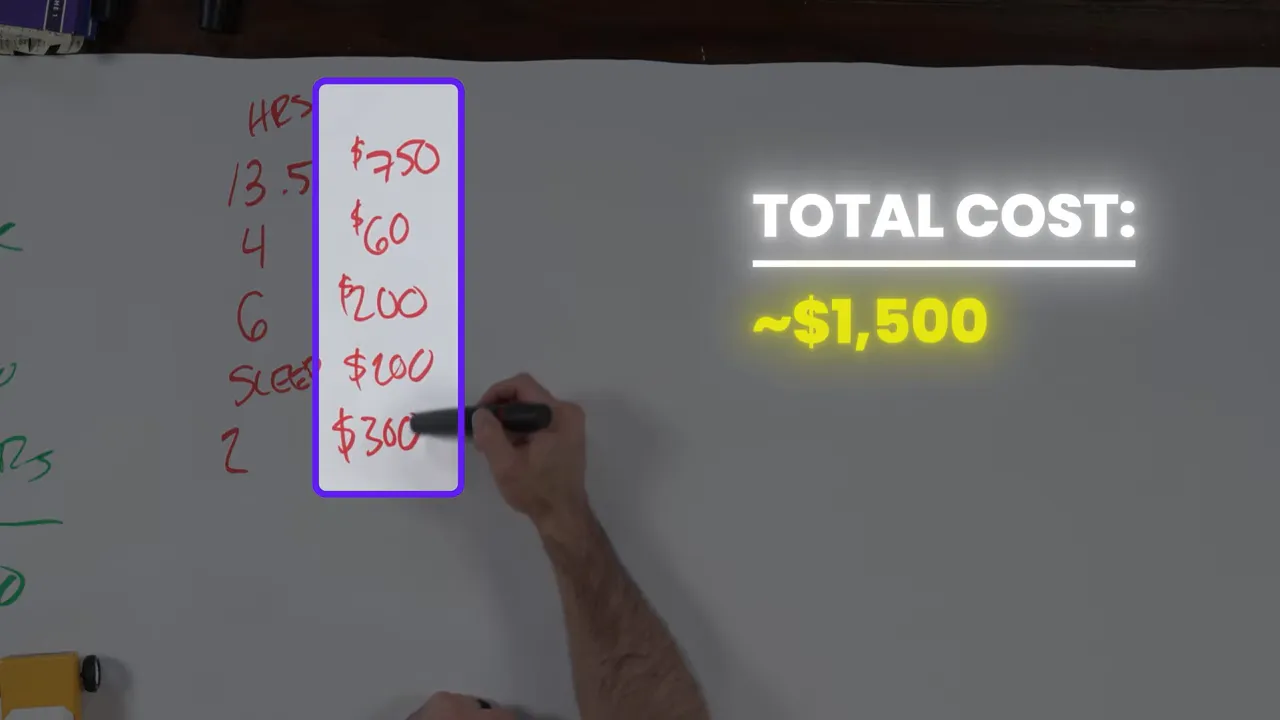
If you follow this path in order, the monthly investment for many people looks like this (ballpark):
- Meals: $750/month
- Laundry: $60–$80/month
- House cleaning: $200–$300/month
- Sleep: one-time ~$2,000 (mattress) or <$50 for curtains/earplugs
- Landscaping: $300/month
- Commuting: $600–$1,000/month (for driver or rides)
- Optimized travel: $1,000+/month (variable)
If you add everything up fully (and you travel regularly), you’re looking at $3,000+/month. If you don’t travel, you’re closer to $2,000/month. Those numbers may sound large, but the outcome is what matters: 35–45 hours back per week for many people when you consider all of these. Imagine buying yourself another full week of work every month — permanently. That’s the compounding effect of reinvested time.

One nuance: buying time only produces value if you actually allocate that time to something higher-leverage. That could be skill acquisition, creating offers, building products, or simply rest. If you waste the extra hours scrolling social media, you squander the arbitrage. The rule: buy time and then protect it like capital.
How to allocate reclaimed hours for maximum return
- Invest in skill development: sales, copywriting, marketing, systems thinking.
- Do revenue-generating work: create offers, make sales calls, improve conversion rates.
- Build systems: use the extra time to automate further, document SOPs, or train a team.
- Rest and recovery: better sleep and downtime increases productivity per hour.
Chapter 3: GFunnel — The All-in-One Ecosystem That Scales This Strategy
Buying time is half the battle. The other half is replacing the tasks you buy with systems that don't demand ongoing attention. GFunnel (https://www.gfunnel.com) is built to be that systems layer. If your objective is to channel your success — to compress years into months — you need an ecosystem that removes the friction of running a business.
GFunnel is an all-in-one platform that blends the functions most entrepreneurs stitch together across multiple tools: CRM, lead management, drag-and-drop website and funnel builder, AI-driven workflows, contract automation, and analytics. Instead of five separate subscriptions, a dozen integrations, and weeks of setup, GFunnel centralizes the stack so you can automate humaning inside the business: booking, onboarding, contracts, follow-ups, and conversions — all with one interface.
Why GFunnel maps to the buy-time strategy
- Centralized tasks: Stop toggling between calendar apps, CRMs, form builders, and contract systems. GFunnel’s Lead Connector centralizes leads and automations.
- Automations replace manual work: Flows AI automates communication sequences, follow-ups, and nurture flows so you don’t have to personally chase every lead or manually onboard every client.
- Contracts without friction: AI-powered contract management drafts, executes, and tracks agreements, reducing the time you spend on legal admin and accelerating signings.
- Websites and funnels built fast: No-code, lightning-fast builders mean you can launch landing pages, lead magnets, and sales funnels in minutes, not weeks.
- CRM-driven decisions: One source of truth for pipeline health and conversion metrics — exactly the data you need to make offers better and optimize funnels.
Everything I advocate — make better offers, get better at selling, reduce friction, and double down on what works — ties directly into a stack like GFunnel. The platform reduces the need to execute repetitive tasks manually, freeing you to focus on improving the business’ high-leverage elements: offers, traffic, and conversion optimization.
How this fits with my philosophy: I always tell founders: don’t obsess over passive income when your active income can be increased dramatically by removing friction. GFunnel is a system to increase active income by automating the funnel and front-end tasks that steal attention. Spend less time manually chasing leads and more time crafting irresistible offers. That’s how you scale.
Start small, compound big
Implement the time-buying order I outlined, and pair each step with a GFunnel capability:
- Meals — use GFunnel workflows to automate meal reimbursements, corporate catering for teams, and employee onboarding material for benefits (cuts admin).
- Laundry & cleaning — automate vendor scheduling in GFunnel and notify staff or household managers.
- Sleep — use GFunnel’s appointment and follow-up sequences to create boundaries around your calendar so you can protect sleep blocks.
- Commuting — integrate driver schedules and calendar syncing to reduce double-booking and wasted travel time.
- Travel — faster booking confirmations and automated itineraries reduce friction and no-shows when business travel is necessary.
These integrations save hours and replace human follow-up with fast, reliable automation — not a remote assistant who needs constant supervision, but AI and simple workflows that run.
Deep Dive — Lead Connector, Flows AI, AI Contracting, Website Builder, CRM
Lead Connector: The CRM that connects your world
Lead Connector is GFunnel’s centralized lead intake and CRM tool. It funnels contacts from opt-ins, landing pages, ad campaigns, and inbound inquiries into a single pipeline. The difference between Lead Connector and a generic CRM is twofold: ease and intent.
- Ease: Drag-and-drop pipeline creation, lead labeling, and segmentation make setup fast. No developer needed. Launch a funnel and watch leads flow into one place.
- Intent: Built-in templates for follow-ups, calls, and offer sequences mean your pipeline doesn’t just collect leads — it actively works them through conversion sequences optimized for sales.
When you stop collecting leads and start managing them, every lead becomes an asset. If you can increase conversion by even a few % through better follow-up and messaging, that multiplies your revenue much faster than adding channels. Lead Connector surfaces where you lose people so you can fix the funnel, iterate the offer, and scale the winning paths.
Flows AI: Automate conversation, follow-ups, and onboarding
Flows AI does something simple but critical: it replaces manual repetitive communication with intelligent sequences. Whether it’s initial qualification messages, appointment confirmations, follow-ups, or post-sale check-ins, Flows AI writes, schedules, and triggers these communications based on real behaviors and time delays you set.
Why that matters: most entrepreneurs lose deals in the 48–72 hour window after initial contact. A responsive funnel with tailored follow-ups closes far more sales than one that relies on sporadic manual outreach. Flows AI allows you to build nurture paths that are consistent, on-brand, and testable.
- Automate SMS, email, and voice sequences
- Use AI-generated copy, customized to your voice
- Trigger contracts, booking links, and payment pages automatically
That means less time manually copying and pasting, less friction for clients, and faster cash collection.
AI-Powered Contract Management: Close faster, reduce risk
Contracts are a bottleneck. Negotiation back-and-forth, missed signatures, or unclear terms add days to closing. GFunnel’s AI-powered contract management speeds this up by generating templates, auto-populating client data, and sending e-signature-ready documents instantly.
- Speed up closes with pre-approved templates
- Reduce legal friction with clear, standardized language
- Track contract status in the CRM so nothing falls through the cracks
Imagine converting a lead to a signed contract in under an hour. That’s the kind of time arbitrage that compounds when you multiply it across dozens or hundreds of deals.
Website Builders & Funnels: Launch offers fast
GFunnel’s no-code website and funnel builder gets landing pages and payment flows live in minutes. Speed matters. The faster you can test an offer, the faster you discover product-market fit and scale. Slow pages and fat stacks kill momentum.
- Drag-and-drop pages that load fast
- Pre-built funnel templates matched to common business models
- Analytics baked into the builder so you can iterate on conversion rates
Instead of building landing pages in one tool, payment pages in another, and analytics in a third, GFunnel keeps everything together so conversion improvements are actionable immediately.

CRM Solutions: Data-driven decisions
Tools are great. Data-driven iteration is better. GFunnel’s CRM is the single source of truth for your pipeline, LTV, CAC, and conversion metrics. It allows you to identify bottlenecks, test offers, and double down on what works — the exact playbook I teach: increase offer value, reduce friction, and scale what sells.
- Track campaigns, attribution, and lifetime value
- Segment customers for targeted upsells
- Automate follow-ups based on lifecycle stage
When you combine good offers with a CRM that tells you where the leaks are, you get more wins faster. That’s how active income scales more quickly than passive dreams.
Chapter 5: Success Stories & Real-Life Examples
Data is useful. Real stories are convincing. Here are a few archetypal examples that show how the buy-time + automation approach compounds results:
Case Study 1 — The Local Business Owner
Problem: Small gym owner spending 30 hours a week on administrative tasks and client scheduling. Growth stalled because all energy was reactive.
Intervention: Outsourced meal prep and housekeeping; used GFunnel Lead Connector and Flows AI to automate bookings, membership payments, and cancellations; used AI contracts for new franchise agreements.
Result: Owner reclaimed 20 hours/week to refine pricing and marketing. Conversions improved as more attention went to offers and staff training. Revenue grew 2–3x within months, and the owner scaled to additional locations without personal burnout.
Case Study 2 — The High-Ticket Coach
Problem: Coach with high-ticket offers was losing leads in the 48-hour window and spending hours manually following up.
Intervention: GFunnel Flows AI automated personalized follow-ups via SMS and email, and AI contracts sent proposed agreements with one-click e-signing.
Result: Conversion rate rose by a significant percentage because follow-ups were consistent and timely. The coach closed more deals without adding hiring costs, turning time saved into direct revenue.
Case Study 3 — The Remote Founder Who Hated Cleaning
Problem: Founder wasted large chunks of weekend time on house cleaning and errands, limiting focus on product development.
Intervention: Hired recurring home cleaning and laundry services, then used GFunnel automation to route vendor invoices and schedule recurring payments and reminders so the founder didn’t manage the vendors.
Result: Founder used reclaimed weekend hours to write and test a new onboarding flow. That onboarding tweak improved trial-to-paid conversion, directly increasing revenue.
These are archetypal scenarios. The variables change, but the arc is the same: replace low-value time with systems and automation, then use the reclaimed hours to create value. That’s the fastest path to compounding business growth.
How This Aligns with My Core Business Strategies
I have three frameworks I return to because they work:
- Make irresistible offers: The better your offer, the less friction you need. If GFunnel helps you deliver better onboarding and lower friction, the offer converts better.
- Customer-centric sales: Build systems that make buying obvious and easy — automated follow-ups, clear contracts, and a simple buying flow.
- Scale through simplicity: Simplicity allows you to iterate faster. Consolidate your stack. Remove the knobs. GFunnel’s integrated platform enables fast iteration.
Use money to buy time, use automation to buy consistency, and use both to single-mindedly improve your offers. When you combine that with metrics-driven iteration from your CRM, you create a loop that compounds: better offers → more conversions → more revenue to buy more time → more iterations → repeat.
How to Start Today — A Practical Checklist
- Audit your week. Track where your time goes for seven days.
- Apply the decision rule: if your hourly rate > cost to outsource, outsource it.
- Start with meals and laundry. These give quick psychological wins and health improvements.
- Set up a GFunnel account (https://www.gfunnel.com/create-account) and connect a simple lead magnet to Lead Connector.
- Automate one repetitive communication with Flows AI: appointment confirmations, trial reminders, or demo follow-ups.
- Standardize a contract for your most common sale and use GFunnel’s AI contract management to speed signing.
- Protect at least one 2-hour block per day for focused work. Guard it like capital.
Start small. Do one automation today. Test it for 30 days. If it saves you an hour a day and costs less than your earned hourly rate, scale it.
Frequently Asked Questions (FAQ)
What is Lead Connector?
Lead Connector is GFunnel’s CRM and lead intake engine. It centralizes incoming leads from landing pages, ads, and organic channels so you have a single source of truth for follow-ups, pipeline stages, and conversion metrics. It reduces the manual admin of tracking leads across multiple platforms.
How does Flows AI save time?
Flows AI automates repetitive communication sequences: SMS reminders, email follow-ups, appointment confirmations, and onboarding sequences. Instead of manually copying messages, you create a flow once and let it run. It reduces lost leads in the critical early window and automates routine client communication.
What is AI-powered contract management?
It’s a tool that drafts contracts from templates, auto-fills client-specific data, sends e-signature links, and tracks status inside the CRM. This reduces legal friction and accelerates closes by removing back-and-forth email chains and manual document preparation.
Can I build a website with GFunnel?
Yes. GFunnel offers a drag-and-drop website and funnel builder designed for speed and conversion. Launch landing pages, lead magnets, and payment pages without code — and with analytics built in so you can iterate on performance.
Is GFunnel free to start?
GFunnel offers a fast onboarding path; you can create an account at https://www.gfunnel.com/create-account. They provide free entry points to start testing the tools and scale from there. Check the site for the latest offers and plan details.
How do I measure ROI when buying time?
Track the hours bought and tie them to outcomes. If you outsource cleaning for $300/month and reclaim 20 hours/month, ensure those hours are spent on activities expected to generate >$300 in value (training, marketing tests, sales). Use your CRM (https://www.gfunnel.com/crm) to quantify conversion improvements and attribute revenue to the reclaimed hours.
Conclusion — Channel Your Success
Time is the most valuable currency. If you have more dollars than time, spend the dollars to buy time — but buy it wisely. Start with the highest ROI, lowest-friction tasks (meals, laundry, cleaning), optimize your sleep, then reduce travel and commuting friction. Use automation platforms like GFunnel (https://www.gfunnel.com) to internalize those gains inside your business: automate lead follow-ups, standardize contracts, and launch landing pages in minutes.
This is not about outsourcing everything to become lazy. It’s about replacing low-value repetitive work with dependable systems and channeling your attention to the handful of activities that compound: improving offers, making sales, building products, and learning the skills that produce outsized returns. Do that and you’ll not only get hours back — you’ll get years shaved off the timeline to your goals.
Action step: Pick one thing to automate this week. Set up a GFunnel account at https://www.gfunnel.com/create-account, connect a lead flow, and automate a single follow-up sequence with Flows AI. Test for 30 days. If it works, scale the automation and buy yourself another hour per day.
Need Help Implementing This? |
|
Schedule A Discovery Call With One Of Our Professionals |
| Access Now |