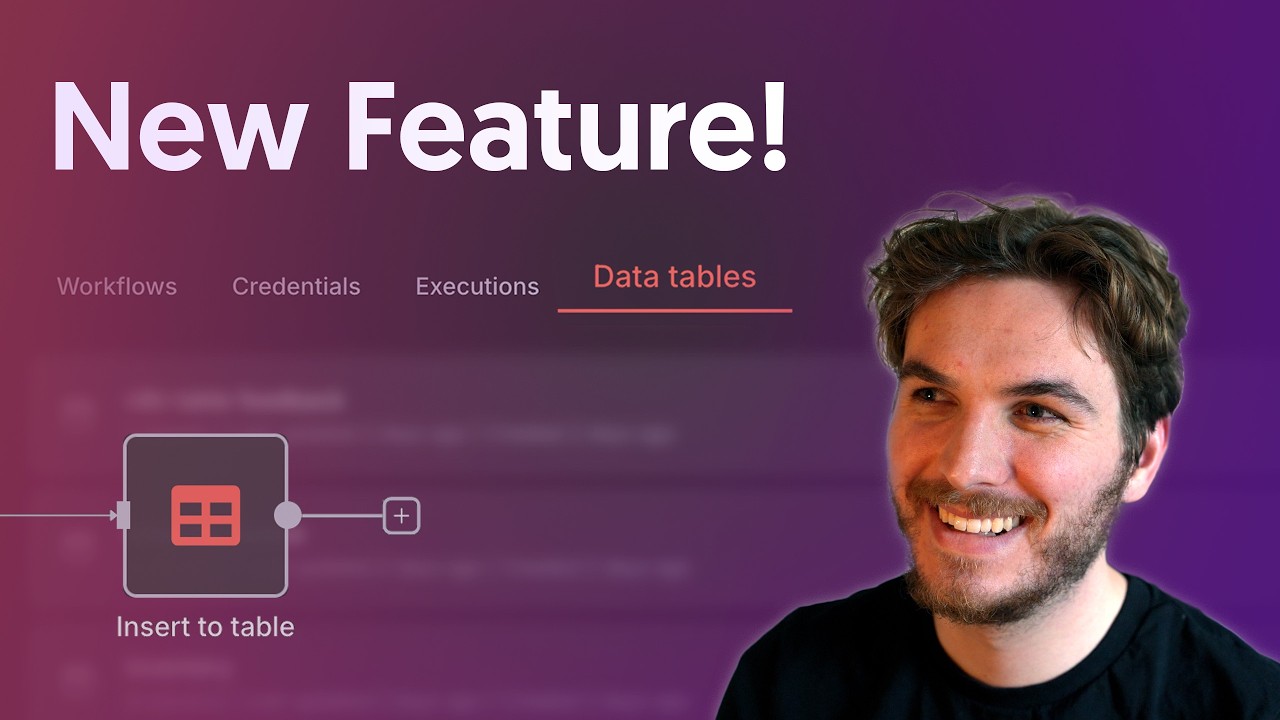
Overwhelmed by juggling tools, spreadsheets, and integrations? Want to Use N8N Within GFunnel to streamline your workflows, reduce latency, and manage your data securely in one place? In a short but powerful announcement, Liam from n8n introduced native data tables—an exciting new feature that changes how you store and interact with data. This article explains what that means, how you can Use N8N Within GFunnel to build reliable automations, and how combining n8n’s Data Tables with GFunnel’s Lead Connector, Flows AI, AI-powered contract management, and CRM solutions can help entrepreneurs turn ideas into scalable digital businesses.
In this deep, practical guide you’ll learn how to:
- Understand n8n Data Tables and why they matter.
- Use N8N Within GFunnel to keep your automation fast, secure, and simple.
- Combine GFunnel’s tools—Lead Connector, Flows AI, website builders, and AI contract workflows—with n8n to create end-to-end systems.
- See real-world use cases, set-up patterns, and growth strategies for creators and entrepreneurs.
Before we dive in, here’s the short version: Use N8N Within GFunnel by leveraging n8n’s new native Data Tables to store and access data locally in your automation environment, and connect that fast, secure data to GFunnel’s all-in-one business platform to manage leads, run AI workflows, and deliver conversions—all without the friction of third-party spreadsheets or remote databases.
Table of Contents
- Table of Contents
- Introduction — Why Native Data Storage Matters
- What Are n8n Data Tables?
- Use N8N Within GFunnel — High-Level Integration Strategy
- GFunnel Tools That Amplify n8n
- Performance and Security: The Native Advantage
- Practical Use Cases: From Lead Capture to Revenue
- Step-by-Step: Create a Workflow Using Data Tables and GFunnel
- Advanced Patterns and Scale Considerations
- Frequently Asked Questions (FAQs)
- Conclusion & Call to Action
Table of Contents
- Introduction — Why Native Data Storage Matters
- What Are n8n Data Tables?
- Use N8N Within GFunnel — High-Level Integration Strategy
- GFunnel Tools That Amplify n8n
- Performance and Security: The Native Advantage
- Practical Use Cases: From Lead Capture to Revenue
- Step-by-Step: Create a Workflow Using Data Tables and GFunnel
- Advanced Patterns and Scale Considerations
- FAQs
- Conclusion & Call to Action
Introduction — Why Native Data Storage Matters
The modern entrepreneur needs speed, reliability, and the ability to iterate quickly. For years many of us have relied on Google Sheets, Airtable, or external databases to store the data that powers automations. Those systems work, but they introduce latency, credential management, API limits, and additional complexity.
Now you can Use N8N Within GFunnel with n8n’s native Data Tables—a compact, built-in data store that lives alongside your n8n instance. That means you can create project-scoped tables like “Contacts” or “Deals” directly in n8n, access them from your workflows without credentials, and, importantly, keep that data access fast and local. Use N8N Within GFunnel to integrate this fast local storage with GFunnel’s CRM, Lead Connector, and AI workflow tools for a frictionless experience that empowers creators and businesses.
Liam, n8n Senior Developer Advocate, summarized it: “We added a new tab labeled Data Tables right next to the Workflow and Credentials tabs.” This seemingly small UI change unlocks significant simplification for developers and non-technical founders alike. When you Use N8N Within GFunnel, you reduce the number of moving parts and make your automations easier to maintain—which translates directly to more uptime, less troubleshooting, and faster time-to-value for your business.
What Are n8n Data Tables?
At its core, n8n Data Tables is a native data feature built into n8n that provides:
- Project-scoped tables: tables are only visible to workflows inside the same project.
- Column definitions with types: like a lightweight database or spreadsheet where you define column types (string, number, etc.).
- Node-level access: nodes can read and write to tables without external credentials or third-party APIs.
- Built-in UI for quick data entry: manual rows can be added directly in the n8n interface for testing or small lists.
Imagine creating a “Contacts” table for your CRM project and being able to add or find a contact from a workflow in milliseconds—no OAuth consent screens, no service accounts, no API limits. When you Use N8N Within GFunnel, that table becomes the glue between your GFunnel landing pages, lead forms, and automated follow-ups. It’s a local state store that keeps your automations snappy and secure.
Important operational notes:
- Data Tables are scoped by project, so they align with how you already organize workflows.
- Self-hosters get Data Tables too, and there’s an environment variable N8N_DATA_TABLES_MAX_SIZE_BYTES to control size limits.
- There’s a global 50 MB default limit on data tables in the cloud—enough for a very large contact list. That’s roughly over 500,000 rows for a simple contacts table in many cases.
And if you’re wondering about data types, Liam’s advice was practical: “If you don't know what type to use, string works for just about everything, so just default to that if you aren't sure.” This makes adoption easier for non-technical teams while still giving structure for power users.
Use N8N Within GFunnel — High-Level Integration Strategy
One of the most powerful approaches for entrepreneurs is to centralize business logic and lead orchestration inside an automation layer that connects to your audience-facing stack. Use N8N Within GFunnel by pairing n8n Data Tables and GFunnel’s Lead Connector and Flows AI. Here’s why that pairing is compelling:
- Speed: n8n Data Tables avoid external API round-trips, reducing latency dramatically, which matters for real-time lead processing and routing.
- Simplicity: no additional credentials or third-party services required for the data that powers your automations.
- Security: keep sensitive operational data inside the same environment that runs your workflows.
- Scalability: GFunnel handles lead capture and web presence while n8n manages the automation and orchestration.
Example high-level flow when you Use N8N Within GFunnel:
- A GFunnel landing page captures a lead from an opt-in form.
- Lead Connector (GFunnel) triggers an n8n webhook or API call.
- n8n writes the lead to a project Data Table instantly.
- n8n runs enrichment steps (third-party APIs, scoring) and updates the Data Table.
- n8n triggers GFunnel flows (email, SMS, follow-up pages) via API or Lead Connector integration.
- Flows AI customizes messaging and sequences, using the data in the Data Table as the canonical source of truth.
Throughout this pattern you can Use N8N Within GFunnel to manage everything from lead scoring to contract initiation. Data Tables act as the operational database for automations, while GFunnel is the customer-facing business platform that collects and monetizes leads.
GFunnel Tools That Amplify n8n
GFunnel provides an all-in-one ecosystem that complements n8n’s automation capabilities. When you Use N8N Within GFunnel, you can take advantage of these GFunnel pillars:
Lead Connector — Your CRM and Lead Engine
Lead Connector is a CRM designed for entrepreneurs and creators. It captures leads, stores contact histories, and organizes pipelines. By integrating Lead Connector with n8n Data Tables, you can:
- Keep a canonical contacts table in n8n while syncing only necessary fields back to Lead Connector or vice versa.
- Trigger automations on new pipeline events, lifecycle changes, or lead scoring thresholds.
- Automate lead distribution and route to sales reps instantly, with near-zero latency when using Data Tables as the intermediate store.
When you Use N8N Within GFunnel alongside Lead Connector, think of n8n as your automation brain and GFunnel as the CRM-powered heart that drives conversions.
Flows AI — AI-driven Automation and Communication
Flows AI brings artificial intelligence into sequences, messaging, and workflow decisions. Use N8N Within GFunnel to feed Flows AI with fresh, fast, accurate lead data from Data Tables so the AI can tailor messages and make decisions in real time. Benefits include:
- Personalized follow-ups based on the most recent activity in your Data Tables.
- Automated segmentation and tag updates that flow back into Lead Connector and n8n tables.
- Smart contract initiation and negotiation flows using AI-powered prompts and templates.
AI-Powered Contract Management
Contracts are critical to converting leads into paying customers. GFunnel’s AI-assisted contract management simplifies drafting, sending, and tracking agreements. Use N8N Within GFunnel to automate contract triggers: when a prospect reaches a certain score or pipeline stage in your n8n table, automatically generate a contract, send it through GFunnel’s contract tools, and track acceptance in your Data Table.
Website Builders and Landing Pages
GFunnel’s drag-and-drop website and funnel builders create high-converting pages in minutes. Use N8N Within GFunnel to connect landing forms to n8n webhooks, immediately populate your Data Tables, and orchestrate personalized follow-ups via Flows AI.
CRM Solutions and Analytics
GFunnel ties insights back into operations: analytics, conversion tracking, and real-time reporting. Use N8N Within GFunnel to enrich your analytics by pushing events from n8n Data Tables to GFunnel dashboards, giving you both automation-level observability and business-level metrics.
Performance and Security: The Native Advantage
If performance is a business metric you care about, the numbers matter. In Liam’s demo, n8n’s Data Tables inserted a row in 8 milliseconds vs Google Sheets which took 1,020 milliseconds—over a hundred times slower. That’s not just impressive marketing copy; it’s real-world impact when you Use N8N Within GFunnel and you need to process many leads quickly.
Why does this matter?
- Real-time routing: If you distribute leads to sales reps, lower latency means leads reach people faster, improving contact rates and conversions.
- Reduced API dependency: Eliminating an external round trip reduces points of failure (rate limits, API downtime, or network hiccups).
- Simpler security model: Because Data Tables are native, you avoid storing credentials for third-party services in n8n. This reduces attack surface and simplifies audits.
Use N8N Within GFunnel and you can architect systems where mission‑critical data and automation remain local while GFunnel provides customer-facing capabilities and analytics. This hybrid approach delivers the best of both worlds: fast, secure automation logic plus a rich business platform.
Practical Use Cases: From Lead Capture to Revenue
Below are practical use cases where combining GFunnel and n8n Data Tables shines. Each shows how to Use N8N Within GFunnel to capture value and save time.
1. Instant Lead Capture and Qualification
Scenario: You run paid ads and generate hundreds of leads per hour. Use N8N Within GFunnel by connecting your GFunnel lead form to an n8n webhook. n8n writes the incoming data to a project Data Table in milliseconds, runs enrichment (append firmographic data or perform email validation), scores the lead, and pushes the top leads into Lead Connector for human follow-up. Lower latency and immediate enrichment increase your odds of converting high-value leads.
2. Automated Onboarding Sequence
Scenario: New customers expect quick onboarding. Use N8N Within GFunnel to trigger a multi-step onboarding flow when a new payment or sign-up is detected. n8n adds the user to a Data Table, then kicks off a Flows AI-driven email series (personalized to the user’s product choices) and sets tasks in Lead Connector for success managers.
3. Contract Generation and Signature Automation
Scenario: You want to automate contract issuance upon deal acceptance. Use N8N Within GFunnel so that when a contact’s pipeline stage updates in your Data Table to “Ready to Contract,” n8n generates a contract draft, sends it through GFunnel’s AI contract manager for customization, and tracks signature status back in the Data Table and Lead Connector. Once signed, another n8n workflow can trigger provisioning and revenue recognition steps.
4. Multi-channel Nurturing with Real-Time Decisioning
Scenario: Use Flows AI to decide whether a lead gets email, SMS, or a call. Use N8N Within GFunnel to store and update channel preferences in a Data Table, then feed that data to Flows AI so it can pick the best outreach channel for each contact at the moment a follow-up is due.
5. Low-latency Event Tracking and Attribution
Scenario: Events from multiple sources (landing pages, checkout, webinar) arrive rapidly. Use N8N Within GFunnel to write events into Data Tables, use n8n workflows to attribute events to campaigns, and update Lead Connector with the latest conversion metrics for each contact. This drives accurate ROAS calculations and better campaign optimizations.
Step-by-Step: Create a Workflow Using Data Tables and GFunnel
Below is a practical, step-by-step pattern to implement a lead capture and qualification workflow. This is a repeatable pattern you can adapt to any GFunnel funnel, website, or ad campaign when you Use N8N Within GFunnel.
Step 1 — Create a GFunnel Lead Form
Build a landing page in GFunnel’s drag-and-drop builder and add a lead capture form. Keep the form minimal to maximize conversion—name, email, and a single qualifier field are often enough.
Step 2 — Send Form Data to n8n (Webhook)
Set the form’s webhook destination to an n8n webhook URL. When the form is submitted, GFunnel sends the payload to n8n instantly. Use N8N Within GFunnel by making this webhook call your lead ingestion point.
Step 3 — Store Data in an n8n Data Table
In the n8n workflow, add the Data Table node and select your project-scoped “Contacts” table. Define columns for the fields you need (name, email, source, campaign, score). If you’re not sure about data types, default to string as Liam suggested—this keeps things moving and prevents type errors in early iterations.
Step 4 — Run Enrichment and Scoring
Add nodes to enrich email domain, check public profiles, or call scoring APIs. Write the results back into the Data Table immediately so subsequent nodes and external systems see the current state.
Step 5 — Trigger GFunnel Actions
If a lead meets qualification thresholds, call GFunnel APIs or use its internal automation triggers to add the lead to sequences in Lead Connector, send a personalized email via Flows AI, or create a task for a sales rep. When you Use N8N Within GFunnel this step is seamless because your Data Table is the truth source driving decisions.
Step 6 — Track and Loop
Update the Data Table with actions taken and outcomes (email opened, call failed, signed contract). Use these updates to trigger additional automations or escalate leads to human follow-up as needed.
This pattern reduces complexity, centralizes operational data, and reduces failures due to credentials or API limits. And because Data Tables are local to your n8n instance, you get the speed benefits Liam demonstrated.
Advanced Patterns and Scale Considerations
As you grow, you’ll want to plan beyond the POC. Here are advanced considerations when you Use N8N Within GFunnel:
Data Size and Limits
n8n Data Tables have a default 50 MB limit on cloud deployments, which Liam said is large enough for many contact lists. If you self-host, adjust N8N_DATA_TABLES_MAX_SIZE_BYTES to suit your workload. When you anticipate very large datasets, consider a hybrid approach: keep fast, operational data in Data Tables and archive historical or analytical data to a dedicated data warehouse or GFunnel analytics integration.
Partitioning and Projects
Use project-scoped tables to partition data by product line, region, or business unit. This ensures access control aligns with team responsibilities and avoids accidental cross-project access. When you Use N8N Within GFunnel, map GFunnel sub-accounts or funnels to corresponding n8n projects for clean separation.
Backup and Restore
Even local data needs backups. Implement scheduled exports from Data Tables to a secure storage location (S3, encrypted backup server) and test restores. GFunnel’s own export capabilities can complement this by providing exportable lead lists from Lead Connector.
Auditing and Observability
Build observability into your workflows: log key events, errors, and actions to a centralized monitoring tool. Because Data Tables are local, include context in each write (request IDs, source campaign IDs) so you can stitch events across GFunnel and n8n during troubleshooting.
Security and Compliance
Keep data minimization in mind—only store what you need. Use encryption for backups, apply role-based access in GFunnel and n8n, and document how data flows between GFunnel and n8n for privacy audits. Use N8N Within GFunnel to maintain clear boundaries between public-facing data and private operational state.
Frequently Asked Questions (FAQs)
Q: What is the best way to Use N8N Within GFunnel?
A: Use n8n Data Tables as the operational data store for automations and GFunnel as the customer-facing platform. Use a webhook from GFunnel forms to n8n, write to Data Tables, and orchestrate follow-up actions using GFunnel’s Lead Connector and Flows AI.
Q: Is Data Tables available on self-hosted n8n?
A: Yes. Data tables are available on cloud, self-hosted, and enterprise plans including the community edition. Self-hosters can configure size with N8N_DATA_TABLES_MAX_SIZE_BYTES.
Q: How fast are Data Tables versus Google Sheets?
A: In the demo, a data table insert took around 8 milliseconds while Google Sheets took about 1,020 milliseconds—over a hundred times faster. That speed advantage is meaningful when processing large volumes or when you need near-real-time routing.
Q: Will using Data Tables limit me from using external databases?
A: No. Data Tables are a convenience and performance tool. For analytics or very large datasets, you can still move data to specialized storage solutions while using Data Tables for real-time automation. Use N8N Within GFunnel to decide which data belongs in the fast operational layer and which belongs in longer-term stores.
Q: How do I get started with GFunnel?
A: Sign up at https://www.gfunnel.com to create an account. Build landing pages, leverage Lead Connector for CRM, and connect your flows to n8n to start automating. GFunnel offers free account options to get started quickly—no credit card required in many cases.
Q: Where can I learn more about n8n Data Tables?
A: n8n provides official documentation. There are also community videos and guides that walk through using Data Tables for common automations. Combining those resources with GFunnel’s documentation and community pages accelerates your learning curve.
Conclusion & Call to Action
Native Data Tables in n8n are a game-changer for anyone who runs automation flows that require fast, secure access to operational data. When you Use N8N Within GFunnel, you combine that performance with an all-in-one business ecosystem—Lead Connector, Flows AI, website builders, AI contract management—that’s built to help entrepreneurs and creators scale faster with fewer tools to manage.
Here are practical next steps:
- Create a GFunnel account at https://www.gfunnel.com and explore Lead Connector.
- Upgrade n8n to a version that includes Data Tables (1.113.0 or newer for the beta in the original announcement).
- Build a simple funnel in GFunnel and connect the form to an n8n webhook. Use a Data Table as your first canonical store and iterate on enrichment and Flows AI messaging.
- Document and monitor your flows, implement backups, and continuously optimize your scoring and routing logic.
To borrow Liam’s excitement: this new native capability is built into the platform, it’s fast to get started, and the results can be powerful. Use N8N Within GFunnel to create systems that are both simple and sophisticated—so you can spend less time wiring tools together and more time building your business.
Want to learn more? Visit GFunnel at https://www.gfunnel.com, read more on the automation page at https://www.gfunnel.com/automation-home, or sign up at https://www.gfunnel.com/create-account. If you’re working on integrations, explore our API resources at https://apihub.gfunnel.com to extend your automation repertoire and combine GFunnel and n8n for unstoppable growth.
Final thought: “A real decision is measured by the fact that you’ve taken a new action.” Take action today—set up a small funnel, connect it to n8n, and start to Use N8N Within GFunnel to channel your success.
Need Help Implementing This? |
|
Schedule A Discovery Call With One Of Our Professionals |
| Access Now |


